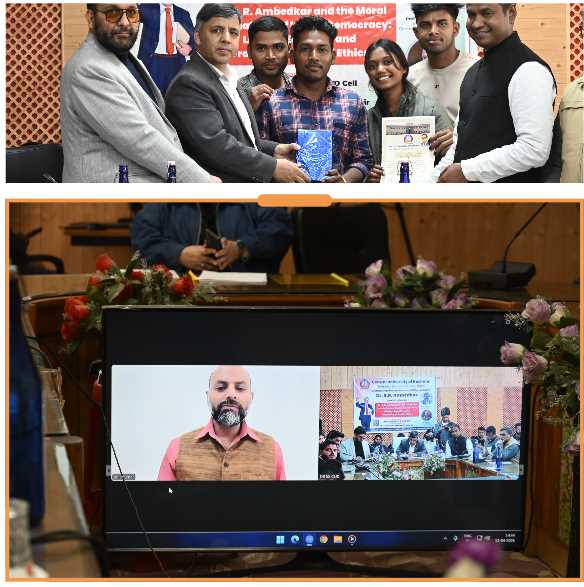
Ganderbal, April 13: Central University of Kashmir organized a panel discussion on the Women’s Reservation Bill (Naari Shakti Vandan Adhiniyam 2023), focusing on its role in advancing gender equity and political justice. The event brought together academicians, policy experts, faculty members, research scholars, and students for an in-depth deliberation on women’s representation in governance.
Vice-Chancellor Prof. A. Ravinder Nath highlighted the cultural recognition of women in Indian tradition while stressing the gap between symbolic respect and real political empowerment. He described the Bill as a step toward aligning democratic institutions with societal values by ensuring greater participation of women in legislative bodies.
Registrar Dr. Nisar Ahmad Mir emphasized that gender disparities persist across sectors and that empowering women has a broad social impact, particularly in reducing poverty and improving education and health outcomes.
Prof. Vandana Mishra argued that women should focus on asserting their inherent strengths in leadership and governance, noting that their participation can positively reshape political priorities and decision-making culture.
Dr. Sri Devi Y. termed the legislation a historic corrective measure, pointing to the long-standing underrepresentation of women in Parliament and the need for a critical mass through 33% reservation to enable meaningful influence in policymaking.
Lt. Dr. Salma Khan traced the bill’s legislative journey since 1996 and linked it to the success of women’s reservation at the grassroots level through the 73rd and 74th Constitutional Amendments.
Other faculty members and speakers underscored that the Bill would improve governance by making it more inclusive and responsive, particularly in addressing gender-based violence, healthcare access, and social justice, while also acknowledging persistent structural and cultural barriers to women’s political participation.
Ganderbal, April 13: Central University of Kashmir organized a panel discussion on the Women’s Reservation Bill (Naari Shakti Vandan Adhiniyam 2023), focusing on its role in advancing gender equity and political justice. The event brought together academicians, policy experts, faculty members, research scholars, and students for an in-depth deliberation on women’s representation in governance.
Vice-Chancellor Prof. A. Ravinder Nath highlighted the cultural recognition of women in Indian tradition while stressing the gap between symbolic respect and real political empowerment. He described the Bill as a step toward aligning democratic institutions with societal values by ensuring greater participation of women in legislative bodies.
Registrar Dr. Nisar Ahmad Mir emphasized that gender disparities persist across sectors and that empowering women has a broad social impact, particularly in reducing poverty and improving education and health outcomes.
Prof. Vandana Mishra argued that women should focus on asserting their inherent strengths in leadership and governance, noting that their participation can positively reshape political priorities and decision-making culture.
Dr. Sri Devi Y. termed the legislation a historic corrective measure, pointing to the long-standing underrepresentation of women in Parliament and the need for a critical mass through 33% reservation to enable meaningful influence in policymaking.
Lt. Dr. Salma Khan traced the bill’s legislative journey since 1996 and linked it to the success of women’s reservation at the grassroots level through the 73rd and 74th Constitutional Amendments.
Other faculty members and speakers underscored that the Bill would improve governance by making it more inclusive and responsive, particularly in addressing gender-based violence, healthcare access, and social justice, while also acknowledging persistent structural and cultural barriers to women’s political participation.
© Copyright 2023 brighterkashmir.com All Rights Reserved. Quantum Technologies