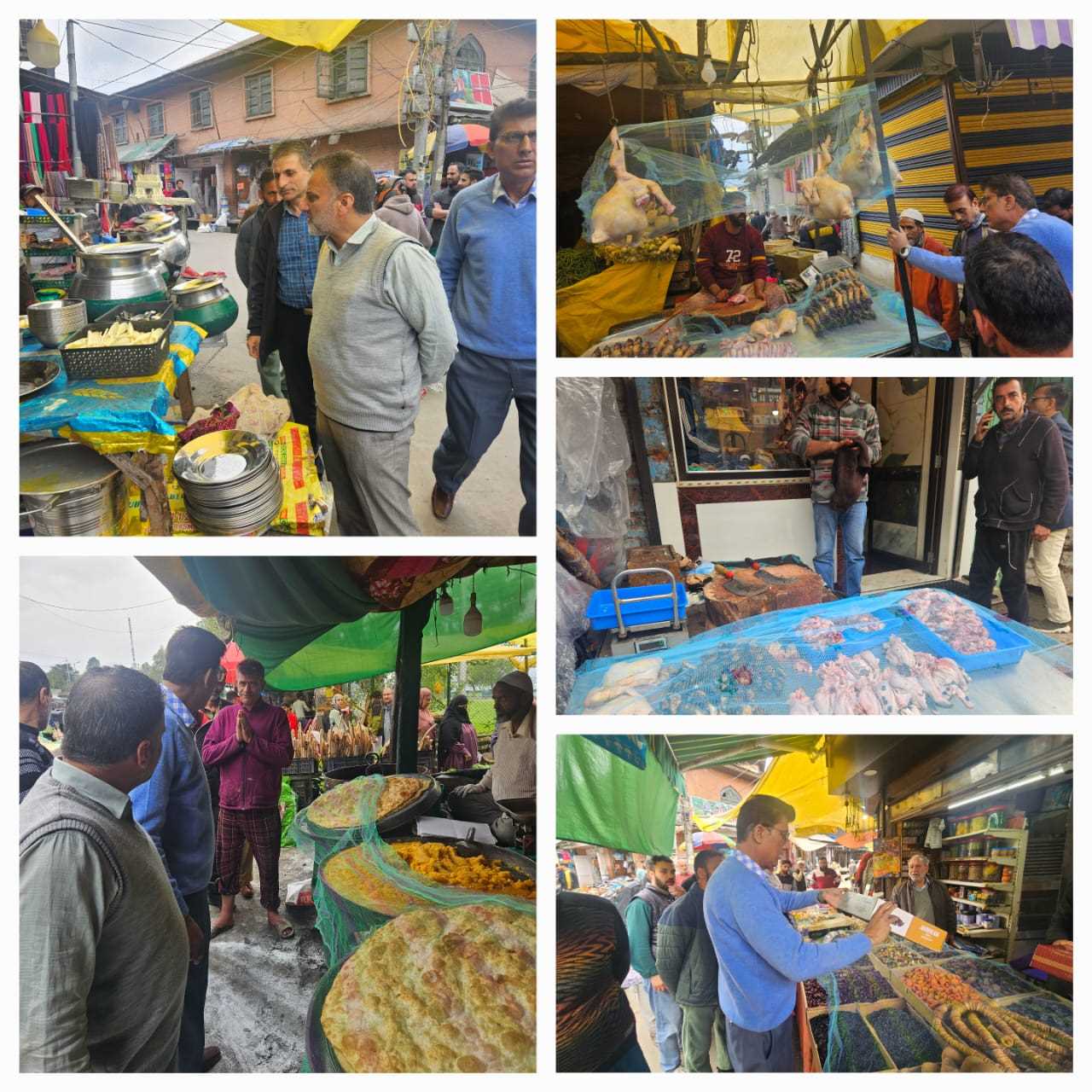
Srinagar, Dec 12: The Food Safety Department conducted raids at several locations in Srinagar on Friday following allegations of adulterated eggs being sold in local markets. While laboratory results are still awaited, the incident has once again triggered criticism over the department’s inability to detect contaminated food proactively.
Across the Valley, public sentiment suggests that the department often remains reactive, acting only after complaints, viral videos, or public outrage. Recent incidents involving rotten meat, suspected adulterated eggs, and other substandard food items have reinforced the perception that routine inspections and surveillance are inconsistent.
Under the Food Safety and Standards Act 2006 and the Rules of 2011, the department is mandated to conduct regular inspections, lift samples of all categories of food for laboratory testing, and initiate legal action against violators. Traders and consumers told Kashmir News Trust that these responsibilities are often carried out sporadically rather than through continuous, year-round vigilance.
Officials confirmed that the seized eggs have been sent for laboratory analysis, and any further action will depend on the findings. Meanwhile, consumers and market observers argue that preventive measures and expanded monitoring are urgently needed to stop contaminated food from entering markets in the first place.
Experts warn that without a strengthened surveillance system and routine inspections, Kashmir’s food supply chain will continue to face recurring adulteration scares that could otherwise be prevented, raising serious public health concerns.
Srinagar, Dec 12: The Food Safety Department conducted raids at several locations in Srinagar on Friday following allegations of adulterated eggs being sold in local markets. While laboratory results are still awaited, the incident has once again triggered criticism over the department’s inability to detect contaminated food proactively.
Across the Valley, public sentiment suggests that the department often remains reactive, acting only after complaints, viral videos, or public outrage. Recent incidents involving rotten meat, suspected adulterated eggs, and other substandard food items have reinforced the perception that routine inspections and surveillance are inconsistent.
Under the Food Safety and Standards Act 2006 and the Rules of 2011, the department is mandated to conduct regular inspections, lift samples of all categories of food for laboratory testing, and initiate legal action against violators. Traders and consumers told Kashmir News Trust that these responsibilities are often carried out sporadically rather than through continuous, year-round vigilance.
Officials confirmed that the seized eggs have been sent for laboratory analysis, and any further action will depend on the findings. Meanwhile, consumers and market observers argue that preventive measures and expanded monitoring are urgently needed to stop contaminated food from entering markets in the first place.
Experts warn that without a strengthened surveillance system and routine inspections, Kashmir’s food supply chain will continue to face recurring adulteration scares that could otherwise be prevented, raising serious public health concerns.
© Copyright 2023 brighterkashmir.com All Rights Reserved. Quantum Technologies