
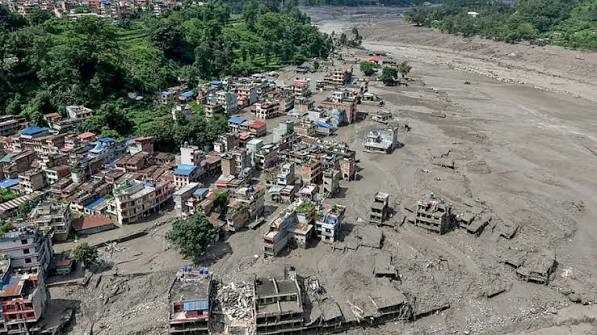
Kathmandu, August 30: The death toll from devastating flash floods and landslides across Nepal and China’s Tibet region has risen to 750, while more than 3,000 people remain missing as rescue teams continue a massive search operation across the disaster-hit Himalayan region.
Nepal has reported 734 deaths, while 2,498 people remain missing. In Tibet, Chinese authorities have reported 16 deaths and 546 missing people. The combined number of missing people stands at more than 3,000.
The disaster struck after a sudden collapse of ice and rock in the Himalayan region triggered a powerful surge of water, mud and debris. The floods swept through valleys and settlements along the Nepal-China border, damaging roads, bridges, hydropower facilities and other critical infrastructure.
Nepal’s Rasuwa, Nuwakot, Dhading and surrounding districts have suffered extensive damage. Several hydropower projects were also affected, with hundreds of workers reported missing. Officials said hundreds of hydropower workers are among those still unaccounted for.
Foreign nationals have also been affected by the disaster. Nepal’s missing list includes several hundred foreigners, while Chinese authorities have reported foreign nationals missing in Tibet.
Nepal Prime Minister Balendra Shah said the government stands with citizens affected by the floods and stressed that saving every citizen’s life remains the government’s top priority.
The Nepal government has mobilised security personnel, helicopters and emergency response teams to reach isolated communities and evacuate survivors. Nearly 20,000 security personnel have been involved in rescue and relief operations.
Thousands of people have already been rescued, including foreign nationals. Helicopters are being used to evacuate people stranded in remote locations, particularly workers trapped near hydropower projects.
One of the most challenging rescue operations is taking place around hydropower tunnels, where workers were trapped after floodwaters and debris entered project sites. Nepal has sought specialised assistance for tunnel rescue operations, forensic identification and DNA testing.
Rescue operations remain difficult because of thick layers of mud, damaged roads, steep Himalayan terrain and unstable weather conditions. Authorities are closely monitoring river levels and have issued warnings to communities in vulnerable areas.
The disaster has created a major humanitarian emergency, with tens of thousands of people affected and thousands of families waiting for information about missing relatives. Hospitals and emergency facilities are also dealing with the recovery and identification of bodies.
Infrastructure damage has further complicated relief operations. Bridges and sections of major highways have been damaged, disrupting the movement of rescue teams and essential supplies. Power infrastructure has also been affected in several areas.
China has intensified rescue and relief operations in Tibet, deploying thousands of personnel along with emergency equipment and specialised resources. Authorities are using drones and other technology to search difficult-to-reach areas.
India has also extended humanitarian and technical assistance to Nepal. Indian rescue and technical teams are supporting operations in the affected areas, while efforts are underway to locate and assist Indian nationals caught in the disaster.
The United States and other countries have also announced humanitarian assistance for Nepal as the scale of the catastrophe becomes clearer.
The disaster has renewed concerns over the vulnerability of the Himalayan region to extreme weather events, glacier-related hazards and landslides. The collapse of ice and rock and the resulting debris flow highlight the risks faced by communities and infrastructure located in fragile mountain valleys.
For families across Nepal, the search for missing relatives continues. Rescue teams are working through mud-filled valleys, damaged settlements and hydropower facilities in the hope of finding survivors.
Authorities have warned that the death toll and missing figures could change as rescue teams reach areas that remain inaccessible. The immediate priority remains rescuing survivors, locating missing people, providing medical assistance, restoring transport links and supporting affected families.


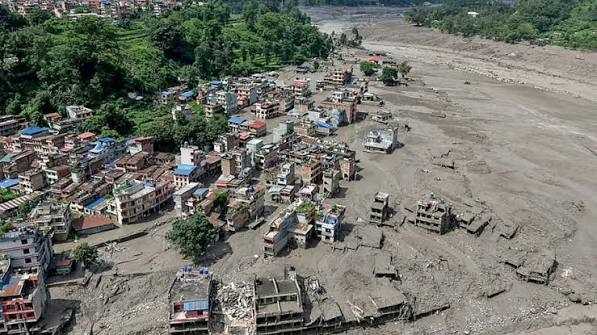
Kathmandu, August 30: The death toll from devastating flash floods and landslides across Nepal and China’s Tibet region has risen to 750, while more than 3,000 people remain missing as rescue teams continue a massive search operation across the disaster-hit Himalayan region.
Nepal has reported 734 deaths, while 2,498 people remain missing. In Tibet, Chinese authorities have reported 16 deaths and 546 missing people. The combined number of missing people stands at more than 3,000.
The disaster struck after a sudden collapse of ice and rock in the Himalayan region triggered a powerful surge of water, mud and debris. The floods swept through valleys and settlements along the Nepal-China border, damaging roads, bridges, hydropower facilities and other critical infrastructure.
Nepal’s Rasuwa, Nuwakot, Dhading and surrounding districts have suffered extensive damage. Several hydropower projects were also affected, with hundreds of workers reported missing. Officials said hundreds of hydropower workers are among those still unaccounted for.
Foreign nationals have also been affected by the disaster. Nepal’s missing list includes several hundred foreigners, while Chinese authorities have reported foreign nationals missing in Tibet.
Nepal Prime Minister Balendra Shah said the government stands with citizens affected by the floods and stressed that saving every citizen’s life remains the government’s top priority.
The Nepal government has mobilised security personnel, helicopters and emergency response teams to reach isolated communities and evacuate survivors. Nearly 20,000 security personnel have been involved in rescue and relief operations.
Thousands of people have already been rescued, including foreign nationals. Helicopters are being used to evacuate people stranded in remote locations, particularly workers trapped near hydropower projects.
One of the most challenging rescue operations is taking place around hydropower tunnels, where workers were trapped after floodwaters and debris entered project sites. Nepal has sought specialised assistance for tunnel rescue operations, forensic identification and DNA testing.
Rescue operations remain difficult because of thick layers of mud, damaged roads, steep Himalayan terrain and unstable weather conditions. Authorities are closely monitoring river levels and have issued warnings to communities in vulnerable areas.
The disaster has created a major humanitarian emergency, with tens of thousands of people affected and thousands of families waiting for information about missing relatives. Hospitals and emergency facilities are also dealing with the recovery and identification of bodies.
Infrastructure damage has further complicated relief operations. Bridges and sections of major highways have been damaged, disrupting the movement of rescue teams and essential supplies. Power infrastructure has also been affected in several areas.
China has intensified rescue and relief operations in Tibet, deploying thousands of personnel along with emergency equipment and specialised resources. Authorities are using drones and other technology to search difficult-to-reach areas.
India has also extended humanitarian and technical assistance to Nepal. Indian rescue and technical teams are supporting operations in the affected areas, while efforts are underway to locate and assist Indian nationals caught in the disaster.
The United States and other countries have also announced humanitarian assistance for Nepal as the scale of the catastrophe becomes clearer.
The disaster has renewed concerns over the vulnerability of the Himalayan region to extreme weather events, glacier-related hazards and landslides. The collapse of ice and rock and the resulting debris flow highlight the risks faced by communities and infrastructure located in fragile mountain valleys.
For families across Nepal, the search for missing relatives continues. Rescue teams are working through mud-filled valleys, damaged settlements and hydropower facilities in the hope of finding survivors.
Authorities have warned that the death toll and missing figures could change as rescue teams reach areas that remain inaccessible. The immediate priority remains rescuing survivors, locating missing people, providing medical assistance, restoring transport links and supporting affected families.

© Copyright 2023 brighterkashmir.com All Rights Reserved. Quantum Technologies