
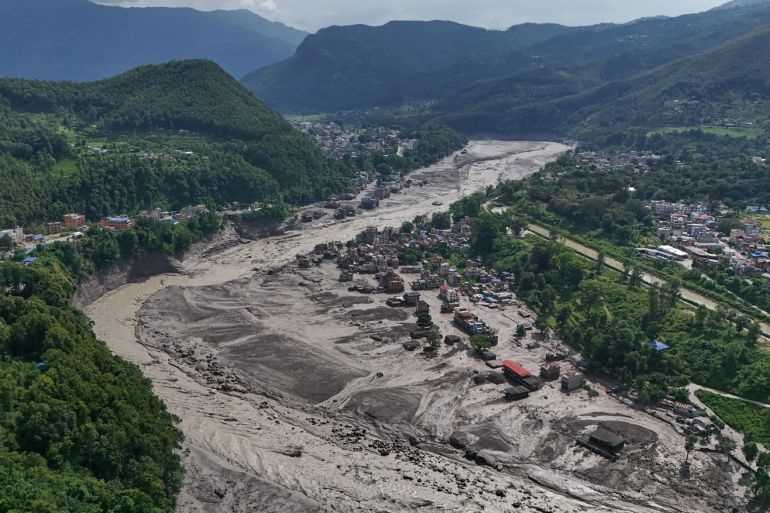
Kathmandu, August 27: At least 162 people have been killed and hundreds remain missing after a catastrophic flash flood swept through Nepal’s northern Rasuwa district near the border with China’s Tibet region, destroying homes, roads, bridges and critical infrastructure, authorities said.
The disaster struck on Wednesday along the Bhote Koshi river, with particularly severe damage reported in the Timure and Syabrubesi areas. The sudden surge of water and debris swept through settlements and the border trade area, leaving extensive destruction in its wake.
Authorities are still conducting search and rescue operations, with more than 400 people reported missing in Nepal. The missing include local residents, security personnel, power project workers and foreign nationals, including tourists travelling through the Himalayan region.
The disaster has also caused major casualties across the border in Tibet. Chinese authorities have reported three deaths, while hundreds of people remain unaccounted for in Gyirong County. The combined number of missing people on both sides of the border has approached 1,000, according to reports.
The precise trigger of the flood remains under investigation. Satellite imagery and expert assessments indicate that a large section of a glacier at an altitude of around 5,200 metres collapsed, sending ice and rock into the valley and producing a powerful surge of water and debris. Experts have also examined whether recent seismic activity contributed to the glacier collapse.
The floodwaters caused severe damage to transport and energy infrastructure. Roads and bridges were washed away, while hydropower facilities in the affected region were damaged. The destruction has complicated rescue operations and disrupted communication and movement in several areas.
Nepalese security forces and emergency teams have been deployed for rescue and recovery operations. However, difficult mountainous terrain, damaged roads and continuing river hazards have made access to some affected locations difficult. Rescue helicopters have also faced challenges reaching the worst-hit areas.
Officials have urged people living along the Trishuli River basin to remain highly alert and move to safer locations where necessary. The authorities have expressed concern over further flooding downstream as large volumes of water and debris move through the river system.
The disaster has also raised renewed concerns over the vulnerability of Himalayan communities to glacier-related hazards. Experts say rising temperatures and accelerating glacier melt are increasing risks across the Himalayan region, where glacial lakes, unstable ice and steep mountain terrain can combine to produce sudden and destructive floods.
The Bhote Koshi region experienced another deadly flood last year, which killed several people and destroyed the Friendship Bridge connecting Nepal and China. The repeated disasters have highlighted the need for stronger early-warning systems, monitoring of glaciers and glacial lakes, and improved disaster preparedness in Himalayan border areas.
India has also responded to the disaster, with relief assistance being sent to Nepal as rescue operations continue. Indian nationals are among those reported missing, prompting Indian authorities to coordinate with Nepalese officials and provide assistance to affected families.
Rescue teams are continuing efforts to locate survivors and establish the whereabouts of those missing. Authorities have warned that the casualty figures could change as teams reach areas that remain cut off by the destruction caused by the floods.
The disaster is among the most serious recent flood emergencies in the Himalayan region and has once again highlighted the growing risks faced by communities and infrastructure located along mountain rivers and near unstable glacial systems.
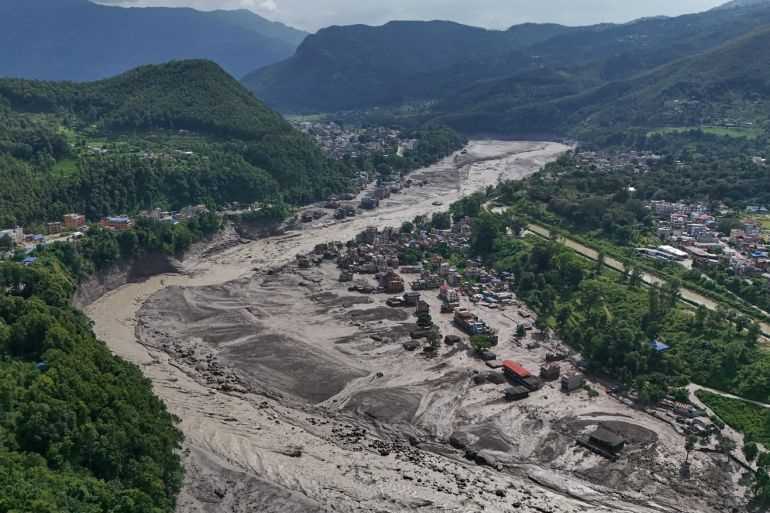
Kathmandu, August 27: At least 162 people have been killed and hundreds remain missing after a catastrophic flash flood swept through Nepal’s northern Rasuwa district near the border with China’s Tibet region, destroying homes, roads, bridges and critical infrastructure, authorities said.
The disaster struck on Wednesday along the Bhote Koshi river, with particularly severe damage reported in the Timure and Syabrubesi areas. The sudden surge of water and debris swept through settlements and the border trade area, leaving extensive destruction in its wake.
Authorities are still conducting search and rescue operations, with more than 400 people reported missing in Nepal. The missing include local residents, security personnel, power project workers and foreign nationals, including tourists travelling through the Himalayan region.
The disaster has also caused major casualties across the border in Tibet. Chinese authorities have reported three deaths, while hundreds of people remain unaccounted for in Gyirong County. The combined number of missing people on both sides of the border has approached 1,000, according to reports.
The precise trigger of the flood remains under investigation. Satellite imagery and expert assessments indicate that a large section of a glacier at an altitude of around 5,200 metres collapsed, sending ice and rock into the valley and producing a powerful surge of water and debris. Experts have also examined whether recent seismic activity contributed to the glacier collapse.
The floodwaters caused severe damage to transport and energy infrastructure. Roads and bridges were washed away, while hydropower facilities in the affected region were damaged. The destruction has complicated rescue operations and disrupted communication and movement in several areas.
Nepalese security forces and emergency teams have been deployed for rescue and recovery operations. However, difficult mountainous terrain, damaged roads and continuing river hazards have made access to some affected locations difficult. Rescue helicopters have also faced challenges reaching the worst-hit areas.
Officials have urged people living along the Trishuli River basin to remain highly alert and move to safer locations where necessary. The authorities have expressed concern over further flooding downstream as large volumes of water and debris move through the river system.
The disaster has also raised renewed concerns over the vulnerability of Himalayan communities to glacier-related hazards. Experts say rising temperatures and accelerating glacier melt are increasing risks across the Himalayan region, where glacial lakes, unstable ice and steep mountain terrain can combine to produce sudden and destructive floods.
The Bhote Koshi region experienced another deadly flood last year, which killed several people and destroyed the Friendship Bridge connecting Nepal and China. The repeated disasters have highlighted the need for stronger early-warning systems, monitoring of glaciers and glacial lakes, and improved disaster preparedness in Himalayan border areas.
India has also responded to the disaster, with relief assistance being sent to Nepal as rescue operations continue. Indian nationals are among those reported missing, prompting Indian authorities to coordinate with Nepalese officials and provide assistance to affected families.
Rescue teams are continuing efforts to locate survivors and establish the whereabouts of those missing. Authorities have warned that the casualty figures could change as teams reach areas that remain cut off by the destruction caused by the floods.
The disaster is among the most serious recent flood emergencies in the Himalayan region and has once again highlighted the growing risks faced by communities and infrastructure located along mountain rivers and near unstable glacial systems.

© Copyright 2023 brighterkashmir.com All Rights Reserved. Quantum Technologies