06-10-2026     3 رجب 1440

CS gives shape to a Comprehensive Rehabilitation and Socio-Economic Reintegration Framework for Drug Abuse Victims

June 10, 2026 | BK NEWS SERVICE

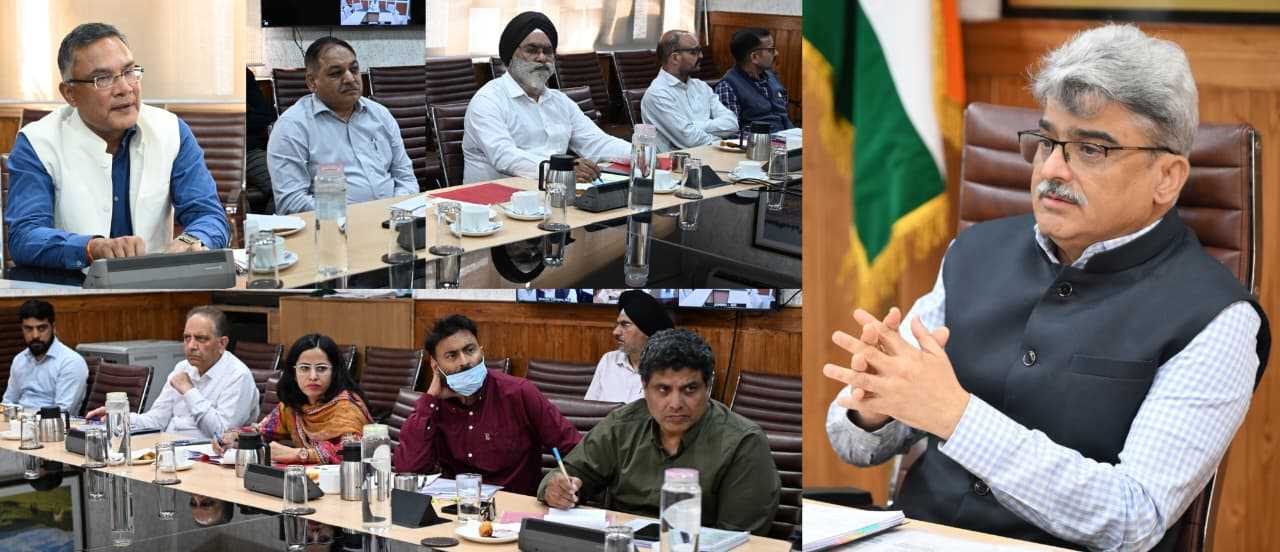
 In a major step towards strengthening the fight against substance abuse and ensuring long-term recovery of affected individuals, the Chief Secretary, Atal Dulloo gave shape to al comprehensive Rehabilitation and Socio-Economic Reintegration Framework for victims of drug abuse, aimed at facilitating their successful reintegration into society through a structured rehabilitation cycle.

The proposed framework was discussed in detail during a high-level meeting attended by Additional Chief Secretary, Finance; Principal Secretary, Home; Commissioner Secretary, Social Welfare Department; Commissioner Secretary, School Education Department; Secretary, Skill Development Department; Director Colleges; Head of IMHANS Srinagar;SIO, NIC and other concerned officers.

The proposed framework seeks to move beyond conventional detoxification and treatment by adopting a holistic approach that combines medical care, psychosocial support, education, skill development, employment opportunities and sustained monitoring to prevent relapse and promote social stability.

During the meeting, the Chief Secretary outlined the comprehensive strategy envisioned by the Government to address the growing challenge of substance abuse through a coordinated, treatment-to-reintegration approach based upon the Individual Reintegration Plans (IRPs) for each of the victim as per his customized requirements.

He emphasized that the framework should be adopted forthwith on a pilot basis through IMHANS Srinagar and one additional district to identify operational challenges and fine-tune the model before its large-scale implementation across the Union Territory.

Elaborating on the proposed mechanism, the Chief Secretary observed that each Addiction Treatment Facility (ATF) should function through a collaborative support system comprising trained Counsellors and Psychiatrists from the Health Department an ASHA Worker, and a Social Worker designated by the Social Welfare Department.

He stated that the ASHA Worker would play a vital role in ensuring adherence to treatment protocols by assisting beneficiaries in taking prescribed medicines regularly and facilitating timely follow-up consultations making home visits.

The Chief Secretary further stressed that the Social Worker would serve as the critical link between treatment and rehabilitation by motivating recovering individuals towards stabilization, rehabilitation and their eventual reintegration into the socio-economic mainstream.

He noted that beneficiaries could be linked with self-employment initiatives, livelihood-generation programmes and various Centrally Sponsored Schemes, besides being encouraged to resume their education for those who had left these midway, thereby ensuring long-term recovery and self-reliance under continuous monitoring and support.

Highlighting the need for community participation, the Chief Secretary also advocated the creation of an additional support network comprising trained counsellors drawn from Self Help Groups (SHGs), educational institutions and health centres to strengthen outreach, counselling and follow-up mechanisms and transform the initiative into a sustainable and successful model of rehabilitation.

Speaking on the occasion, Additional Chief Secretary, Finance, Shailendra Kumar, assured full support from the Finance Department for successful implementation of the initiative.

 He advised the Social Welfare Department to further refine the framework to make it more realistic, outcome-oriented and beneficial for the affected individuals, ensuring tangible socio-economic gains for those undergoing rehabilitation.

The scheme as elaborated by the Principal Secretary, Home, Chandraker Bharti is designed around six key objectives, including institutionalizing a structured rehabilitation cycle, ensuring seamless transition from detoxification to socio-economic stabilization, reducing relapse rates through continuous care and monitoring, establishing mentor-led handholding for beneficiaries, promoting interdepartmental convergence and preventing premature exit before certified stabilization.

Elaborating it further the Commissioner Secretary, Social Welfare Department, Sarmad Hafeez revealed that under the framework, rehabilitation shall be undertaken through three distinct phases spanning over a period of time.

He divulged that the first phase, Treatment and Stabilization focuses on centralized intake, assessment, detoxification, clinical evaluation and risk categorization of beneficiaries. Cases referred from government-recognized de-addiction centres will undergo comprehensive assessment by authorized psychiatric professionals.

Additionally based on risk levels, beneficiaries will receive appropriate supervision and support. The Department shall prepare preliminary Individual Reintegration Plans (IRPs) covering educational, social and economic rehabilitation needs. The District Task Force will review these plans and assign dedicated mentors to each beneficiary.

The second phase, as elucidated includes Reintegration and Livelihood Activation, which focuses on socio-economic activation and implementation of approved Individual Reintegration Plans. Beneficiaries will be connected with education, skill development programmes, apprenticeships, employment opportunities and livelihood interventions.

The third phase, Sustained Monitoring and Social Inclusion, will concentrate on long-term retention, community acceptance and sustained socio-economic stability. Beneficiaries will continue receiving support to maintain educational pursuits, employment, entrepreneurship initiatives, family relationships and mental well-being.

A key feature of the proposed framework is the institution of mentor-led handholding, whereby each beneficiary will be assigned a dedicated mentor responsible for continuous guidance, coordination with departments, monitoring of progress and facilitating access to opportunities and support systems.

Moreover these designated mentors will conduct periodic physical, telephonic and digital follow-ups to verify progress and provide continued guidance.

The framework also emphasizes strong interdepartmental convergence, bringing together multiple departments and stakeholders to ensure seamless delivery of services and benefits required for the rehabilitation process.

During the meeting, Head, IMHANS Srinagar, Prof. (Dr.) Arshid Hussain, presented the proposed treatment and rehabilitation framework, highlighting evidence-based protocols and best practices required for ensuring the success of the initiative. He elaborated on the institution's three-tier “Circle of Care” model, detailing the roles and responsibilities of various stakeholders involved in the rehabilitation and socio-economic reintegration process as per the IRP model.

Prof. Hussain also outlined a comprehensive capacity-building roadmap for the personnel associated with the programme and informed the meeting about the series of training programmes proposed to be conducted by IMHANS Srinagar.

 These trainings, he noted, would equip the concerned functionaries with the requisite skills and knowledge for effective implementation of the framework and facilitate the timely operationalization of all components of the strategy.

By integrating treatment, livelihood generation, social inclusion and continuous monitoring into a single structured framework, the Government aims to significantly reduce relapse rates, enhance recovery outcomes and empower recovering individuals to lead productive, dignified and self-reliant lives.

CS gives shape to a Comprehensive Rehabilitation and Socio-Economic Reintegration Framework for Drug Abuse Victims

June 10, 2026 | BK NEWS SERVICE

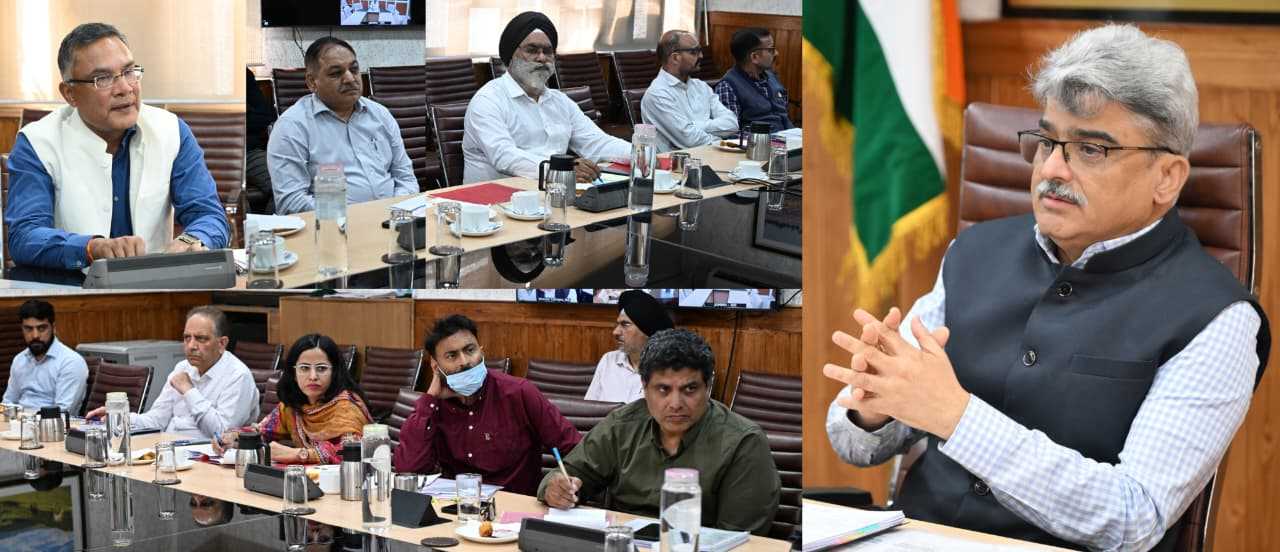
 In a major step towards strengthening the fight against substance abuse and ensuring long-term recovery of affected individuals, the Chief Secretary, Atal Dulloo gave shape to al comprehensive Rehabilitation and Socio-Economic Reintegration Framework for victims of drug abuse, aimed at facilitating their successful reintegration into society through a structured rehabilitation cycle.

The proposed framework was discussed in detail during a high-level meeting attended by Additional Chief Secretary, Finance; Principal Secretary, Home; Commissioner Secretary, Social Welfare Department; Commissioner Secretary, School Education Department; Secretary, Skill Development Department; Director Colleges; Head of IMHANS Srinagar;SIO, NIC and other concerned officers.

The proposed framework seeks to move beyond conventional detoxification and treatment by adopting a holistic approach that combines medical care, psychosocial support, education, skill development, employment opportunities and sustained monitoring to prevent relapse and promote social stability.

During the meeting, the Chief Secretary outlined the comprehensive strategy envisioned by the Government to address the growing challenge of substance abuse through a coordinated, treatment-to-reintegration approach based upon the Individual Reintegration Plans (IRPs) for each of the victim as per his customized requirements.

He emphasized that the framework should be adopted forthwith on a pilot basis through IMHANS Srinagar and one additional district to identify operational challenges and fine-tune the model before its large-scale implementation across the Union Territory.

Elaborating on the proposed mechanism, the Chief Secretary observed that each Addiction Treatment Facility (ATF) should function through a collaborative support system comprising trained Counsellors and Psychiatrists from the Health Department an ASHA Worker, and a Social Worker designated by the Social Welfare Department.

He stated that the ASHA Worker would play a vital role in ensuring adherence to treatment protocols by assisting beneficiaries in taking prescribed medicines regularly and facilitating timely follow-up consultations making home visits.

The Chief Secretary further stressed that the Social Worker would serve as the critical link between treatment and rehabilitation by motivating recovering individuals towards stabilization, rehabilitation and their eventual reintegration into the socio-economic mainstream.

He noted that beneficiaries could be linked with self-employment initiatives, livelihood-generation programmes and various Centrally Sponsored Schemes, besides being encouraged to resume their education for those who had left these midway, thereby ensuring long-term recovery and self-reliance under continuous monitoring and support.

Highlighting the need for community participation, the Chief Secretary also advocated the creation of an additional support network comprising trained counsellors drawn from Self Help Groups (SHGs), educational institutions and health centres to strengthen outreach, counselling and follow-up mechanisms and transform the initiative into a sustainable and successful model of rehabilitation.

Speaking on the occasion, Additional Chief Secretary, Finance, Shailendra Kumar, assured full support from the Finance Department for successful implementation of the initiative.

 He advised the Social Welfare Department to further refine the framework to make it more realistic, outcome-oriented and beneficial for the affected individuals, ensuring tangible socio-economic gains for those undergoing rehabilitation.

The scheme as elaborated by the Principal Secretary, Home, Chandraker Bharti is designed around six key objectives, including institutionalizing a structured rehabilitation cycle, ensuring seamless transition from detoxification to socio-economic stabilization, reducing relapse rates through continuous care and monitoring, establishing mentor-led handholding for beneficiaries, promoting interdepartmental convergence and preventing premature exit before certified stabilization.

Elaborating it further the Commissioner Secretary, Social Welfare Department, Sarmad Hafeez revealed that under the framework, rehabilitation shall be undertaken through three distinct phases spanning over a period of time.

He divulged that the first phase, Treatment and Stabilization focuses on centralized intake, assessment, detoxification, clinical evaluation and risk categorization of beneficiaries. Cases referred from government-recognized de-addiction centres will undergo comprehensive assessment by authorized psychiatric professionals.

Additionally based on risk levels, beneficiaries will receive appropriate supervision and support. The Department shall prepare preliminary Individual Reintegration Plans (IRPs) covering educational, social and economic rehabilitation needs. The District Task Force will review these plans and assign dedicated mentors to each beneficiary.

The second phase, as elucidated includes Reintegration and Livelihood Activation, which focuses on socio-economic activation and implementation of approved Individual Reintegration Plans. Beneficiaries will be connected with education, skill development programmes, apprenticeships, employment opportunities and livelihood interventions.

The third phase, Sustained Monitoring and Social Inclusion, will concentrate on long-term retention, community acceptance and sustained socio-economic stability. Beneficiaries will continue receiving support to maintain educational pursuits, employment, entrepreneurship initiatives, family relationships and mental well-being.

A key feature of the proposed framework is the institution of mentor-led handholding, whereby each beneficiary will be assigned a dedicated mentor responsible for continuous guidance, coordination with departments, monitoring of progress and facilitating access to opportunities and support systems.

Moreover these designated mentors will conduct periodic physical, telephonic and digital follow-ups to verify progress and provide continued guidance.

The framework also emphasizes strong interdepartmental convergence, bringing together multiple departments and stakeholders to ensure seamless delivery of services and benefits required for the rehabilitation process.

During the meeting, Head, IMHANS Srinagar, Prof. (Dr.) Arshid Hussain, presented the proposed treatment and rehabilitation framework, highlighting evidence-based protocols and best practices required for ensuring the success of the initiative. He elaborated on the institution's three-tier “Circle of Care” model, detailing the roles and responsibilities of various stakeholders involved in the rehabilitation and socio-economic reintegration process as per the IRP model.

Prof. Hussain also outlined a comprehensive capacity-building roadmap for the personnel associated with the programme and informed the meeting about the series of training programmes proposed to be conducted by IMHANS Srinagar.

 These trainings, he noted, would equip the concerned functionaries with the requisite skills and knowledge for effective implementation of the framework and facilitate the timely operationalization of all components of the strategy.

By integrating treatment, livelihood generation, social inclusion and continuous monitoring into a single structured framework, the Government aims to significantly reduce relapse rates, enhance recovery outcomes and empower recovering individuals to lead productive, dignified and self-reliant lives.


  • Address: R.C 2 Quarters Press Enclave Near Pratap Park, Srinagar 190001.
  • Phone: 0194-2451076 , +91-941-940-0056 , +91-962-292-4716
  • Email: brighterkmr@gmail.com
Owner, Printer, Publisher, Editor: Farooq Ahmad Wani
Legal Advisor: M.J. Hubi
Printed at: Sangermal offset Printing Press Rangreth ( Budgam)
Published from: Gulshanabad Chraresharief Budgam
RNI No.: JKENG/2010/33802
Office No’s: 0194-2451076
Mobile No’s 9419400056, 9622924716 ,7006086442
Postal Regd No: SK/135/2010-2019
POST BOX NO: 1001
Administrative Office: R.C 2 Quarters Press Enclave Near Pratap Park ( Srinagar -190001)

© Copyright 2023 brighterkashmir.com All Rights Reserved. Quantum Technologies

Owner, Printer, Publisher, Editor: Farooq Ahmad Wani
Legal Advisor: M.J. Hubi
Printed at: Abid Enterprizes, Zainkote Srinagar
Published from: Gulshanabad Chraresharief Budgam
RNI No.: JKENG/2010/33802
Office No’s: 0194-2451076, 9622924716 , 9419400056
Postal Regd No: SK/135/2010-2019
Administrative Office: Abi Guzer Srinagar

© Copyright 2018 brighterkashmir.com All Rights Reserved.