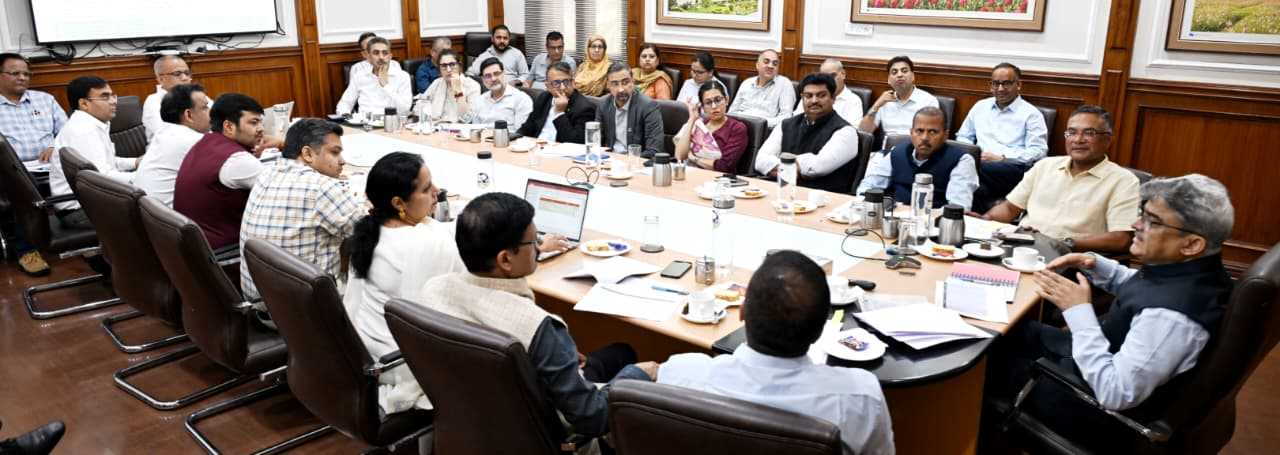
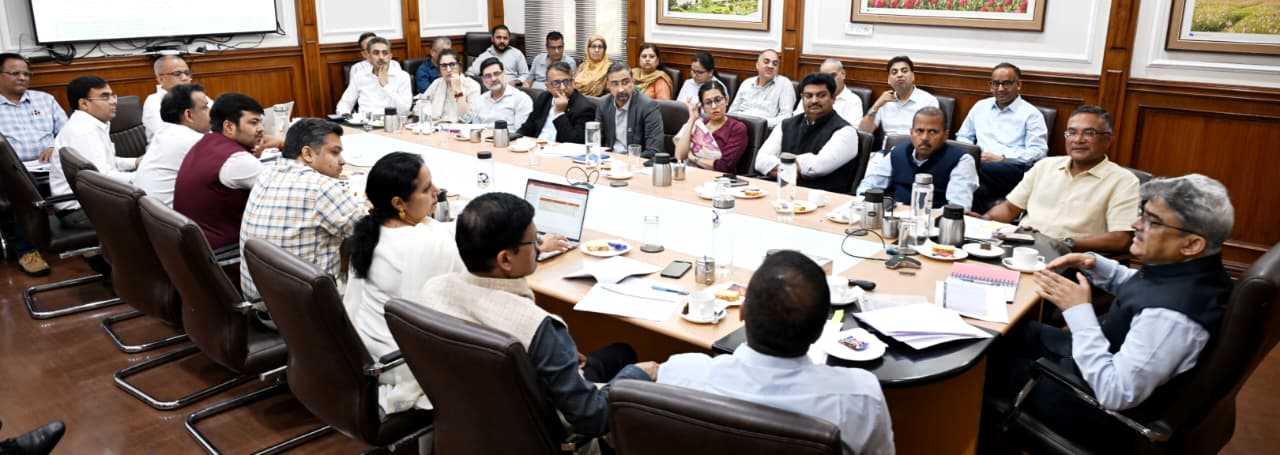
Chief Secretary, Atal Dulloo, today chaired a review meeting to assess the roadmap for implementation of the ambitious Urban Challenge Fund (UCF) in the Union Territory. The presentation was made by the Housing & Urban Development Department, outlining a transformative approach to urban financing and infrastructure development.
The meeting besides the concerned Administrative Secretaries was attended by Commissioner Secretary, H&UDD and other HoDs of the Department.
The Chief Secretary took this occasion to impress upon the concerned departments to identify projects strictly in line with the scheme guidelines. He observed that the scheme has immense potential to transform the standards of urban centres and emphasized that the Union Territory should optimally leverage it for upgrading infrastructure and making cities more liveable and citizen-friendly.
Highlighting the innovative funding structure, it was informed that central assistance under UCF will be limited to 25% of project cost, acting as a catalytic instrument to mobilize at least 50% of funds through market sources such as bonds, bank loans, and public-private partnerships. This blended financing model is aimed at enhancing financial sustainability and reducing dependence on traditional budgetary support.
He further directed the officers to shortlist at least a dozen viable projects across the twin cities, covering areas such as urban mobility, parking infrastructure, housing, beautification and other eligible sectors, so that these could be taken up in a structured and time-bound manner under the scheme. He stressed the need for timely identification and preparation of high-quality, bankable projects to fully leverage the opportunities under the Urban Challenge Fund.
At the outset, Gurjeet Singh Dhillon from the Ministry of Housing and Urban Affairs gave a detailed overview of the scheme, highlighting its vast potential, funding architecture and implementation framework. He informed that J&K has the opportunity to bring a majority of its urban areas under the ambit of this scheme.
During the meeting, the Additional Chief Secretary (Finance), Shailendra Kumar, underscored the importance of focusing on bankable projects as envisaged under the scheme. He advised the department to draw lessons from past experiences in implementing PPP projects to ensure that proposed initiatives are executed smoothly without encountering bottlenecks.
The Managing Director, J&K Bank, Amitava Chatterjee, also shared insights into best practices adopted by various States in leveraging similar financing models. He assured that the bank would extend full support in building local capacity and facilitating access to market-based financing to maximize the benefits of the scheme.
The Divisional Commissioners also identified several city development and housing projects with strong potential for successful implementation under the scheme. Representatives from National Housing Bank and Housing and Urban Development Corporation expressed their keen interest in partnering with the Union Territory for execution of projects under the Urban Challenge Fund.
The Commissioner Secretary, Housing & Urban Development, Mandeep Kaur speaking in the meeting informed that the Urban Challenge Fund, with a national outlay of ₹1,00,000 crore, is designed to usher in a paradigm shift in urban development by leveraging market-based financing and promoting sustainable, revenue-generating infrastructure projects.
She added that out of the total outlay, ₹90,000 crore is earmarked for bankable infrastructure projects, while ₹5,000 crore each has been allocated for project preparation & capacity building and credit repayment guarantee mechanisms.
The Chief Secretary wasfurther apprised that the mission to be implemented over a five-year period from FY 2026 covers a wide range of urban local bodies, including cities with a population above 10 lakh, capital cities, major industrial towns, and all ULBs in hilly and special category regions, with a particular focus on Tier-II and Tier-III cities.
The presentation outlined three key strategic verticals under the fund including Cities as Growth Hubs, Creative Redevelopment of Cities, and Water & Sanitation. These verticals aim to promote economic growth, rejuvenate urban spaces, and ensure universal access to essential urban services. Proposed interventions include development of economic corridors, transit-oriented infrastructure, heritage revitalisation, integrated water supply systems, sewerage networks, and climate-resilient urban infrastructure.
It was further informed that special emphasis is being laid on sustainable urban mobility, redevelopment of markets and public spaces, strengthening of industrial and MSME infrastructure, and adoption of smart and digital technologies for efficient urban management.
The fund also provides for a robust project preparation and capacity building component to strengthen institutional capabilities, alongside a Credit Repayment Guarantee Scheme to support smaller urban local bodies, particularly in hilly and northeastern regions, in accessing market finance.
The meeting was informed that Memorandum of Understanding (MoUs) between the Ministry of Housing and Urban Affairs and the UT will be signed shortly, marking the formal commencement of the programme.
Reiterating the significance of the initiative, the Chief Secretary observed that the Urban Challenge Fund presents a major opportunity for J&K to accelerate urban transformation, strengthen economic growth centres, and significantly improve the quality of life in its cities through sustainable and innovative financing mechanisms.

Chief Secretary, Atal Dulloo, today chaired a review meeting to assess the roadmap for implementation of the ambitious Urban Challenge Fund (UCF) in the Union Territory. The presentation was made by the Housing & Urban Development Department, outlining a transformative approach to urban financing and infrastructure development.
The meeting besides the concerned Administrative Secretaries was attended by Commissioner Secretary, H&UDD and other HoDs of the Department.
The Chief Secretary took this occasion to impress upon the concerned departments to identify projects strictly in line with the scheme guidelines. He observed that the scheme has immense potential to transform the standards of urban centres and emphasized that the Union Territory should optimally leverage it for upgrading infrastructure and making cities more liveable and citizen-friendly.
Highlighting the innovative funding structure, it was informed that central assistance under UCF will be limited to 25% of project cost, acting as a catalytic instrument to mobilize at least 50% of funds through market sources such as bonds, bank loans, and public-private partnerships. This blended financing model is aimed at enhancing financial sustainability and reducing dependence on traditional budgetary support.
He further directed the officers to shortlist at least a dozen viable projects across the twin cities, covering areas such as urban mobility, parking infrastructure, housing, beautification and other eligible sectors, so that these could be taken up in a structured and time-bound manner under the scheme. He stressed the need for timely identification and preparation of high-quality, bankable projects to fully leverage the opportunities under the Urban Challenge Fund.
At the outset, Gurjeet Singh Dhillon from the Ministry of Housing and Urban Affairs gave a detailed overview of the scheme, highlighting its vast potential, funding architecture and implementation framework. He informed that J&K has the opportunity to bring a majority of its urban areas under the ambit of this scheme.
During the meeting, the Additional Chief Secretary (Finance), Shailendra Kumar, underscored the importance of focusing on bankable projects as envisaged under the scheme. He advised the department to draw lessons from past experiences in implementing PPP projects to ensure that proposed initiatives are executed smoothly without encountering bottlenecks.
The Managing Director, J&K Bank, Amitava Chatterjee, also shared insights into best practices adopted by various States in leveraging similar financing models. He assured that the bank would extend full support in building local capacity and facilitating access to market-based financing to maximize the benefits of the scheme.
The Divisional Commissioners also identified several city development and housing projects with strong potential for successful implementation under the scheme. Representatives from National Housing Bank and Housing and Urban Development Corporation expressed their keen interest in partnering with the Union Territory for execution of projects under the Urban Challenge Fund.
The Commissioner Secretary, Housing & Urban Development, Mandeep Kaur speaking in the meeting informed that the Urban Challenge Fund, with a national outlay of ₹1,00,000 crore, is designed to usher in a paradigm shift in urban development by leveraging market-based financing and promoting sustainable, revenue-generating infrastructure projects.
She added that out of the total outlay, ₹90,000 crore is earmarked for bankable infrastructure projects, while ₹5,000 crore each has been allocated for project preparation & capacity building and credit repayment guarantee mechanisms.
The Chief Secretary wasfurther apprised that the mission to be implemented over a five-year period from FY 2026 covers a wide range of urban local bodies, including cities with a population above 10 lakh, capital cities, major industrial towns, and all ULBs in hilly and special category regions, with a particular focus on Tier-II and Tier-III cities.
The presentation outlined three key strategic verticals under the fund including Cities as Growth Hubs, Creative Redevelopment of Cities, and Water & Sanitation. These verticals aim to promote economic growth, rejuvenate urban spaces, and ensure universal access to essential urban services. Proposed interventions include development of economic corridors, transit-oriented infrastructure, heritage revitalisation, integrated water supply systems, sewerage networks, and climate-resilient urban infrastructure.
It was further informed that special emphasis is being laid on sustainable urban mobility, redevelopment of markets and public spaces, strengthening of industrial and MSME infrastructure, and adoption of smart and digital technologies for efficient urban management.
The fund also provides for a robust project preparation and capacity building component to strengthen institutional capabilities, alongside a Credit Repayment Guarantee Scheme to support smaller urban local bodies, particularly in hilly and northeastern regions, in accessing market finance.
The meeting was informed that Memorandum of Understanding (MoUs) between the Ministry of Housing and Urban Affairs and the UT will be signed shortly, marking the formal commencement of the programme.
Reiterating the significance of the initiative, the Chief Secretary observed that the Urban Challenge Fund presents a major opportunity for J&K to accelerate urban transformation, strengthen economic growth centres, and significantly improve the quality of life in its cities through sustainable and innovative financing mechanisms.
© Copyright 2023 brighterkashmir.com All Rights Reserved. Quantum Technologies