
BREAKING NEWS
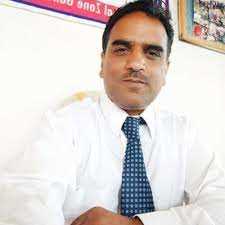
That day, Tariq Ahmad Lone did not merely witness history. He became part of a humanitarian story — one in which he chose to extend a helping hand rather than simply record the suffering of others
Some incidents remain etched in one's memory forever. For senior cameraman Tariq Ahmad Lone of the India Today Group, the devastating blast near the Jammu and Kashmir Bank headquarters, close to the Tourist Reception Centre (TRC), on November 17, 2005, was one such tragedy — a day when journalism took a backseat and humanity came first.
Twenty-one years have passed, but the horrifying images of that day remain as vivid as ever for Lone, who was present at the spot while performing his professional duties as a cameraman for Aaj Tak and India Today.
What he witnessed was beyond anything a journalist could prepare himself for. The powerful explosion left behind a scene of devastation, with injured people scattered around, some lying in drains, others trapped amid the chaos, and several victims losing their lives.
But in those crucial moments, Lone made a decision that would define his memory of the tragedy.
Instead of continuing to film the horrifying scenes, he put his camera aside and joined the rescue efforts.
His conscience would not allow him to remain a mere spectator when fellow human beings were fighting for their lives.
"I still remember everything as if it happened yesterday. I saw injured people lying helplessly, some in drains and others desperately needing assistance. My heart told me that this was not the time to keep shooting. I had to help them," Lone recalls in his emotional eyewitness account.
He rushed towards the victims, helped pull out injured people and participated in the rescue operation, doing whatever he could to save lives.
For him, every injured person was not just a victim of a terror attack but somebody's son, father, brother or husband. Somewhere, a family was waiting for that person to return home.
"Every person lying there had a family. Someone was waiting for them at home. I kept thinking that if I could help save even one life, it would mean everything," he recalls.
An enduring testimony to Lone's humanitarian response is a photograph published in The Hindu, capturing him rescuing an injured man during the aftermath of the explosion.
The photograph was taken by noted photojournalist Nisar Ahmad, while the accompanying report was written by senior journalist Shujaat Bukhari.
Ironically, both Nisar Ahmad and Shujaat Bukhari are no longer alive. Lone remembers them with deep affection and pays tribute to their contribution to journalism. Shujaat was shot dead by terrorists , while Nisaar has naturally death.
"May Almighty Allah grant both of them the highest place in Jannah. Ameen," he says.
The photograph remains a powerful reminder that a journalist's responsibility does not end with documenting an incident. Sometimes, an instinctive human response becomes more important than professional duty.
Recalling the confusion that followed the explosion, Lone says there were conflicting reports in the media about the number of casualties.
According to his recollection, four people were killed and around 45 others injured. While some television channels reported eight or even ten deaths, he maintains that the India Today Group reported the correct death toll of four.
For Lone, accurate reporting during a tragedy was as important as documenting the incident itself.
Twenty-one years later, the wounds of memory remain
The passage of two decades has not erased the emotional impact of that day. Lone says the faces of the injured, the sight of dead bodies and the desperate efforts to rescue people continue to haunt his memories.
For a cameraman whose professional responsibility was to capture events as they unfolded, November 17, 2005, became a defining moment when the human being within him took precedence over the journalist.
His experience also offers a powerful reflection on the larger meaning of journalism. A camera can preserve history, expose brutality and bring the truth before the world. But when human lives are at stake, compassion must never be sacrificed at the altar of professional responsibility.
That day, Tariq Ahmad Lone did not merely witness history. He became part of a humanitarian story — one in which he chose to extend a helping hand rather than simply record the suffering of others.
Twenty-one years later, the photograph of him rescuing an injured man stands as a lasting reminder of that choice.
Some photographs capture tragedy. Some capture courage. And some remind us that humanity is greater than everything else.
As Lone remembers the victims and those who lost their lives, he prays for peace and for a future in which innocent people never have to experience such horrors again.
"May Almighty Allah protect our nation from such horrific attacks, safeguard innocent lives and bless our country with everlasting peace.

© Copyright 2023 brighterkashmir.com All Rights Reserved. Quantum Technologies