
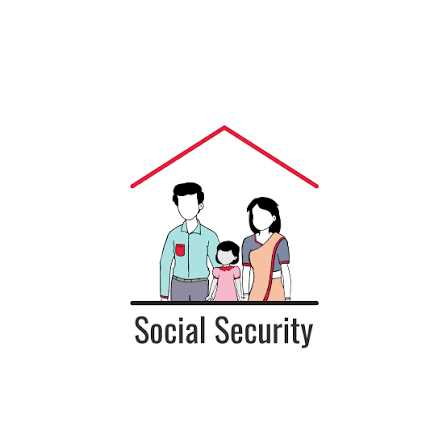
Social security is the foundation of humane development. It is not simply a collection of government welfare schemes or financial assistance programmes. It is an essential guarantee of human dignity, economic stability and social justice. By protecting people against the uncertainties of unemployment, illness, disability, accidents and old age, social security enables individuals to live with confidence and participate more productively in the economy
The true measure of a nation’s progress lies not merely in its economic growth, industrial expansion, technological advancement or rising per capita income. It lies in the security, dignity and opportunities it provides to its most vulnerable citizens. A nation cannot claim to have achieved inclusive development if workers remain anxious about their future, elderly people struggle to meet basic needs, and a single medical emergency pushes a poor family into debt.
Social security is the foundation of humane development. It is not simply a collection of government welfare schemes or financial assistance programmes. It is an essential guarantee of human dignity, economic stability and social justice. By protecting people against the uncertainties of unemployment, illness, disability, accidents and old age, social security enables individuals to live with confidence and participate more productively in the economy.
Under the leadership of Prime Minister Narendra Modi, the Union Government has expanded the reach of several social protection initiatives, seeking to connect vulnerable sections with financial assistance, healthcare, insurance, pensions and nutritional support. These efforts have strengthened the welfare delivery framework and brought millions of people closer to formal systems of assistance. However, the changing structure of employment, rising living costs and the scale of India’s informal workforce demand a more comprehensive and responsive approach.
The next phase of social security must move beyond expanding the number of schemes and beneficiaries. It must ensure that benefits are adequate, accessible, reliable and capable of protecting people when they face genuine hardship.
Beyond the Numbers
According to the International Labour Organization’s 2026 report, cited in the figures informing this discussion, India’s social protection coverage has risen from 19 per cent in 2015 to 64.3 per cent, encompassing more than 940 million people. This expansion represents a significant change in the reach of social protection and reflects the growing importance of welfare delivery in the country’s development priorities.
Yet, coverage figures alone cannot provide a complete picture of social security. Registration does not necessarily mean that a person receives timely assistance. Enrolment in an insurance scheme does not automatically guarantee that treatment will be affordable or that a claim will be settled without difficulty. Similarly, a pension that remains unchanged while prices rise may offer little meaningful protection to an elderly person living alone.
The real test is whether assistance reaches people when they need it most. Can a daily-wage worker survive a prolonged period without employment? Can a farmer recover from crop losses without falling into a debt trap? Can an elderly couple afford food, medicines and shelter? Can a family meet hospital expenses without exhausting its lifetime savings?
These questions must guide the future of social security policy. The objective should not be limited to bringing more people into the system; it must also be to ensure that the protection offered is sufficient to meet their essential needs.
Protecting the Informal Workforce
India’s labour market presents one of the greatest challenges to building a comprehensive social security system. A substantial proportion of the workforce is employed in the informal sector, with estimates placing its share at around 87 per cent. Agricultural labourers, construction workers, domestic workers, street vendors, small traders, daily-wage earners and numerous service providers sustain the country’s economic activity, often without the benefits enjoyed by workers in organised employment.
For many of these workers, income depends on the availability of work each day. An injury, illness, extreme weather event or temporary slowdown can immediately disrupt household finances. Unlike salaried employees with provident fund contributions, paid leave or employer-supported insurance, informal workers often have little financial protection against such shocks.
This vulnerability is especially pronounced among those living on low and irregular incomes. When employment stops, household expenditure on food, education, housing and healthcare does not disappear. Families are often compelled to borrow money, sell assets or withdraw children from educational institutions to manage immediate expenses.
Social security must therefore become a basic component of labour policy rather than a benefit largely associated with formal employment. Workers should be able to access essential protections irrespective of whether they work in a factory, on a construction site, in a small shop, on a farm or through a digital platform.
Expanding coverage will require simplified registration, flexible contribution mechanisms, stronger enforcement of applicable labour protections and greater awareness of available benefits. Above all, the system must recognise the realities of informal employment instead of expecting vulnerable workers to navigate complicated administrative procedures.
Digital Delivery and Financial Inclusion
The expansion of digital public infrastructure has created new opportunities for delivering welfare assistance more efficiently. The Pradhan Mantri Jan Dhan Yojana has helped bring previously unbanked people into the formal financial system, while Direct Benefit Transfer has enabled the transfer of assistance directly into beneficiaries’ bank accounts under numerous government programmes.
Aadhaar-based identification and digital platforms can help improve transparency, reduce certain forms of duplication and make the delivery of benefits more accountable. Together, these mechanisms have strengthened the government's capacity to reach people across geographically diverse regions.
However, technology must remain a means of inclusion, not become an additional barrier. Many elderly people, persons with disabilities, migrant workers and citizens in remote areas face difficulties using digital services. Poor internet connectivity, authentication failures, incorrect bank details and limited digital literacy can prevent eligible beneficiaries from receiving assistance.
A welfare system cannot be considered successful merely because its transactions are digitised. It must also provide accessible alternatives for people who cannot independently use digital platforms.
Panchayats, urban local bodies and Common Service Centres can play a crucial role in bridging this gap. Local officials should help citizens register for schemes, correct documentation errors, track applications and resolve payment-related grievances. A responsive grievance-redressal mechanism is equally important so that beneficiaries are not left without assistance when technical or administrative failures occur.
Digital governance must combine efficiency with a human face.
Healthcare as a Social Guarantee
Healthcare is among the most important dimensions of social security because illness can undermine a family’s financial stability within days. A serious medical condition may force a household to spend savings accumulated over years, borrow heavily or sell land and other assets.
The Ayushman Bharat Pradhan Mantri Jan Arogya Yojana has sought to reduce the financial burden of eligible families by providing hospitalisation cover. The extension of healthcare coverage under the Ayushman Vay Vandana initiative to senior citizens aged 70 years and above has also sought to strengthen protection during old age, subject to the scheme’s applicable provisions.
These measures are important, but insurance coverage alone cannot address the entire healthcare challenge. The availability, affordability and quality of treatment remain equally significant.
Public investment in healthcare must increase, with particular attention to primary health centres, community health facilities, district hospitals and rural medical services. Shortages of specialist doctors, diagnostic facilities and essential medicines often force patients to travel long distances or seek expensive private treatment.
The cost of medicines, diagnostic tests and follow-up care can remain a substantial burden even when hospitalisation is covered. Poor households also lose income when patients or their caregivers cannot work.
A comprehensive healthcare security framework must therefore combine financial protection with accessible public services, affordable medicines, reliable diagnostics and adequate medical personnel. Preventive healthcare, early diagnosis and awareness programmes should receive greater attention because preventing illness is often less costly and more humane than treating advanced disease.
Healthcare must be treated as an essential social investment, not merely an individual responsibility.
Financial Protection for Every Stage of Life
Social security must address the different risks people face throughout their lives. Farmers need support against agricultural distress, workers require protection against accidents and loss of income, and elderly citizens need dependable financial assistance after their earning years end.
The Pradhan Mantri Kisan Samman Nidhi provides direct financial assistance to eligible farming families. The Atal Pension Yojana seeks to encourage pension savings among eligible subscribers, including workers in the informal sector. The Pradhan Mantri Jeevan Jyoti Bima Yojana and Pradhan Mantri Suraksha Bima Yojana provide life and accident insurance, respectively, subject to their eligibility conditions and policy provisions.
These initiatives can help households manage specific financial risks. However, their effectiveness depends on awareness, affordability, enrolment and timely access to benefits. Insurance is useful only when people understand what it covers, can maintain the required contributions where applicable and can obtain legitimate claims without unnecessary difficulty.
Old-age security deserves particular attention. Many informal workers spend their working lives without accumulating sufficient retirement savings. Once they become unable to work, their financial dependence on family members can increase. While family support remains valuable, it cannot substitute for a reliable social protection system.
Old-age and widow pensions must be periodically reviewed against inflation and the cost of essential goods and services. The adequacy of pension payments is as important as the number of people enrolled. A nominal pension that fails to cover basic necessities offers limited protection against deprivation.
Similarly, contributory pension and insurance schemes should be made easier to understand and access. Clear information about contributions, benefits, exclusions and claim procedures can help citizens make informed decisions and build greater confidence in the system.
Workers, Retirement and EPFO
Long-term financial security for salaried workers depends significantly on provident fund contributions, pension arrangements and insurance benefits. The Employees’ Provident Fund Organisation plays an important role in helping eligible employees build retirement savings and obtain associated social security benefits under applicable rules.
The proposed increase in the monthly wage ceiling for mandatory provident fund coverage from ₹15,000 to ₹25,000, reportedly envisaged from September 17, 2026, could widen access to formal social security for employees previously excluded because their wages exceeded the existing threshold. The reported estimate suggests that around 5.1 million additional employees could benefit if the change is implemented as envisaged.
The proposal is significant because many workers earning modest salaries remain vulnerable to financial insecurity in old age. Extending provident fund coverage could help them accumulate savings through regular contributions and improve their long-term financial preparedness.
However, the precise implementation status and applicable rules must be clearly communicated to employers and employees. Any expansion should also account for the capacity of small enterprises to absorb additional employment costs while protecting workers’ take-home incomes and entitlements.
The larger objective should be to progressively extend meaningful social protection without creating avoidable barriers to formal employment. Better compliance, simpler procedures and greater awareness can help ensure that workers receive the benefits intended for them. To Be Continued)
Social security is the foundation of humane development. It is not simply a collection of government welfare schemes or financial assistance programmes. It is an essential guarantee of human dignity, economic stability and social justice. By protecting people against the uncertainties of unemployment, illness, disability, accidents and old age, social security enables individuals to live with confidence and participate more productively in the economy
The true measure of a nation’s progress lies not merely in its economic growth, industrial expansion, technological advancement or rising per capita income. It lies in the security, dignity and opportunities it provides to its most vulnerable citizens. A nation cannot claim to have achieved inclusive development if workers remain anxious about their future, elderly people struggle to meet basic needs, and a single medical emergency pushes a poor family into debt.
Social security is the foundation of humane development. It is not simply a collection of government welfare schemes or financial assistance programmes. It is an essential guarantee of human dignity, economic stability and social justice. By protecting people against the uncertainties of unemployment, illness, disability, accidents and old age, social security enables individuals to live with confidence and participate more productively in the economy.
Under the leadership of Prime Minister Narendra Modi, the Union Government has expanded the reach of several social protection initiatives, seeking to connect vulnerable sections with financial assistance, healthcare, insurance, pensions and nutritional support. These efforts have strengthened the welfare delivery framework and brought millions of people closer to formal systems of assistance. However, the changing structure of employment, rising living costs and the scale of India’s informal workforce demand a more comprehensive and responsive approach.
The next phase of social security must move beyond expanding the number of schemes and beneficiaries. It must ensure that benefits are adequate, accessible, reliable and capable of protecting people when they face genuine hardship.
Beyond the Numbers
According to the International Labour Organization’s 2026 report, cited in the figures informing this discussion, India’s social protection coverage has risen from 19 per cent in 2015 to 64.3 per cent, encompassing more than 940 million people. This expansion represents a significant change in the reach of social protection and reflects the growing importance of welfare delivery in the country’s development priorities.
Yet, coverage figures alone cannot provide a complete picture of social security. Registration does not necessarily mean that a person receives timely assistance. Enrolment in an insurance scheme does not automatically guarantee that treatment will be affordable or that a claim will be settled without difficulty. Similarly, a pension that remains unchanged while prices rise may offer little meaningful protection to an elderly person living alone.
The real test is whether assistance reaches people when they need it most. Can a daily-wage worker survive a prolonged period without employment? Can a farmer recover from crop losses without falling into a debt trap? Can an elderly couple afford food, medicines and shelter? Can a family meet hospital expenses without exhausting its lifetime savings?
These questions must guide the future of social security policy. The objective should not be limited to bringing more people into the system; it must also be to ensure that the protection offered is sufficient to meet their essential needs.
Protecting the Informal Workforce
India’s labour market presents one of the greatest challenges to building a comprehensive social security system. A substantial proportion of the workforce is employed in the informal sector, with estimates placing its share at around 87 per cent. Agricultural labourers, construction workers, domestic workers, street vendors, small traders, daily-wage earners and numerous service providers sustain the country’s economic activity, often without the benefits enjoyed by workers in organised employment.
For many of these workers, income depends on the availability of work each day. An injury, illness, extreme weather event or temporary slowdown can immediately disrupt household finances. Unlike salaried employees with provident fund contributions, paid leave or employer-supported insurance, informal workers often have little financial protection against such shocks.
This vulnerability is especially pronounced among those living on low and irregular incomes. When employment stops, household expenditure on food, education, housing and healthcare does not disappear. Families are often compelled to borrow money, sell assets or withdraw children from educational institutions to manage immediate expenses.
Social security must therefore become a basic component of labour policy rather than a benefit largely associated with formal employment. Workers should be able to access essential protections irrespective of whether they work in a factory, on a construction site, in a small shop, on a farm or through a digital platform.
Expanding coverage will require simplified registration, flexible contribution mechanisms, stronger enforcement of applicable labour protections and greater awareness of available benefits. Above all, the system must recognise the realities of informal employment instead of expecting vulnerable workers to navigate complicated administrative procedures.
Digital Delivery and Financial Inclusion
The expansion of digital public infrastructure has created new opportunities for delivering welfare assistance more efficiently. The Pradhan Mantri Jan Dhan Yojana has helped bring previously unbanked people into the formal financial system, while Direct Benefit Transfer has enabled the transfer of assistance directly into beneficiaries’ bank accounts under numerous government programmes.
Aadhaar-based identification and digital platforms can help improve transparency, reduce certain forms of duplication and make the delivery of benefits more accountable. Together, these mechanisms have strengthened the government's capacity to reach people across geographically diverse regions.
However, technology must remain a means of inclusion, not become an additional barrier. Many elderly people, persons with disabilities, migrant workers and citizens in remote areas face difficulties using digital services. Poor internet connectivity, authentication failures, incorrect bank details and limited digital literacy can prevent eligible beneficiaries from receiving assistance.
A welfare system cannot be considered successful merely because its transactions are digitised. It must also provide accessible alternatives for people who cannot independently use digital platforms.
Panchayats, urban local bodies and Common Service Centres can play a crucial role in bridging this gap. Local officials should help citizens register for schemes, correct documentation errors, track applications and resolve payment-related grievances. A responsive grievance-redressal mechanism is equally important so that beneficiaries are not left without assistance when technical or administrative failures occur.
Digital governance must combine efficiency with a human face.
Healthcare as a Social Guarantee
Healthcare is among the most important dimensions of social security because illness can undermine a family’s financial stability within days. A serious medical condition may force a household to spend savings accumulated over years, borrow heavily or sell land and other assets.
The Ayushman Bharat Pradhan Mantri Jan Arogya Yojana has sought to reduce the financial burden of eligible families by providing hospitalisation cover. The extension of healthcare coverage under the Ayushman Vay Vandana initiative to senior citizens aged 70 years and above has also sought to strengthen protection during old age, subject to the scheme’s applicable provisions.
These measures are important, but insurance coverage alone cannot address the entire healthcare challenge. The availability, affordability and quality of treatment remain equally significant.
Public investment in healthcare must increase, with particular attention to primary health centres, community health facilities, district hospitals and rural medical services. Shortages of specialist doctors, diagnostic facilities and essential medicines often force patients to travel long distances or seek expensive private treatment.
The cost of medicines, diagnostic tests and follow-up care can remain a substantial burden even when hospitalisation is covered. Poor households also lose income when patients or their caregivers cannot work.
A comprehensive healthcare security framework must therefore combine financial protection with accessible public services, affordable medicines, reliable diagnostics and adequate medical personnel. Preventive healthcare, early diagnosis and awareness programmes should receive greater attention because preventing illness is often less costly and more humane than treating advanced disease.
Healthcare must be treated as an essential social investment, not merely an individual responsibility.
Financial Protection for Every Stage of Life
Social security must address the different risks people face throughout their lives. Farmers need support against agricultural distress, workers require protection against accidents and loss of income, and elderly citizens need dependable financial assistance after their earning years end.
The Pradhan Mantri Kisan Samman Nidhi provides direct financial assistance to eligible farming families. The Atal Pension Yojana seeks to encourage pension savings among eligible subscribers, including workers in the informal sector. The Pradhan Mantri Jeevan Jyoti Bima Yojana and Pradhan Mantri Suraksha Bima Yojana provide life and accident insurance, respectively, subject to their eligibility conditions and policy provisions.
These initiatives can help households manage specific financial risks. However, their effectiveness depends on awareness, affordability, enrolment and timely access to benefits. Insurance is useful only when people understand what it covers, can maintain the required contributions where applicable and can obtain legitimate claims without unnecessary difficulty.
Old-age security deserves particular attention. Many informal workers spend their working lives without accumulating sufficient retirement savings. Once they become unable to work, their financial dependence on family members can increase. While family support remains valuable, it cannot substitute for a reliable social protection system.
Old-age and widow pensions must be periodically reviewed against inflation and the cost of essential goods and services. The adequacy of pension payments is as important as the number of people enrolled. A nominal pension that fails to cover basic necessities offers limited protection against deprivation.
Similarly, contributory pension and insurance schemes should be made easier to understand and access. Clear information about contributions, benefits, exclusions and claim procedures can help citizens make informed decisions and build greater confidence in the system.
Workers, Retirement and EPFO
Long-term financial security for salaried workers depends significantly on provident fund contributions, pension arrangements and insurance benefits. The Employees’ Provident Fund Organisation plays an important role in helping eligible employees build retirement savings and obtain associated social security benefits under applicable rules.
The proposed increase in the monthly wage ceiling for mandatory provident fund coverage from ₹15,000 to ₹25,000, reportedly envisaged from September 17, 2026, could widen access to formal social security for employees previously excluded because their wages exceeded the existing threshold. The reported estimate suggests that around 5.1 million additional employees could benefit if the change is implemented as envisaged.
The proposal is significant because many workers earning modest salaries remain vulnerable to financial insecurity in old age. Extending provident fund coverage could help them accumulate savings through regular contributions and improve their long-term financial preparedness.
However, the precise implementation status and applicable rules must be clearly communicated to employers and employees. Any expansion should also account for the capacity of small enterprises to absorb additional employment costs while protecting workers’ take-home incomes and entitlements.
The larger objective should be to progressively extend meaningful social protection without creating avoidable barriers to formal employment. Better compliance, simpler procedures and greater awareness can help ensure that workers receive the benefits intended for them. To Be Continued)

© Copyright 2023 brighterkashmir.com All Rights Reserved. Quantum Technologies