
A smart city cannot be created only by installing technology in selected areas. If a student in Srinagar can easily access online courses, cloud platforms, digital libraries and AI tools while a student in a remote district struggles with basic connectivity, we cannot say that the digital transformation is reaching everyone equally
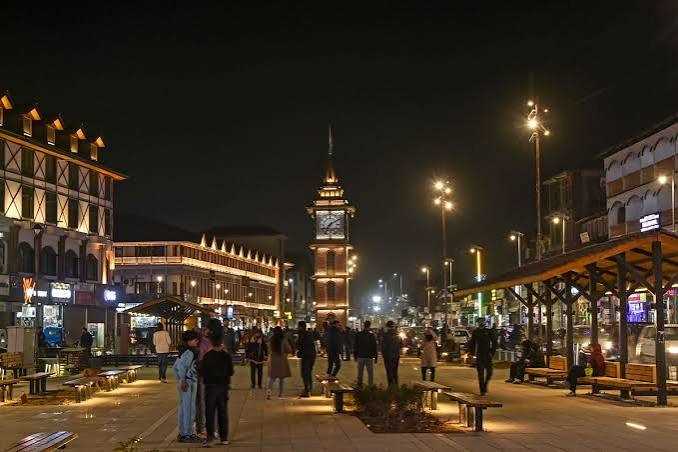
When we hear the words “smart city”, our imagination often goes towards Srinagar. We think about smart roads, surveillance cameras, intelligent traffic systems, digital services, public Wi-Fi and modern infrastructure. But from my perspective as a technology student from Kupwara, the idea of a smart city needs to be much bigger than what we see in the major urban centres.
Kashmir cannot become digitally smart if the benefits of technology remain concentrated in a few places.
I have experienced this difference myself. My college is located in Safapora, Ganderbal, where students from different parts of Kashmir come for engineering education. We are studying Computer Science, Artificial Intelligence, cloud computing and other technologies that depend heavily on reliable internet connectivity. Yet there are times when accessing basic online
resources becomes difficult because the internet is slow or unstable. At certain locations, even mobile network connectivity can become a challenge. It creates an uncomfortable contradiction.
We are preparing ourselves for a digital future while sometimes struggling to access the digital infrastructure required to learn.
This is not simply a student problem. It raises a larger question about how we define digital development.
A smart city cannot be created only by installing technology in selected areas. If a student in Srinagar can easily access online courses, cloud platforms, digital libraries and AI tools while a student in a remote district struggles with basic connectivity, we cannot say that the digital transformation is reaching everyone equally.
The same concern applies to districts such as Kupwara, Bandipora, Baramulla, Ganderbal, Shopian, Kulgam and other parts of Jammu and Kashmir. Development should not stop where the city limits end. A young person sitting in a village today can be tomorrow's software engineer, researcher, entrepreneur or cybersecurity professional. But that potential requires
access to the same digital opportunities available elsewhere.
We often talk about 5G as if the arrival of a new generation of mobile technology automatically means better connectivity. My own experience tells me that the reality can be different. In some locations, 4G can feel more stable and useful than 5G. Network performance depends on coverage, spectrum, signal strength, congestion, backhaul and local infrastructure. Simply displaying a 5G symbol on a phone is not the same as providing a reliable digital experience.
This is where the idea of a smart citizen becomes important.
A digitally empowered citizen should not only know how to use Instagram, WhatsApp or digital payments. They should know how to access government services, identify online scams, protect personal information, use digital banking safely, understand basic cybersecurity and make informed decisions about technology.
At the same time, citizens cannot be blamed for every digital problem. If a government service is available online but the website is difficult to use, the network is unreliable or people have never been taught how to use the service, simply calling the system “digital” does not solve the problem.
The responsibility therefore lies with both infrastructure and people.
Our educational institutions can play a major role. Colleges and schools should not treat digital literacy as something students automatically acquire because they own smartphones. Students need practical exposure to cybersecurity, digital governance, artificial intelligence, responsible technology use and online safety.
Local administrations also have an important role. Digital services should be designed for ordinary citizens, not only for technically educated users. Websites should be simple, mobile-friendly and reliable. Important information should be available in languages people
understand. And where digital access remains difficult, physical alternatives should continue to exist.
For Kashmir, this conversation is particularly important. We have a young population that is increasingly connected to the digital world. Students are learning programming, AI, data science, cybersecurity and other emerging technologies. Many are building projects and looking for
opportunities beyond traditional employment. But if we want this generation to contribute to the digital economy from within Jammu and Kashmir, connectivity and digital infrastructure must keep pace with their ambitions.
A smart Kashmir should therefore not mean only a smarter Srinagar.
It should mean a student in Kupwara getting reliable access to an online course. It should mean an engineering student in Safapora being able to attend a cloud-based class without repeatedly worrying about connectivity. It should mean a small business owner in a remote area being able to use digital payments and online markets confidently. It should mean a villager being able to access a government service without travelling unnecessarily to a district office.
Technology should reduce geographical inequality, not create another layer of it.
We should also stop measuring digital development only through the number of towers, cameras, applications or kilometres of fibre installed. The real question should be: does the citizen
experience better connectivity, easier services, greater safety and more opportunities because of these investments?
A smart city is ultimately not a collection of machines. It is an ecosystem where infrastructure, institutions and citizens work together.
Srinagar may be the centre of much of our urban development, but the digital future of Jammu and Kashmir cannot be built from Srinagar alone. It must reach Kupwara, Ganderbal, Bandipora, Baramulla, Anantnag, Pulwama, Shopian, Kulgam, Budgam and every other district.
As a technology student, I believe our ambition should not simply be to make our cities smarter. It should be to make our entire society digitally capable.
Because the real test of a smart city is not how advanced it looks from the outside. It is how easily an ordinary citizen can participate in its future.
Email:-----------------------majidqurashi958@gmail.com


A smart city cannot be created only by installing technology in selected areas. If a student in Srinagar can easily access online courses, cloud platforms, digital libraries and AI tools while a student in a remote district struggles with basic connectivity, we cannot say that the digital transformation is reaching everyone equally
When we hear the words “smart city”, our imagination often goes towards Srinagar. We think about smart roads, surveillance cameras, intelligent traffic systems, digital services, public Wi-Fi and modern infrastructure. But from my perspective as a technology student from Kupwara, the idea of a smart city needs to be much bigger than what we see in the major urban centres.
Kashmir cannot become digitally smart if the benefits of technology remain concentrated in a few places.
I have experienced this difference myself. My college is located in Safapora, Ganderbal, where students from different parts of Kashmir come for engineering education. We are studying Computer Science, Artificial Intelligence, cloud computing and other technologies that depend heavily on reliable internet connectivity. Yet there are times when accessing basic online
resources becomes difficult because the internet is slow or unstable. At certain locations, even mobile network connectivity can become a challenge. It creates an uncomfortable contradiction.
We are preparing ourselves for a digital future while sometimes struggling to access the digital infrastructure required to learn.
This is not simply a student problem. It raises a larger question about how we define digital development.
A smart city cannot be created only by installing technology in selected areas. If a student in Srinagar can easily access online courses, cloud platforms, digital libraries and AI tools while a student in a remote district struggles with basic connectivity, we cannot say that the digital transformation is reaching everyone equally.
The same concern applies to districts such as Kupwara, Bandipora, Baramulla, Ganderbal, Shopian, Kulgam and other parts of Jammu and Kashmir. Development should not stop where the city limits end. A young person sitting in a village today can be tomorrow's software engineer, researcher, entrepreneur or cybersecurity professional. But that potential requires
access to the same digital opportunities available elsewhere.
We often talk about 5G as if the arrival of a new generation of mobile technology automatically means better connectivity. My own experience tells me that the reality can be different. In some locations, 4G can feel more stable and useful than 5G. Network performance depends on coverage, spectrum, signal strength, congestion, backhaul and local infrastructure. Simply displaying a 5G symbol on a phone is not the same as providing a reliable digital experience.
This is where the idea of a smart citizen becomes important.
A digitally empowered citizen should not only know how to use Instagram, WhatsApp or digital payments. They should know how to access government services, identify online scams, protect personal information, use digital banking safely, understand basic cybersecurity and make informed decisions about technology.
At the same time, citizens cannot be blamed for every digital problem. If a government service is available online but the website is difficult to use, the network is unreliable or people have never been taught how to use the service, simply calling the system “digital” does not solve the problem.
The responsibility therefore lies with both infrastructure and people.
Our educational institutions can play a major role. Colleges and schools should not treat digital literacy as something students automatically acquire because they own smartphones. Students need practical exposure to cybersecurity, digital governance, artificial intelligence, responsible technology use and online safety.
Local administrations also have an important role. Digital services should be designed for ordinary citizens, not only for technically educated users. Websites should be simple, mobile-friendly and reliable. Important information should be available in languages people
understand. And where digital access remains difficult, physical alternatives should continue to exist.
For Kashmir, this conversation is particularly important. We have a young population that is increasingly connected to the digital world. Students are learning programming, AI, data science, cybersecurity and other emerging technologies. Many are building projects and looking for
opportunities beyond traditional employment. But if we want this generation to contribute to the digital economy from within Jammu and Kashmir, connectivity and digital infrastructure must keep pace with their ambitions.
A smart Kashmir should therefore not mean only a smarter Srinagar.
It should mean a student in Kupwara getting reliable access to an online course. It should mean an engineering student in Safapora being able to attend a cloud-based class without repeatedly worrying about connectivity. It should mean a small business owner in a remote area being able to use digital payments and online markets confidently. It should mean a villager being able to access a government service without travelling unnecessarily to a district office.
Technology should reduce geographical inequality, not create another layer of it.
We should also stop measuring digital development only through the number of towers, cameras, applications or kilometres of fibre installed. The real question should be: does the citizen
experience better connectivity, easier services, greater safety and more opportunities because of these investments?
A smart city is ultimately not a collection of machines. It is an ecosystem where infrastructure, institutions and citizens work together.
Srinagar may be the centre of much of our urban development, but the digital future of Jammu and Kashmir cannot be built from Srinagar alone. It must reach Kupwara, Ganderbal, Bandipora, Baramulla, Anantnag, Pulwama, Shopian, Kulgam, Budgam and every other district.
As a technology student, I believe our ambition should not simply be to make our cities smarter. It should be to make our entire society digitally capable.
Because the real test of a smart city is not how advanced it looks from the outside. It is how easily an ordinary citizen can participate in its future.
Email:-----------------------majidqurashi958@gmail.com

© Copyright 2023 brighterkashmir.com All Rights Reserved. Quantum Technologies