
BREAKING NEWS
Sabr is for one person, it is silence. Not the silence of the weak, nor the silence that lets in injustice. It's the silence of the thousand words man that will not come out of the most wounded room of his heart
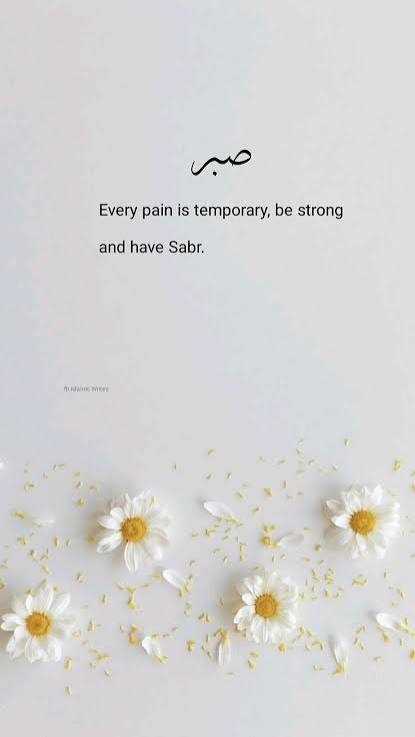
Sabr has a simple translation as Patience but nothing is smaller than that word, patience. Patience is a word for waiting rooms. Sabr is a word that means the times in your life when you didn't think you would make it. It is the silence following betrayal, the ache of a missing love that will never come back, the exhaustion of a pain no one else can see, and the faith that keeps it going towards Allah when the heart does not understand what Allah has written.
Sabr is not just waiting for bad times to pass. It's sometimes knowing it may never come the way you hoped, yet remaining Dignified. Still choosing prayer. Still not giving in to the pain and becoming a person you don't recognise. Numbing is sustained by closing the heart. Sabr is a wounded, trembling heart that is open towards its Lord.
Sabr is for one person, it is silence. Not the silence of the weak, nor the silence that lets in injustice. It's the silence of the thousand words man that will not come out of the most wounded room of his heart. By putting sentences in our mouths that we years later regret, pain plays a major role in our lives. So they pause, they breathe, they hold their tongue, not that it didn't hurt, but that they won't let the hurt be another wound to bear.
But sabr is no abusing, and making it virtue. Sometimes it's talking asking for assistance, setting a boundary, reporting harm, walking away. It is not passivity, rather it is a response to pain which is pleasing to Allah, not from the attitude of anger, fear or despair. Another is, sabr is grief. It is rising to a world which it never knew, and bringing a void into all normal mornings a voice that will not answer, a chair that shall always be empty, a dream that died quietly. There are losses that we never “get over.” We don't learn to walk unless we carry them.
So sabr is not keeping believing that the loss did not have a negative impact on you, or being cheerful to make others happy. It can be at the brink of a sadness that comes like a wave and cry: This hurts and it may hurt again and again I will not give up my life for it. I will not let Allah go because of it.
A sabr can be in the person who weeps. When his young son Ibrahim breathed his last, the Prophet Muhammad (peace be upon him) wept, and said: The eyes shed tears and the heart grieves, and we say only what pleases our Lord. Yes, Ibrahim, we are sad that you are leaving us. Faith never came into the world to subtract sadness, it came to remove sadness from the world.
To someone else, sabr is loneliness, the loneliness of a pain that can't be translated.
“You pour your heart out to someone who will listen, who will hold your hand, say, "I know. Yet when you go back to your bedroom and shut the door, some of the suffering is yours. No one can understand another person's heart: no one can understand the weight that you carried, the words that you swallowed, the nights that you survived”
But this is where a different sabr starts: when you know that people would never be able to understand what you are going through, except Allah. He's aware of the story behind the story. He knows the sentence you never completed, the tears you never cried out, the sorrow you never found words for, and the prayers you never said. Prophet Yaqub (peace be upon him) was grieved until his eyes went white, but he said that he had come with his grief to Allah alone. His heart was not breaking, he did not pretend. He just knew where to transport it.
You don't know what it is to whisper Ya Allah, no one understands, but you do that is sabr. In the dark, after the house has fallen asleep, it could be a prayer mat a dua with no eloquence, only tears Hasbunallahu wa ni‘mal wakeel repeated when nothing else can be said. Sabr is not a lack of collapse in those times. It's picking the right time to fold.
And that place is before Allah.
Surrender is a word that some use to describe sabr. It's not about surrendering one's belief in the possibility of life, of the possibility of effort, of the possibility of healing, but the surrender of the illusion that everything is ours to own. We can plan, strive and pray with all our hearts and yet find that Allah has written something else. When the door opens it is easy to trust Him. Sabr starts at the door that would not open; at the door of answers that wouldn't come until years later; at the door where you would be walking but not knowing where it went.
Surrender: I don't know but Allah knows. I don't know how this will be good, but I know that I am not unseen. I will do what I can, I will leave what I cannot in the hands of the One who has all things.
So, here is sabr combined with tawakkul. We envision tawakkul as a simple ease, like this: When you trust in Allah, it isn't as though you had to bear no suffering. But maybe real tawakkal is not to be when it hurts, when you make your duas with your shivering voice, when you say Alhamdulillah with your broken heart, and when you have faith in His mercy and His decree is unclear. Surrendering in pain remains surrender in all pain, maybe it’s most true form. It is faith that has spotted the worst in life and remained.
Sabr finds relief when she recalls that this world is passing. This doesn't mean your pain is little. But even the longest night is a short night in a long night's journey, even the heaviest chapter is but the end of the first. Pain is beautiful. They do not cease to be, because Allah is greater than pain, and He promises them the immense reward.
Maybe the most misinterpreted is the sabr you see on the outside: the one that looks cool, shows up, and is told, “You are handling all of that so well.” No one sees them alone, however: overthinking, silent crying, and a pain for understanding. Allah sees both, and sees the calm and its rebellion, sees the smile and trembling under it. One does not have to look broken to be suffering from pain, nor strong for their sabr to count. Sabr isn't no pain for me. It is surviving the hard times and holding onto the good.
It's a thing that's trying to make you cruel and you are being kind. To not be disheartened but not cynical. Hurt, but with no dwelling place of resentment. Betrayed but not betrayers. Without losing compassion for people, tired of people. It softens your heart and sensitises it to suffering, not hardens it; it makes you more (Aajiz) more conscious of your need for Allah than ever before, not further.
It's not easy and it's not always graceful. It has tears, anger, therapy, resting, dua, boundaries, silence and starting again. It is not often a single act of fortitude, but rather a thousand acts of refusal to allow hardship to take your faith, your mercy or your core. Sabr is to reach the limits of suffering but maintain hope in Allah. Sabr is to feel pain without worshiping it.
Sabr is the wounding without wounding people. May be the most beautiful sabr of all is to continue coming back to Allah even with the heart that does not know.
Email;------------------------kamranbhatt029@gmail.com
Sabr is for one person, it is silence. Not the silence of the weak, nor the silence that lets in injustice. It's the silence of the thousand words man that will not come out of the most wounded room of his heart
Sabr has a simple translation as Patience but nothing is smaller than that word, patience. Patience is a word for waiting rooms. Sabr is a word that means the times in your life when you didn't think you would make it. It is the silence following betrayal, the ache of a missing love that will never come back, the exhaustion of a pain no one else can see, and the faith that keeps it going towards Allah when the heart does not understand what Allah has written.
Sabr is not just waiting for bad times to pass. It's sometimes knowing it may never come the way you hoped, yet remaining Dignified. Still choosing prayer. Still not giving in to the pain and becoming a person you don't recognise. Numbing is sustained by closing the heart. Sabr is a wounded, trembling heart that is open towards its Lord.
Sabr is for one person, it is silence. Not the silence of the weak, nor the silence that lets in injustice. It's the silence of the thousand words man that will not come out of the most wounded room of his heart. By putting sentences in our mouths that we years later regret, pain plays a major role in our lives. So they pause, they breathe, they hold their tongue, not that it didn't hurt, but that they won't let the hurt be another wound to bear.
But sabr is no abusing, and making it virtue. Sometimes it's talking asking for assistance, setting a boundary, reporting harm, walking away. It is not passivity, rather it is a response to pain which is pleasing to Allah, not from the attitude of anger, fear or despair. Another is, sabr is grief. It is rising to a world which it never knew, and bringing a void into all normal mornings a voice that will not answer, a chair that shall always be empty, a dream that died quietly. There are losses that we never “get over.” We don't learn to walk unless we carry them.
So sabr is not keeping believing that the loss did not have a negative impact on you, or being cheerful to make others happy. It can be at the brink of a sadness that comes like a wave and cry: This hurts and it may hurt again and again I will not give up my life for it. I will not let Allah go because of it.
A sabr can be in the person who weeps. When his young son Ibrahim breathed his last, the Prophet Muhammad (peace be upon him) wept, and said: The eyes shed tears and the heart grieves, and we say only what pleases our Lord. Yes, Ibrahim, we are sad that you are leaving us. Faith never came into the world to subtract sadness, it came to remove sadness from the world.
To someone else, sabr is loneliness, the loneliness of a pain that can't be translated.
“You pour your heart out to someone who will listen, who will hold your hand, say, "I know. Yet when you go back to your bedroom and shut the door, some of the suffering is yours. No one can understand another person's heart: no one can understand the weight that you carried, the words that you swallowed, the nights that you survived”
But this is where a different sabr starts: when you know that people would never be able to understand what you are going through, except Allah. He's aware of the story behind the story. He knows the sentence you never completed, the tears you never cried out, the sorrow you never found words for, and the prayers you never said. Prophet Yaqub (peace be upon him) was grieved until his eyes went white, but he said that he had come with his grief to Allah alone. His heart was not breaking, he did not pretend. He just knew where to transport it.
You don't know what it is to whisper Ya Allah, no one understands, but you do that is sabr. In the dark, after the house has fallen asleep, it could be a prayer mat a dua with no eloquence, only tears Hasbunallahu wa ni‘mal wakeel repeated when nothing else can be said. Sabr is not a lack of collapse in those times. It's picking the right time to fold.
And that place is before Allah.
Surrender is a word that some use to describe sabr. It's not about surrendering one's belief in the possibility of life, of the possibility of effort, of the possibility of healing, but the surrender of the illusion that everything is ours to own. We can plan, strive and pray with all our hearts and yet find that Allah has written something else. When the door opens it is easy to trust Him. Sabr starts at the door that would not open; at the door of answers that wouldn't come until years later; at the door where you would be walking but not knowing where it went.
Surrender: I don't know but Allah knows. I don't know how this will be good, but I know that I am not unseen. I will do what I can, I will leave what I cannot in the hands of the One who has all things.
So, here is sabr combined with tawakkul. We envision tawakkul as a simple ease, like this: When you trust in Allah, it isn't as though you had to bear no suffering. But maybe real tawakkal is not to be when it hurts, when you make your duas with your shivering voice, when you say Alhamdulillah with your broken heart, and when you have faith in His mercy and His decree is unclear. Surrendering in pain remains surrender in all pain, maybe it’s most true form. It is faith that has spotted the worst in life and remained.
Sabr finds relief when she recalls that this world is passing. This doesn't mean your pain is little. But even the longest night is a short night in a long night's journey, even the heaviest chapter is but the end of the first. Pain is beautiful. They do not cease to be, because Allah is greater than pain, and He promises them the immense reward.
Maybe the most misinterpreted is the sabr you see on the outside: the one that looks cool, shows up, and is told, “You are handling all of that so well.” No one sees them alone, however: overthinking, silent crying, and a pain for understanding. Allah sees both, and sees the calm and its rebellion, sees the smile and trembling under it. One does not have to look broken to be suffering from pain, nor strong for their sabr to count. Sabr isn't no pain for me. It is surviving the hard times and holding onto the good.
It's a thing that's trying to make you cruel and you are being kind. To not be disheartened but not cynical. Hurt, but with no dwelling place of resentment. Betrayed but not betrayers. Without losing compassion for people, tired of people. It softens your heart and sensitises it to suffering, not hardens it; it makes you more (Aajiz) more conscious of your need for Allah than ever before, not further.
It's not easy and it's not always graceful. It has tears, anger, therapy, resting, dua, boundaries, silence and starting again. It is not often a single act of fortitude, but rather a thousand acts of refusal to allow hardship to take your faith, your mercy or your core. Sabr is to reach the limits of suffering but maintain hope in Allah. Sabr is to feel pain without worshiping it.
Sabr is the wounding without wounding people. May be the most beautiful sabr of all is to continue coming back to Allah even with the heart that does not know.
Email;------------------------kamranbhatt029@gmail.com

© Copyright 2023 brighterkashmir.com All Rights Reserved. Quantum Technologies