
BREAKING NEWS
Jammu, Aug 22: In Kashmir, where traditions are closely woven into everyday life, few cultural expressions capture the region’s grace, emotion and collective spirit as beautifully as Rouff, the traditional folk dance performed primarily by women.
Simple in form but rich in meaning, Rouff has long been associated with celebrations, festivals and the arrival of spring. It is performed during occasions such as Eid-ul-Fitr, Eid-ul-Adha, weddings and cultural gatherings, while its springtime performances reflect the joy of renewal after Kashmir’s long winter.
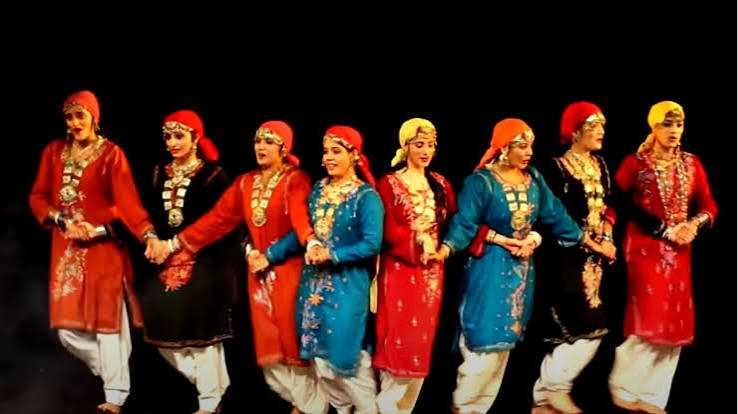
The dance is distinctive for its gentle and synchronised movements. Women traditionally form two facing rows, holding hands or placing their arms around one another, and move rhythmically forward and backward. The coordinated steps create a graceful visual pattern, reflecting both discipline and togetherness.
Unlike many traditional dances, Rouff does not depend on musical instruments. The dancers themselves provide the musical element through traditional songs passed down through generations. These songs explore a wide range of emotions—from love and devotion to happiness, longing and descriptions of Kashmir’s natural beauty.
This combination of movement and song makes Rouff more than a performance. It is an oral and cultural archive in which generations of Kashmiri women have preserved memories, emotions and community traditions.
The visual character of Rouff is equally distinctive. Performers traditionally wear the pheran, Kashmir’s long, flowing dress, often complemented by embroidery and traditional jewellery. The movement of colourful pherans as dancers perform in unison adds to the elegance of the spectacle.
But Rouff’s significance extends beyond aesthetics. Historically, it has provided women with a shared social space—a setting in which they could celebrate together, strengthen community bonds and temporarily leave behind the pressures of everyday life. In that sense, the dance represents not only artistic expression but also companionship and social cohesion.
Its greatest strength, perhaps, lies in its simplicity. Rouff does not require elaborate stages, expensive instruments or complicated choreography. Its essence rests on people, rhythm, voice and collective participation.
Yet this very simplicity faces a modern challenge. Changing lifestyles, evolving entertainment preferences and the gradual weakening of traditional community practices have reduced the space available for many folk traditions. Rouff, too, risks becoming something performed mainly on formal cultural stages rather than naturally within communities.
Preserving it therefore requires more than occasional performances at festivals. Schools, cultural institutions and community organisations can help introduce younger generations to Rouff, its songs and its history. Documenting traditional compositions, training young performers and creating opportunities for intergenerational cultural exchange can ensure that the tradition remains living rather than merely archival.
There is also an opportunity to present Rouff to wider audiences as part of Kashmir’s cultural identity. Tourism and cultural programmes can showcase the dance responsibly, provided its authenticity is respected and it is not reduced merely to a decorative performance for visitors.
Rouff ultimately tells a larger story about Kashmir. Its linked hands, synchronised steps and shared songs embody ideas of community, continuity, emotion and harmony.
In an age of rapid cultural change, preserving Rouff is therefore not simply about saving an old dance. It is about safeguarding a language through which generations of Kashmiris have expressed joy, belonging and collective memory.
The dance may be gentle, but its message is enduring: when tradition moves together, culture stays alive.
Jammu, Aug 22: In Kashmir, where traditions are closely woven into everyday life, few cultural expressions capture the region’s grace, emotion and collective spirit as beautifully as Rouff, the traditional folk dance performed primarily by women.
Simple in form but rich in meaning, Rouff has long been associated with celebrations, festivals and the arrival of spring. It is performed during occasions such as Eid-ul-Fitr, Eid-ul-Adha, weddings and cultural gatherings, while its springtime performances reflect the joy of renewal after Kashmir’s long winter.
The dance is distinctive for its gentle and synchronised movements. Women traditionally form two facing rows, holding hands or placing their arms around one another, and move rhythmically forward and backward. The coordinated steps create a graceful visual pattern, reflecting both discipline and togetherness.
Unlike many traditional dances, Rouff does not depend on musical instruments. The dancers themselves provide the musical element through traditional songs passed down through generations. These songs explore a wide range of emotions—from love and devotion to happiness, longing and descriptions of Kashmir’s natural beauty.
This combination of movement and song makes Rouff more than a performance. It is an oral and cultural archive in which generations of Kashmiri women have preserved memories, emotions and community traditions.
The visual character of Rouff is equally distinctive. Performers traditionally wear the pheran, Kashmir’s long, flowing dress, often complemented by embroidery and traditional jewellery. The movement of colourful pherans as dancers perform in unison adds to the elegance of the spectacle.
But Rouff’s significance extends beyond aesthetics. Historically, it has provided women with a shared social space—a setting in which they could celebrate together, strengthen community bonds and temporarily leave behind the pressures of everyday life. In that sense, the dance represents not only artistic expression but also companionship and social cohesion.
Its greatest strength, perhaps, lies in its simplicity. Rouff does not require elaborate stages, expensive instruments or complicated choreography. Its essence rests on people, rhythm, voice and collective participation.
Yet this very simplicity faces a modern challenge. Changing lifestyles, evolving entertainment preferences and the gradual weakening of traditional community practices have reduced the space available for many folk traditions. Rouff, too, risks becoming something performed mainly on formal cultural stages rather than naturally within communities.
Preserving it therefore requires more than occasional performances at festivals. Schools, cultural institutions and community organisations can help introduce younger generations to Rouff, its songs and its history. Documenting traditional compositions, training young performers and creating opportunities for intergenerational cultural exchange can ensure that the tradition remains living rather than merely archival.
There is also an opportunity to present Rouff to wider audiences as part of Kashmir’s cultural identity. Tourism and cultural programmes can showcase the dance responsibly, provided its authenticity is respected and it is not reduced merely to a decorative performance for visitors.
Rouff ultimately tells a larger story about Kashmir. Its linked hands, synchronised steps and shared songs embody ideas of community, continuity, emotion and harmony.
In an age of rapid cultural change, preserving Rouff is therefore not simply about saving an old dance. It is about safeguarding a language through which generations of Kashmiris have expressed joy, belonging and collective memory.
The dance may be gentle, but its message is enduring: when tradition moves together, culture stays alive.

© Copyright 2023 brighterkashmir.com All Rights Reserved. Quantum Technologies