
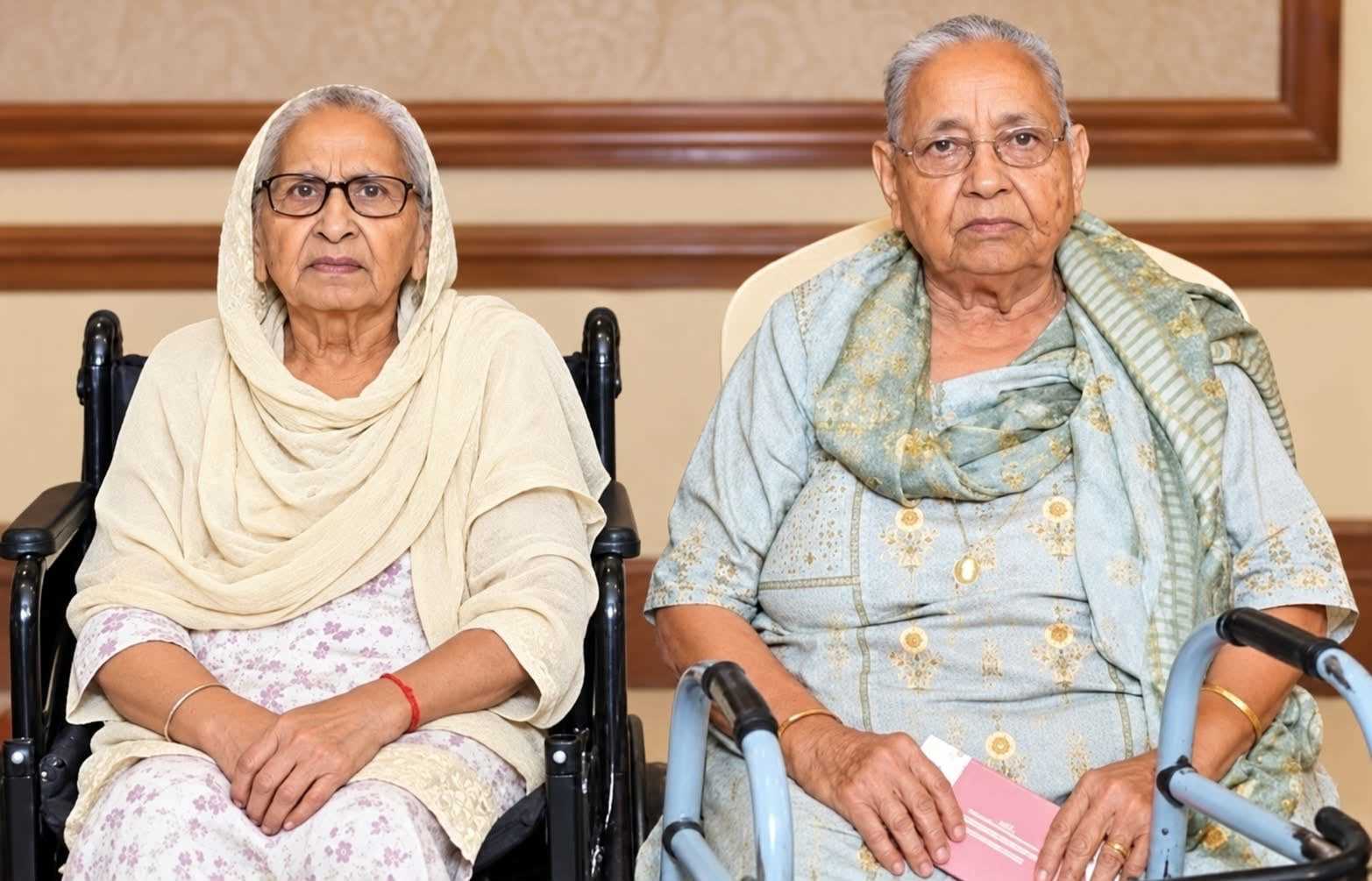
Leaving home is never easy. One does not abandon merely a building of bricks and mortar, but childhood memories, neighbours, fields, trees, courtyards and a part of one's own life.We left believing that conditions might improve and we would eventually return
Some events are recorded in history books, some in official documents, and some remain etched in the human heart. The Partition of India in 1947 was one such tragedy.
It was not merely a line drawn on a map. It tore through the lives of millions, separating families from their homes, native lands and loved ones, and robbing countless children of their innocence.
This memoir recounts the experiences of two sisters, Mrs Satyawanti Dutta and Mrs Swarn Kanta Chhibber, and their family during Partition. Their personal tragedy reflects the suffering of countless families forced to abandon their homes and begin life anew amid fear, violence and uncertainty.
The sisters experienced Partition differently. Satyawanti, the elder, was a young married woman confronting the responsibilities of adulthood and struggling to protect her family. Swarn Kanta was barely six years old, with a world still centred on her home, courtyard and loved ones.
For Satyawanti, those days meant fear intertwined with responsibility. For Swarn Kanta, they meant terrifying sights, crowds, separation and uncertainty that would remain imprinted on her childhood memories.
Their recollections give a human face to a tragedy that cannot be fully understood through dates and statistics alone.
This is the story of a home left behind, loved ones lost, a little girl robbed of childhood’s security, and an elder sister fighting to protect her family and preserve her identity.
Above all, it is a story of memories that survived.
From Kotli Kaini to Mirpur: Leaving Home
My name is Satyawanti Dutta, and my younger sister is Swarn Kanta Chhibber.
I was born in January 1929 and married Sh. Harbans Lal Dutta in 1947. At the time, I was living with my parents and three brothers—Late Sh. Om Parkash Bali, Late Sh. Manohar Lal Bali and Late Sh. Bansi Lal Bali—in Kotli Kaini, then part of undivided India and now administered by Pakistan.
My younger sister, Swarn Kanta, was barely six years old.
What does home mean to a six-year-old child? The walls of the house, a mother's voice, the company of family, games in the courtyard, familiar paths and familiar faces—these make up a child's entire world.
That was Swarn Kanta's world, too.
Life continued as usual, and we had little idea that history was about to transform our lives. Gradually, however, anxiety appeared on people's faces, fear entered their conversations, and uncertainty began to overshadow everyday life.
The year 1947 became the beginning of a storm none of us could have imagined.
As the situation worsened, our family decided to move to Mirpur for safety.
Leaving home is never easy. One does not abandon merely a building of bricks and mortar, but childhood memories, neighbours, fields, trees, courtyards and a part of one's own life.
We left believing that conditions might improve and we would eventually return. Little did we know that the journey to Mirpur marked the beginning of a permanent separation from our old life.
The home whose door we closed that day would remain in our memories, but we would never know whether we would see it again.
That Night in Mirpur: When Safety Vanished
Even Mirpur offered no refuge. The situation continued to deteriorate, and fear hung over everything.
The owner of the house where we were staying left during the night. Feeling increasingly unsafe, we locked ourselves inside, hoping the door would protect us from the violence outside.
But that fragile sense of security soon collapsed.
A violent mob broke down the door and entered the house. They took our father away. We saw one member of the mob wearing our father's clothes. From that day onwards, we never saw him again and never learned what had happened to him.
The memory of that moment remains horrifying.
It was not merely a wooden door that was broken; our last sense of security was shattered with it.
We were taken from the house to an open field. My sister and I, along with the family members who were with us, stood frightened and bewildered.
Where would we go? Whom could we trust? Who would protect us? Would we survive?
Swarn Kanta was too young to comprehend the full meaning of what was happening. Yet children absorb fear through sights, sounds and emotions, even when they cannot understand the reasons behind them.
The house that had once sheltered us was gone as a place of refuge. We now stood helpless in an open field, surrounded by uncertainty.
As the elder sister, I worried desperately about Swarn Kanta and the rest of my family. But I, too, was trapped in the same danger, with no clear path ahead.
There was only darkness and the faint hope that somehow morning would come.
Imprisonment and the Fight for Identity
Our ordeal was far from over.
We were confined in a gurdwara, where men and women were separated. In those terrible days, separation from loved ones could mean never seeing them again.
Every sound brought fear. Every unfamiliar face caused apprehension. Each passing moment seemed to carry the threat of another tragedy.
Swarn Kanta was too young to understand the full gravity of the situation, but the experience permanently altered her childhood. At an age when children should have been thinking about school, play and family, she was surrounded by terror and uncertainty.
For me, the circumstances were even more painful. I was concerned about my family and younger sister while struggling to protect my own identity and honour in a situation that had become unbearable.
In that desperate moment, I took a deeply painful decision. I consumed opium and struck myself on the head with an axe.
Even today, recalling that incident is distressing. The fear and desperation were so overwhelming that I was prepared to risk my life rather than face what I believed might happen to me.
My experience reflects the horrific choices that violence during Partition forced upon some women, leaving them to confront unbearable threats to their lives, dignity and identity.
I was seriously injured, but there was no opportunity to rest. Despite the wound on my head and the severe pain, I had to continue walking.
At one point, I drank dirty water along the way and vomited. Gradually, the effects of the opium wore off, but the wound and pain remained.
My body was injured, my mind was consumed by fear, and the future was uncertain. Yet we continued, because stopping was not an option.
I kept moving with the family members who were with me, except for our father, who had been taken away by the mob.
Little Swarn Kanta remained part of that harrowing journey.
Those days shaped the destinies of the two sisters in different ways: one was an elder sister struggling to protect her family and preserve her identity amid unimaginable suffering; the other was a little girl witnessing the cruelty of the world before she was old enough to understand it.
The Partition of 1947 was a time of relentless fear, separation and uncertainty. Every parting felt like a final goodbye, while the sight of a familiar face brought a fleeting ray of hope amid the darkness.
At one point, we saw another person wearing our father's clothes. The sight filled us with dread. We feared that something terrible had happened to him.
Those clothes were more than a possession; they were a reminder of someone we loved deeply. Their sight raised painful questions. Was our father alive? Where was he? Would we ever see him again?
We never saw him again, nor did we learn what had happened to him.
Partition robbed us not only of our home and security but also of the certainty of knowing the fate of our loved ones. For many families, a piece of clothing, a familiar name or a personal belonging became the last link to someone who had disappeared.
Yet, even amid this despair, a glimmer of hope emerged.
With the help of a school principal, we were reunited with our brother, who was a teacher. After so much fear and uncertainty, seeing a member of our family again was an experience beyond words. His presence reminded us that our family had not been entirely torn apart. Hope, however fragile, was still alive.
But danger continued to surround us.
Some Sikh families were attacked with stones in the same open field. Chaos prevailed, with people screaming, running for safety and desperately searching for protection. It is painful even today to imagine the terror these scenes must have caused a child of barely six.
We were subsequently taken towards Alibeg in Bhimber. Our ordeal continued until we eventually reached the banks of the Jhelum River, where we witnessed the suffering of a Sikh doctor's family.
That sight, like so many others, remained etched in our memories.
Recalling the violence of Partition is deeply painful. Yet memories cannot simply be erased. They serve not only as reminders of suffering but also as warnings for future generations about the devastating consequences of hatred and communal violence.
From Attari to Jammu: Rebuilding Life
After a long and harrowing journey marked by fear, separation and uncertainty, we travelled by train to Attari in Punjab. From there, we moved to Kurukshetra, then to Nagrota and subsequently to Jhullaka Mohalla. Eventually, we settled in Rehari Colony, Jammu, where we began rebuilding our lives.
For us, the railway was more than a means of transportation. It carried us across a newly drawn international border and away from the world we had always known.
Our home was behind us. Our land was behind us. Our village, birthplace and cherished memories belonged to a past we could no longer reach.
Ahead lay an unfamiliar life whose challenges we could scarcely imagine.
After reaching Attari, we stayed in refugee camps, where life was difficult and uncertain. Families that had once lived in their own homes now depended on temporary shelters. Those who had owned land struggled to survive on rations. People who had once planned their futures were suddenly confronted with a more immediate question: how would they get through the day?
Yet the human spirit possesses a remarkable capacity to endure and begin again.
We, too, found the strength to carry on. We had lost our home and land, and the world we knew had been shattered. But we still had one another. We still had our family and the will to survive.
Slowly, we began to rebuild our lives.
Eventually, Jammu became our home. It was here that we learned to live with the pain of displacement while creating a future for our children and generations to come. We built a new house and tried to restore the stability that Partition had taken away.
But although we created a new home, the memory of our old one never faded.
Time passed. Generations changed. Life moved forward, but memories remained.
What We Leave Behind Never Truly Disappears
Time continued its journey. We found a new home, rebuilt our lives and watched our children, grandchildren and subsequent generations grow and establish themselves.
Yet the old house remained alive in my mind.
I could still recall the home we had left behind, the paths we had walked, the birthplace we had abandoned and the world that had collapsed around us.
The displaced people of Partition lost far more than their land and property. They lost the continuity of their lives. Their stories were divided into two distinct chapters: life before Partition and life after Partition.
Our family experienced the same rupture. One part of our lives belonged to the world we had known; the other began with the struggle to rebuild what had been lost.
Through it all, one thing remained with us: memory.
Memories can be painfully powerful. A face may suddenly appear before our eyes, an old place may return to our thoughts, or a forgotten sound may revive an incident we thought time had buried.
But memories are also a form of heritage. They preserve the experiences of those who lived through history and give future generations an opportunity to understand its human consequences.
If we fail to pass these memories on, a vital part of our collective history may disappear forever.
Conclusion
The Partition of 1947 was not merely a division of territory. It divided human lives, destroyed homes, separated families and brought childhoods to an abrupt end. It forced ordinary people to abandon everything they had known, through no fault of their own.
Satyawanti Dutta and Swarn Kanta Chhibber experienced and remembered those traumatic days differently.
For the elder sister, Satyawanti, Partition was a period of fear, responsibility, struggle and the desperate effort to protect her family and preserve her identity. For the younger sister, Swarn Kanta, it was a terrifying childhood experience shaped by scenes of violence, separation and uncertainty.
She may not have understood the meaning of every incident at the time, but its sights, sounds and emotions remained with her long afterwards.
We lost our home. We lost our birthplace. We were separated from loved ones and deprived of the security and familiarity of the life we had known.
But we did not lose our will to live.
That hope carried us from Mirpur to Attari, through refugee camps and onwards to Jammu. It gave us the strength to rebuild our home, raise our children and move forward despite the wounds of the past.
Even today, when we recall those years, our hearts are filled with pain. Yet our experiences have also taught us a profound lesson: history must be understood through humanity, not hatred.
Future generations must learn what Partition did to ordinary people. Behind every statistic was a family, behind every abandoned home was a lifetime of memories, and behind every displaced person was a story of loss, courage and survival.
We do not want our memories to nurture hatred in the minds of those who come after us. We want them to inspire compassion and a deeper understanding of the human cost of conflict.
We want future generations to recognise that the destruction of a home is not merely a personal tragedy; it is a wound inflicted on humanity itself.
They must learn that being human matters more than divisions of religion, caste, language or nationality. They must understand that when hatred takes hold, ordinary people are often the first to pay the price.
Our home was taken away. Our native land was left behind. An entire chapter of our lives was lost.
Yet we began again. We lived, raised the next generation and refused to surrender our hope.
Today, the walls of our old house are no longer ours. The land we once called home lies beyond our reach, and the familiar paths of our childhood are no longer part of our everyday lives.
But the memories remain within us.
Perhaps that is the greatest power of memory. Houses may be destroyed, land may change hands and borders may be redrawn, but no boundary can erase the memories carried in the human heart.
Our story is not ours alone. It is a small part of the larger story of millions who endured the upheaval of 1947. It bears witness to a generation that lost so much yet found the courage to begin again.
This is our memory. This is our pain. This is our struggle.
And this is the legacy we wish to leave for future generations:
Not hatred, but humanity.
Not indifference, but remembrance.
Not despair, but the courage to rise again.
And above all, never lose the hope to live.
This is our story.
This is our memory.
And this is our legacy.
Email:--------------------rkchhibber4@gmail.com

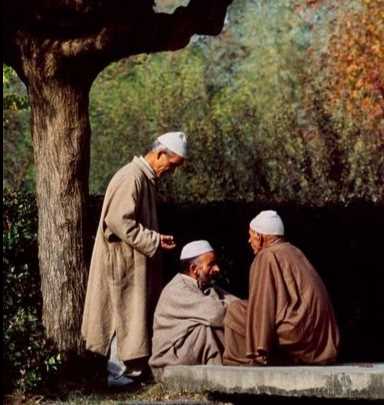

Leaving home is never easy. One does not abandon merely a building of bricks and mortar, but childhood memories, neighbours, fields, trees, courtyards and a part of one's own life.We left believing that conditions might improve and we would eventually return
Some events are recorded in history books, some in official documents, and some remain etched in the human heart. The Partition of India in 1947 was one such tragedy.
It was not merely a line drawn on a map. It tore through the lives of millions, separating families from their homes, native lands and loved ones, and robbing countless children of their innocence.
This memoir recounts the experiences of two sisters, Mrs Satyawanti Dutta and Mrs Swarn Kanta Chhibber, and their family during Partition. Their personal tragedy reflects the suffering of countless families forced to abandon their homes and begin life anew amid fear, violence and uncertainty.
The sisters experienced Partition differently. Satyawanti, the elder, was a young married woman confronting the responsibilities of adulthood and struggling to protect her family. Swarn Kanta was barely six years old, with a world still centred on her home, courtyard and loved ones.
For Satyawanti, those days meant fear intertwined with responsibility. For Swarn Kanta, they meant terrifying sights, crowds, separation and uncertainty that would remain imprinted on her childhood memories.
Their recollections give a human face to a tragedy that cannot be fully understood through dates and statistics alone.
This is the story of a home left behind, loved ones lost, a little girl robbed of childhood’s security, and an elder sister fighting to protect her family and preserve her identity.
Above all, it is a story of memories that survived.
From Kotli Kaini to Mirpur: Leaving Home
My name is Satyawanti Dutta, and my younger sister is Swarn Kanta Chhibber.
I was born in January 1929 and married Sh. Harbans Lal Dutta in 1947. At the time, I was living with my parents and three brothers—Late Sh. Om Parkash Bali, Late Sh. Manohar Lal Bali and Late Sh. Bansi Lal Bali—in Kotli Kaini, then part of undivided India and now administered by Pakistan.
My younger sister, Swarn Kanta, was barely six years old.
What does home mean to a six-year-old child? The walls of the house, a mother's voice, the company of family, games in the courtyard, familiar paths and familiar faces—these make up a child's entire world.
That was Swarn Kanta's world, too.
Life continued as usual, and we had little idea that history was about to transform our lives. Gradually, however, anxiety appeared on people's faces, fear entered their conversations, and uncertainty began to overshadow everyday life.
The year 1947 became the beginning of a storm none of us could have imagined.
As the situation worsened, our family decided to move to Mirpur for safety.
Leaving home is never easy. One does not abandon merely a building of bricks and mortar, but childhood memories, neighbours, fields, trees, courtyards and a part of one's own life.
We left believing that conditions might improve and we would eventually return. Little did we know that the journey to Mirpur marked the beginning of a permanent separation from our old life.
The home whose door we closed that day would remain in our memories, but we would never know whether we would see it again.
That Night in Mirpur: When Safety Vanished
Even Mirpur offered no refuge. The situation continued to deteriorate, and fear hung over everything.
The owner of the house where we were staying left during the night. Feeling increasingly unsafe, we locked ourselves inside, hoping the door would protect us from the violence outside.
But that fragile sense of security soon collapsed.
A violent mob broke down the door and entered the house. They took our father away. We saw one member of the mob wearing our father's clothes. From that day onwards, we never saw him again and never learned what had happened to him.
The memory of that moment remains horrifying.
It was not merely a wooden door that was broken; our last sense of security was shattered with it.
We were taken from the house to an open field. My sister and I, along with the family members who were with us, stood frightened and bewildered.
Where would we go? Whom could we trust? Who would protect us? Would we survive?
Swarn Kanta was too young to comprehend the full meaning of what was happening. Yet children absorb fear through sights, sounds and emotions, even when they cannot understand the reasons behind them.
The house that had once sheltered us was gone as a place of refuge. We now stood helpless in an open field, surrounded by uncertainty.
As the elder sister, I worried desperately about Swarn Kanta and the rest of my family. But I, too, was trapped in the same danger, with no clear path ahead.
There was only darkness and the faint hope that somehow morning would come.
Imprisonment and the Fight for Identity
Our ordeal was far from over.
We were confined in a gurdwara, where men and women were separated. In those terrible days, separation from loved ones could mean never seeing them again.
Every sound brought fear. Every unfamiliar face caused apprehension. Each passing moment seemed to carry the threat of another tragedy.
Swarn Kanta was too young to understand the full gravity of the situation, but the experience permanently altered her childhood. At an age when children should have been thinking about school, play and family, she was surrounded by terror and uncertainty.
For me, the circumstances were even more painful. I was concerned about my family and younger sister while struggling to protect my own identity and honour in a situation that had become unbearable.
In that desperate moment, I took a deeply painful decision. I consumed opium and struck myself on the head with an axe.
Even today, recalling that incident is distressing. The fear and desperation were so overwhelming that I was prepared to risk my life rather than face what I believed might happen to me.
My experience reflects the horrific choices that violence during Partition forced upon some women, leaving them to confront unbearable threats to their lives, dignity and identity.
I was seriously injured, but there was no opportunity to rest. Despite the wound on my head and the severe pain, I had to continue walking.
At one point, I drank dirty water along the way and vomited. Gradually, the effects of the opium wore off, but the wound and pain remained.
My body was injured, my mind was consumed by fear, and the future was uncertain. Yet we continued, because stopping was not an option.
I kept moving with the family members who were with me, except for our father, who had been taken away by the mob.
Little Swarn Kanta remained part of that harrowing journey.
Those days shaped the destinies of the two sisters in different ways: one was an elder sister struggling to protect her family and preserve her identity amid unimaginable suffering; the other was a little girl witnessing the cruelty of the world before she was old enough to understand it.
The Partition of 1947 was a time of relentless fear, separation and uncertainty. Every parting felt like a final goodbye, while the sight of a familiar face brought a fleeting ray of hope amid the darkness.
At one point, we saw another person wearing our father's clothes. The sight filled us with dread. We feared that something terrible had happened to him.
Those clothes were more than a possession; they were a reminder of someone we loved deeply. Their sight raised painful questions. Was our father alive? Where was he? Would we ever see him again?
We never saw him again, nor did we learn what had happened to him.
Partition robbed us not only of our home and security but also of the certainty of knowing the fate of our loved ones. For many families, a piece of clothing, a familiar name or a personal belonging became the last link to someone who had disappeared.
Yet, even amid this despair, a glimmer of hope emerged.
With the help of a school principal, we were reunited with our brother, who was a teacher. After so much fear and uncertainty, seeing a member of our family again was an experience beyond words. His presence reminded us that our family had not been entirely torn apart. Hope, however fragile, was still alive.
But danger continued to surround us.
Some Sikh families were attacked with stones in the same open field. Chaos prevailed, with people screaming, running for safety and desperately searching for protection. It is painful even today to imagine the terror these scenes must have caused a child of barely six.
We were subsequently taken towards Alibeg in Bhimber. Our ordeal continued until we eventually reached the banks of the Jhelum River, where we witnessed the suffering of a Sikh doctor's family.
That sight, like so many others, remained etched in our memories.
Recalling the violence of Partition is deeply painful. Yet memories cannot simply be erased. They serve not only as reminders of suffering but also as warnings for future generations about the devastating consequences of hatred and communal violence.
From Attari to Jammu: Rebuilding Life
After a long and harrowing journey marked by fear, separation and uncertainty, we travelled by train to Attari in Punjab. From there, we moved to Kurukshetra, then to Nagrota and subsequently to Jhullaka Mohalla. Eventually, we settled in Rehari Colony, Jammu, where we began rebuilding our lives.
For us, the railway was more than a means of transportation. It carried us across a newly drawn international border and away from the world we had always known.
Our home was behind us. Our land was behind us. Our village, birthplace and cherished memories belonged to a past we could no longer reach.
Ahead lay an unfamiliar life whose challenges we could scarcely imagine.
After reaching Attari, we stayed in refugee camps, where life was difficult and uncertain. Families that had once lived in their own homes now depended on temporary shelters. Those who had owned land struggled to survive on rations. People who had once planned their futures were suddenly confronted with a more immediate question: how would they get through the day?
Yet the human spirit possesses a remarkable capacity to endure and begin again.
We, too, found the strength to carry on. We had lost our home and land, and the world we knew had been shattered. But we still had one another. We still had our family and the will to survive.
Slowly, we began to rebuild our lives.
Eventually, Jammu became our home. It was here that we learned to live with the pain of displacement while creating a future for our children and generations to come. We built a new house and tried to restore the stability that Partition had taken away.
But although we created a new home, the memory of our old one never faded.
Time passed. Generations changed. Life moved forward, but memories remained.
What We Leave Behind Never Truly Disappears
Time continued its journey. We found a new home, rebuilt our lives and watched our children, grandchildren and subsequent generations grow and establish themselves.
Yet the old house remained alive in my mind.
I could still recall the home we had left behind, the paths we had walked, the birthplace we had abandoned and the world that had collapsed around us.
The displaced people of Partition lost far more than their land and property. They lost the continuity of their lives. Their stories were divided into two distinct chapters: life before Partition and life after Partition.
Our family experienced the same rupture. One part of our lives belonged to the world we had known; the other began with the struggle to rebuild what had been lost.
Through it all, one thing remained with us: memory.
Memories can be painfully powerful. A face may suddenly appear before our eyes, an old place may return to our thoughts, or a forgotten sound may revive an incident we thought time had buried.
But memories are also a form of heritage. They preserve the experiences of those who lived through history and give future generations an opportunity to understand its human consequences.
If we fail to pass these memories on, a vital part of our collective history may disappear forever.
Conclusion
The Partition of 1947 was not merely a division of territory. It divided human lives, destroyed homes, separated families and brought childhoods to an abrupt end. It forced ordinary people to abandon everything they had known, through no fault of their own.
Satyawanti Dutta and Swarn Kanta Chhibber experienced and remembered those traumatic days differently.
For the elder sister, Satyawanti, Partition was a period of fear, responsibility, struggle and the desperate effort to protect her family and preserve her identity. For the younger sister, Swarn Kanta, it was a terrifying childhood experience shaped by scenes of violence, separation and uncertainty.
She may not have understood the meaning of every incident at the time, but its sights, sounds and emotions remained with her long afterwards.
We lost our home. We lost our birthplace. We were separated from loved ones and deprived of the security and familiarity of the life we had known.
But we did not lose our will to live.
That hope carried us from Mirpur to Attari, through refugee camps and onwards to Jammu. It gave us the strength to rebuild our home, raise our children and move forward despite the wounds of the past.
Even today, when we recall those years, our hearts are filled with pain. Yet our experiences have also taught us a profound lesson: history must be understood through humanity, not hatred.
Future generations must learn what Partition did to ordinary people. Behind every statistic was a family, behind every abandoned home was a lifetime of memories, and behind every displaced person was a story of loss, courage and survival.
We do not want our memories to nurture hatred in the minds of those who come after us. We want them to inspire compassion and a deeper understanding of the human cost of conflict.
We want future generations to recognise that the destruction of a home is not merely a personal tragedy; it is a wound inflicted on humanity itself.
They must learn that being human matters more than divisions of religion, caste, language or nationality. They must understand that when hatred takes hold, ordinary people are often the first to pay the price.
Our home was taken away. Our native land was left behind. An entire chapter of our lives was lost.
Yet we began again. We lived, raised the next generation and refused to surrender our hope.
Today, the walls of our old house are no longer ours. The land we once called home lies beyond our reach, and the familiar paths of our childhood are no longer part of our everyday lives.
But the memories remain within us.
Perhaps that is the greatest power of memory. Houses may be destroyed, land may change hands and borders may be redrawn, but no boundary can erase the memories carried in the human heart.
Our story is not ours alone. It is a small part of the larger story of millions who endured the upheaval of 1947. It bears witness to a generation that lost so much yet found the courage to begin again.
This is our memory. This is our pain. This is our struggle.
And this is the legacy we wish to leave for future generations:
Not hatred, but humanity.
Not indifference, but remembrance.
Not despair, but the courage to rise again.
And above all, never lose the hope to live.
This is our story.
This is our memory.
And this is our legacy.
Email:--------------------rkchhibber4@gmail.com

© Copyright 2023 brighterkashmir.com All Rights Reserved. Quantum Technologies