06-02-2026     3 رجب 1440

NEP 2020 Transforms Humanities Education

Such a structure ensures that not even a drop of human learning goes to waste, ensuring the dignity of the learner while enabling them to continue their learning process right from where they stopped irrespective of when life permits.

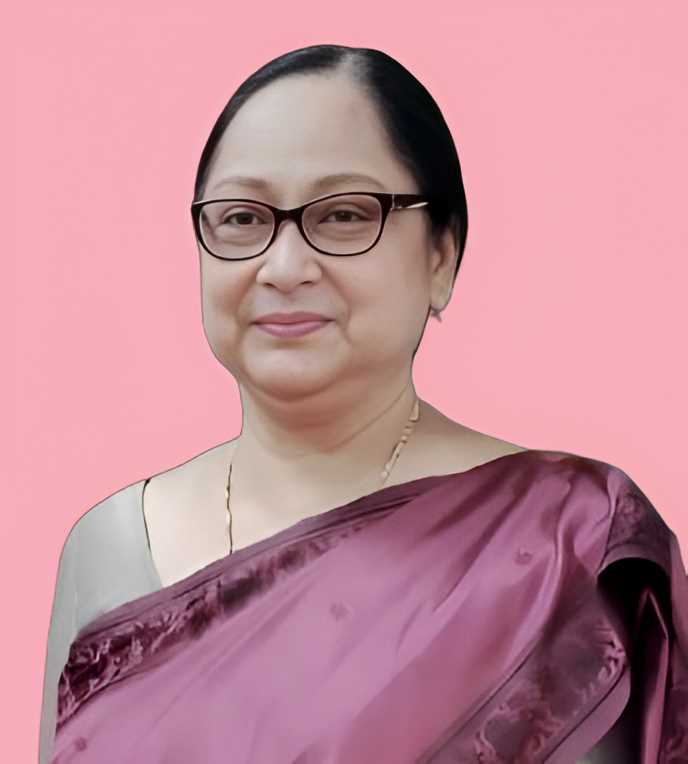
June 02, 2026 | Prof. Kanupriya

Walking through the corridors of any educational institute in Bihar will make you experience the reverberations of the past. Indeed, for decades and decades, these prestigious walls held within them an extremely traditional form of scholarship. In the departments of English and humanities, academic success was determined through a very inflexible hyper-siloing process. This was evident in the old system called Three-Year Degree Course (TDC) Honours wherein one’s intelligence was judged based on his or her ability to interpret euro-centric text frames that ran from Anglo-Saxon history to Elizabethan drama, Victorian psychology, and Modernism. While it must be conceded that the previous system had its advantages in preserving a highly beautiful tradition of library culture, it certainly led to an inherent institutional dilemma. We were churning out intelligent beings that knew everything about Shakespearean sonnets but society always found itself asking these talented graduates what practical profession they were going to make out of such education. Humanities had gradually become ornamental a side-channel where one spent his or her years marking time before appearing for government examinations that were relevant to a changing world order.

Today, analyzing the active application of the NEP 2020, this myth has been debunked entirely. What makes up the true legacy of this policy is certainly not the technical bureaucratic aspects associated with it, but the bold, empowering revision of the practical undergraduate curriculum. By implementing the structural concept of Choice Based Credit System (CBCS) within the Four Year Undergraduate Programme (FYUP), state universities in Bihar have achieved one extraordinary feat: they have set free the liberal arts. Instead of compromising on the traditional study of liberal arts, the policy has made use of it as a weapon. By integrating professional practical skills within the framework of academics, the policy makes reading of literature a powerful instrument of international leadership.
This rebirth of intellect finds reflection in the transition from the old three-year curriculum system to the new four-year curriculum framework. In the old system, when a student opted for English Honours, he found himself completely enclosed in an absolute academic silo where there was not even a structural link between literary analysis and the art of survival through multi-disciplinary creativity. The new curriculum has succeeded in breaking this impasse. While the Major and Minor Core components ensure that academic and classical discipline remain intact, the entrance point shifts from being a mimic of western criticism to a critical analysis approach which is comparatively superior. The true breakthrough, however, is found in the form of the Skill Enhancement Courses that have become an intrinsic part of the core credit requirement itself. With the inclusion of targeted courses in creative writing, digital media, and public speaking skills in the English language and leadership, humanities has been fully practicalized. When a student analyzes a metaphor in a poem, he or she learns at the same time the precise craft of public communication, structural rhetoric, and documentation within a corporate setup. Moreover, multi-disciplinary modules inherently break down the structural separation between arts and
Moreover, from the administrative point of view of the old-fashioned curriculam, the other major triumph of such curriculum lies in its humanitarian nature. Education is often seen as an instrument against the circumstances in socio-economically unstable environment. According to the previous approach, if the student, especially a girl coming from a remote area and burdened with new family obligations, was forced to leave university after their sophomore or junior year, they were deemed dropouts whose educational accomplishments disappeared. Now, using the four-year system that provides a number of exit points, the system acknowledges student difficulties and shows administrative consideration. Having passed the freshman year, the student earns an Undergraduate Certificate which confirms their proficiency in reading skills; having spent two years in university, the student receives an Undergraduate Diploma that recognizes their intermediate level of analysis and communication abilities; the third year brings a complete Bachelor's Degree, while the fourth prepares a unique scholar to do international scientific and theoretical research.
Such a structure ensures that not even a drop of human learning goes to waste, ensuring the dignity of the learner while enabling them to continue their learning process right from where they stopped irrespective of when life permits.
In conclusion, what we see happening today within the modern classroom structure is none other than the birth of the decolonized intellectual. For far too long, discussions in the global sphere have been dominated by academics whose very identity was separated from ours. The introduction of the Indian Knowledge Systems and the inclusion of literature translations in addition to world classics has done away with this gap. Our children are no longer just passive consumers of a Eurocentric canon. Instead, they are analyzing regional social dynamics, conducting translations of regional oral narratives, and looking into world philosophy through an Indian perspective, thus erasing the age-old and unspoken inferiority complex in the region. Five years on since NEP 2020, the humanities have moved from being a purely ornamental degree to a powerhouse degree that is ready to take charge of the global discussions to come. They have the vocabulary to criticize, the multidisciplinary skills to innovate, and the unshakable confidence to speak.

NEP 2020 Transforms Humanities Education

Such a structure ensures that not even a drop of human learning goes to waste, ensuring the dignity of the learner while enabling them to continue their learning process right from where they stopped irrespective of when life permits.

June 02, 2026 | Prof. Kanupriya

Walking through the corridors of any educational institute in Bihar will make you experience the reverberations of the past. Indeed, for decades and decades, these prestigious walls held within them an extremely traditional form of scholarship. In the departments of English and humanities, academic success was determined through a very inflexible hyper-siloing process. This was evident in the old system called Three-Year Degree Course (TDC) Honours wherein one’s intelligence was judged based on his or her ability to interpret euro-centric text frames that ran from Anglo-Saxon history to Elizabethan drama, Victorian psychology, and Modernism. While it must be conceded that the previous system had its advantages in preserving a highly beautiful tradition of library culture, it certainly led to an inherent institutional dilemma. We were churning out intelligent beings that knew everything about Shakespearean sonnets but society always found itself asking these talented graduates what practical profession they were going to make out of such education. Humanities had gradually become ornamental a side-channel where one spent his or her years marking time before appearing for government examinations that were relevant to a changing world order.

Today, analyzing the active application of the NEP 2020, this myth has been debunked entirely. What makes up the true legacy of this policy is certainly not the technical bureaucratic aspects associated with it, but the bold, empowering revision of the practical undergraduate curriculum. By implementing the structural concept of Choice Based Credit System (CBCS) within the Four Year Undergraduate Programme (FYUP), state universities in Bihar have achieved one extraordinary feat: they have set free the liberal arts. Instead of compromising on the traditional study of liberal arts, the policy has made use of it as a weapon. By integrating professional practical skills within the framework of academics, the policy makes reading of literature a powerful instrument of international leadership.
This rebirth of intellect finds reflection in the transition from the old three-year curriculum system to the new four-year curriculum framework. In the old system, when a student opted for English Honours, he found himself completely enclosed in an absolute academic silo where there was not even a structural link between literary analysis and the art of survival through multi-disciplinary creativity. The new curriculum has succeeded in breaking this impasse. While the Major and Minor Core components ensure that academic and classical discipline remain intact, the entrance point shifts from being a mimic of western criticism to a critical analysis approach which is comparatively superior. The true breakthrough, however, is found in the form of the Skill Enhancement Courses that have become an intrinsic part of the core credit requirement itself. With the inclusion of targeted courses in creative writing, digital media, and public speaking skills in the English language and leadership, humanities has been fully practicalized. When a student analyzes a metaphor in a poem, he or she learns at the same time the precise craft of public communication, structural rhetoric, and documentation within a corporate setup. Moreover, multi-disciplinary modules inherently break down the structural separation between arts and
Moreover, from the administrative point of view of the old-fashioned curriculam, the other major triumph of such curriculum lies in its humanitarian nature. Education is often seen as an instrument against the circumstances in socio-economically unstable environment. According to the previous approach, if the student, especially a girl coming from a remote area and burdened with new family obligations, was forced to leave university after their sophomore or junior year, they were deemed dropouts whose educational accomplishments disappeared. Now, using the four-year system that provides a number of exit points, the system acknowledges student difficulties and shows administrative consideration. Having passed the freshman year, the student earns an Undergraduate Certificate which confirms their proficiency in reading skills; having spent two years in university, the student receives an Undergraduate Diploma that recognizes their intermediate level of analysis and communication abilities; the third year brings a complete Bachelor's Degree, while the fourth prepares a unique scholar to do international scientific and theoretical research.
Such a structure ensures that not even a drop of human learning goes to waste, ensuring the dignity of the learner while enabling them to continue their learning process right from where they stopped irrespective of when life permits.
In conclusion, what we see happening today within the modern classroom structure is none other than the birth of the decolonized intellectual. For far too long, discussions in the global sphere have been dominated by academics whose very identity was separated from ours. The introduction of the Indian Knowledge Systems and the inclusion of literature translations in addition to world classics has done away with this gap. Our children are no longer just passive consumers of a Eurocentric canon. Instead, they are analyzing regional social dynamics, conducting translations of regional oral narratives, and looking into world philosophy through an Indian perspective, thus erasing the age-old and unspoken inferiority complex in the region. Five years on since NEP 2020, the humanities have moved from being a purely ornamental degree to a powerhouse degree that is ready to take charge of the global discussions to come. They have the vocabulary to criticize, the multidisciplinary skills to innovate, and the unshakable confidence to speak.


  • Address: R.C 2 Quarters Press Enclave Near Pratap Park, Srinagar 190001.
  • Phone: 0194-2451076 , +91-941-940-0056 , +91-962-292-4716
  • Email: brighterkmr@gmail.com
Owner, Printer, Publisher, Editor: Farooq Ahmad Wani
Legal Advisor: M.J. Hubi
Printed at: Sangermal offset Printing Press Rangreth ( Budgam)
Published from: Gulshanabad Chraresharief Budgam
RNI No.: JKENG/2010/33802
Office No’s: 0194-2451076
Mobile No’s 9419400056, 9622924716 ,7006086442
Postal Regd No: SK/135/2010-2019
POST BOX NO: 1001
Administrative Office: R.C 2 Quarters Press Enclave Near Pratap Park ( Srinagar -190001)

© Copyright 2023 brighterkashmir.com All Rights Reserved. Quantum Technologies

Owner, Printer, Publisher, Editor: Farooq Ahmad Wani
Legal Advisor: M.J. Hubi
Printed at: Abid Enterprizes, Zainkote Srinagar
Published from: Gulshanabad Chraresharief Budgam
RNI No.: JKENG/2010/33802
Office No’s: 0194-2451076, 9622924716 , 9419400056
Postal Regd No: SK/135/2010-2019
Administrative Office: Abi Guzer Srinagar

© Copyright 2018 brighterkashmir.com All Rights Reserved.