
BREAKING NEWS
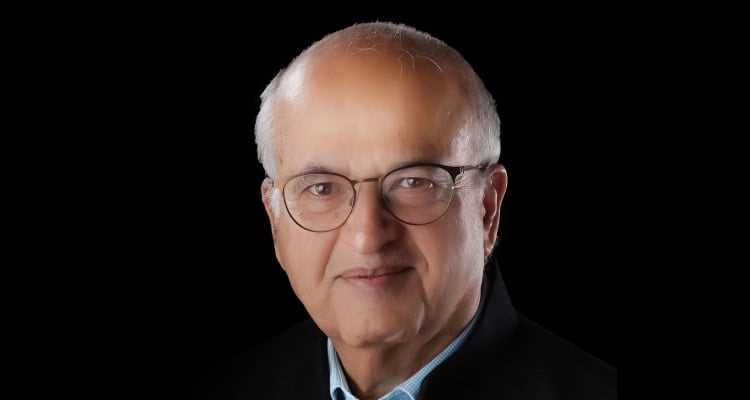
Srinagar, March 1: Post the vulnerabilities that surfaced after the onset of Covid-19 across India, public health education requires an urgent overhaul if the country and its people desire a “Viksit Bharat” by 2047, said Rahul Mehra, the Founder Chairman of the US-based Tarang Health Alliance (THA).
In an exclusive interview to Brighter Kashmir Editor-in-Chief Farooq Wani, Mehra, a scientist with over 70 patents to his name, said promoting awareness about health education has to begin at the school level. He said children are more malleable and can be moulded towards achieving improved physical and mental wellbeing, and by extension, this can ensure the long-term wellbeing of society.
“My mission in life has been to promote health education in India. We are in dire need of improving health standards in India, educating the masses about health and related safety protocols,” said Mehra.
As one of India’s Representatives at UNESCO, Mehra has taken the lead in promoting health education and education, especially in developing countries.
Having worked with Metronic until 2009 as a research scientist with a specialisation in medical research, Mehra told BK that after retiring, he decided to start his NGO in 2016.
“During my time in Metronic, I visited many hospitals in India and met several doctors. I came to the conclusion that most Metronic products were expensive and beyond the reach of the common-man. It also occurred to me that if people looked after their health well, admissions in hospitals would reduce and so would the taking of medicines,” he said.
According to Mehra, teaching adults about the benefits of health education is very difficult because most have mindsets not ready for change. “In the case of children, however, it is easier to make them understand the importance of leading healthy lives”.
“India cannot realise the dream of a “Viksit Bharat” as long as it does not improve health standards,” he said. “I visited many hospitals in India’s north east and south. Most were government-run and in terrible shape. When I talked to the doctors, they said poor lifestyle habits were the primary cause for people landing in hospital.”
“Take a look at the school and health systems in the US, Japan, Finland and Australia. Children are taught very early about the need to eat healthy food and to prioritise physical activity. Physical activity improves cognitive ability. In India, this is not taught at all. Our goal should be for overall physical, mental and societal wellbeing. I strongly believe, health education should be part of the school curriculum,”Mehra said.
He said health has three important components – physical, mental, and social. “All three aspects need to be ingrained into the youth of India to ensure that when they reach adulthood, they can use these attributes creatively together to take society forward”.
“Schools in India need to discard the routine system of education and promote health and skills-based education, maths and science, so that every child can realise his or her full potential,” he said, adding that at Tarang, teachers are trained and then sent to schools to educate children about following healthy lifestyles.
“We measure everything; our responsibility is not limited to only talking about health education. The health and hygiene habits of children have noticeably improved after connecting with Tarang,” Mehraj said.
“All developed countries have focused on health. They have acquired developed ranking because of this. The culture in India has to change and it will take years and decades to do so. The use of tobacco and allied products is going down in developed nations, but not in India. We, therefore, have so many people suffering from cancer.”
The role of the media in promoting health education and awareness must not be undervalued, or underestimated. Media can start by picking one health-related subject and write about it, publish a series of articles. Publish a column on health once a week.
On improving physical and mental health standards in Kashmir and reducing drugs abuse, Mehra said adopt good habits at home such as not using mobiles during meal times. “Artificial Intelligence also has to be used in a correct, friendly and assistive way”.
“If AI is used correctly, it will not replace the human brain; it will complement the human brain. My message to parents is that you are the role models of health for your children. For educators and policy makers, my message is to make health education a compulsory subject in schools,” Mehra said.
Srinagar, March 1: Post the vulnerabilities that surfaced after the onset of Covid-19 across India, public health education requires an urgent overhaul if the country and its people desire a “Viksit Bharat” by 2047, said Rahul Mehra, the Founder Chairman of the US-based Tarang Health Alliance (THA).
In an exclusive interview to Brighter Kashmir Editor-in-Chief Farooq Wani, Mehra, a scientist with over 70 patents to his name, said promoting awareness about health education has to begin at the school level. He said children are more malleable and can be moulded towards achieving improved physical and mental wellbeing, and by extension, this can ensure the long-term wellbeing of society.
“My mission in life has been to promote health education in India. We are in dire need of improving health standards in India, educating the masses about health and related safety protocols,” said Mehra.
As one of India’s Representatives at UNESCO, Mehra has taken the lead in promoting health education and education, especially in developing countries.
Having worked with Metronic until 2009 as a research scientist with a specialisation in medical research, Mehra told BK that after retiring, he decided to start his NGO in 2016.
“During my time in Metronic, I visited many hospitals in India and met several doctors. I came to the conclusion that most Metronic products were expensive and beyond the reach of the common-man. It also occurred to me that if people looked after their health well, admissions in hospitals would reduce and so would the taking of medicines,” he said.
According to Mehra, teaching adults about the benefits of health education is very difficult because most have mindsets not ready for change. “In the case of children, however, it is easier to make them understand the importance of leading healthy lives”.
“India cannot realise the dream of a “Viksit Bharat” as long as it does not improve health standards,” he said. “I visited many hospitals in India’s north east and south. Most were government-run and in terrible shape. When I talked to the doctors, they said poor lifestyle habits were the primary cause for people landing in hospital.”
“Take a look at the school and health systems in the US, Japan, Finland and Australia. Children are taught very early about the need to eat healthy food and to prioritise physical activity. Physical activity improves cognitive ability. In India, this is not taught at all. Our goal should be for overall physical, mental and societal wellbeing. I strongly believe, health education should be part of the school curriculum,”Mehra said.
He said health has three important components – physical, mental, and social. “All three aspects need to be ingrained into the youth of India to ensure that when they reach adulthood, they can use these attributes creatively together to take society forward”.
“Schools in India need to discard the routine system of education and promote health and skills-based education, maths and science, so that every child can realise his or her full potential,” he said, adding that at Tarang, teachers are trained and then sent to schools to educate children about following healthy lifestyles.
“We measure everything; our responsibility is not limited to only talking about health education. The health and hygiene habits of children have noticeably improved after connecting with Tarang,” Mehraj said.
“All developed countries have focused on health. They have acquired developed ranking because of this. The culture in India has to change and it will take years and decades to do so. The use of tobacco and allied products is going down in developed nations, but not in India. We, therefore, have so many people suffering from cancer.”
The role of the media in promoting health education and awareness must not be undervalued, or underestimated. Media can start by picking one health-related subject and write about it, publish a series of articles. Publish a column on health once a week.
On improving physical and mental health standards in Kashmir and reducing drugs abuse, Mehra said adopt good habits at home such as not using mobiles during meal times. “Artificial Intelligence also has to be used in a correct, friendly and assistive way”.
“If AI is used correctly, it will not replace the human brain; it will complement the human brain. My message to parents is that you are the role models of health for your children. For educators and policy makers, my message is to make health education a compulsory subject in schools,” Mehra said.

© Copyright 2023 brighterkashmir.com All Rights Reserved. Quantum Technologies