
The crop therefore represents not only an agricultural product but also an important source of livelihood for rural communities. One interesting feature of traditional walnut cultivation in Kashmir is that most of the orchards are managed with no use of synthetic fertilisers
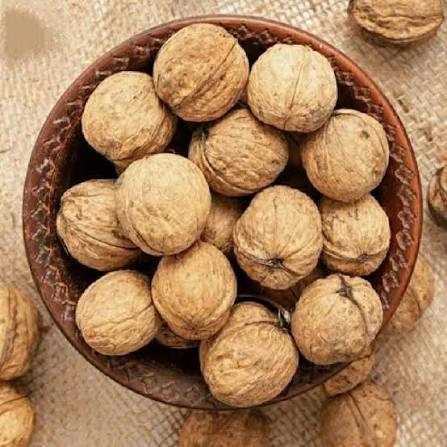
Jammu and Kashmir is blessed with beautiful mountains, green valleys and rich natural resources. Among these treasures, the Kashmiri walnut, locally known as Doen or Akhrot, holds a special place. From traditional orchards to household kitchens, walnuts are deeply connected with our food culture, farmers livelihoods and agricultural heritage. But this familiar dry fruit is more than a seasonal delicacy. it is also a valuable source of nutrition and an opportunity for local economic development. Walnut (Juglans regia L.), belonging to the family Juglandaceae, is one of the most valuable nut crops of Jammu and Kashmir known for its distinctive flavour, nutritional value and traditional importance. It forms an important part of the region’s agricultural heritage. Jammu and Kashmir is India’s leading walnut-producing region, accounting for the vast majority of the country’s walnut production. According to the second advance estimates for 2025–26, walnut cultivation covered approximately 86,600 hectares, with an estimated annual production of 3.15 lakh metric tonnes. Major walnut-growing areas include Kupwara, Baramulla, Bandipora, Ganderbal, Budgam, Pulwama, Anantnag, Kulgam and Shopian in the Kashmir Valley. While Doda, Kishtwar and Ramban district in the Jammu region. Besides, livelihood and heritage, it also offers opportunities to develop value-added products, particularly walnut oil and nutritious foods using walnut kernels and oil-extraction by-products. The crop therefore represents not only an agricultural product but also an important source of livelihood for rural communities. One interesting feature of traditional walnut cultivation in Kashmir is that most of the orchards are managed with no use of synthetic fertilisers. Walnut trees can grow for many years under suitable soil and climatic conditions, and traditional farming practices may involve relatively low external inputs. However, the nutrient requirements of a walnut tree depend on soil fertility, tree age, orchard management and growing conditions. Beneath the hard shell lies a nutrient-rich food containing fats, protein, carbohydrates, dietary fibre, vitamins, minerals and naturally occurring plant compounds.
Nutrient Approximate amount as per 100 g
Energy 654 kcal
Total fat 65.2 g
Protein 15.2 g
Carbohydrates 13.7 g
Dietary fibre 6.7 g
Calcium 98 mg
Magnesium 158 mg
Phosphorus 346 mg
Potassium 441 mg
Iron 2.9 mg
Walnuts are particularly notable for their unsaturated fats. They contain linoleic acid, an omega-6 fatty acid, and alpha-linolenic acid (ALA), a plant-based omega-3 fatty acid. Both are essential fatty acids, meaning that the body needs to obtain them from food. Walnuts also provide minerals such as magnesium, phosphorus and copper, which contribute to normal body functions. Their dietary fibre supports digestive health, while their plant compounds have attracted scientific interest because of their potential antioxidant properties. The exact composition can vary according to variety, growing conditions, maturity and storage. The value of the walnut does not end with its kernel. Walnut oil is another useful product obtained by extracting oil from the kernels. Its composition depends on the walnut variety and the extraction and storage methods used.
A source of essential fatty acids
Walnut oil contains substantial amounts of unsaturated fatty acids, particularly linoleic acid and alpha-linolenic acid. These fats contribute to normal body functions and can form part of a balanced diet.
Potential support for heart health
Replacing some foods rich in saturated fats with sources of unsaturated fats can help support a heart-healthy dietary pattern. Walnut oil may be one suitable option when used appropriately. However, it is a food ingredient, not a medicine, and should not replace prescribed treatment.
Naturally occurring antioxidant compounds
Walnut kernels contain various plant compounds, and some may also be present in the extracted oil, depending on the processing method. Researchers can study these compounds using laboratory antioxidant assays. Such results are useful for understanding the properties of an oil but do not, on their own, prove that it prevents or cures a disease in humans.
An opportunity for value addition in Jammu and Kashmir
Jammu and Kashmir already has an established walnut-growing sector. Producing quality-tested walnut oil, improving extraction methods, using suitable packaging and ensuring proper storage could create additional value for locally grown walnuts. This may provide opportunities for farmers, small-scale processors, food entrepreneurs and local markets.
Is walnut oil suitable for every cooking method?
Although walnut oil has nutritional value, it is not necessarily the best choice for every type of cooking. It is rich in polyunsaturated fats, which can be more susceptible to oxidation when exposed to excessive heat, air and light. Walnut oil can be used in food preparations suited to its flavour and quality. For prolonged high-temperature cooking or repeated deep-frying, an oil with appropriate heat stability should be selected. Walnut oil should be stored in a tightly closed container, away from direct light and heat, and used according to the producer’s storage instructions. The Kashmiri walnut is much more than a dry fruit sold in markets. It is part of our regional identity, a source of nutrients and an important agricultural resource. Its kernels provide valuable nourishment, while walnut oil offers further opportunities for research, food innovation and value addition. Protecting traditional orchards, supporting growers, improving post-harvest handling and encouraging scientific research can help Jammu and Kashmir make better use of this valuable crop. The walnut growing on our mountain slopes carries a story of nature, nutrition and hard work. By protecting our orchards and developing products responsibly, we can turn this traditional treasure into a lasting opportunity for our farmers and future generations.



The crop therefore represents not only an agricultural product but also an important source of livelihood for rural communities. One interesting feature of traditional walnut cultivation in Kashmir is that most of the orchards are managed with no use of synthetic fertilisers
Jammu and Kashmir is blessed with beautiful mountains, green valleys and rich natural resources. Among these treasures, the Kashmiri walnut, locally known as Doen or Akhrot, holds a special place. From traditional orchards to household kitchens, walnuts are deeply connected with our food culture, farmers livelihoods and agricultural heritage. But this familiar dry fruit is more than a seasonal delicacy. it is also a valuable source of nutrition and an opportunity for local economic development. Walnut (Juglans regia L.), belonging to the family Juglandaceae, is one of the most valuable nut crops of Jammu and Kashmir known for its distinctive flavour, nutritional value and traditional importance. It forms an important part of the region’s agricultural heritage. Jammu and Kashmir is India’s leading walnut-producing region, accounting for the vast majority of the country’s walnut production. According to the second advance estimates for 2025–26, walnut cultivation covered approximately 86,600 hectares, with an estimated annual production of 3.15 lakh metric tonnes. Major walnut-growing areas include Kupwara, Baramulla, Bandipora, Ganderbal, Budgam, Pulwama, Anantnag, Kulgam and Shopian in the Kashmir Valley. While Doda, Kishtwar and Ramban district in the Jammu region. Besides, livelihood and heritage, it also offers opportunities to develop value-added products, particularly walnut oil and nutritious foods using walnut kernels and oil-extraction by-products. The crop therefore represents not only an agricultural product but also an important source of livelihood for rural communities. One interesting feature of traditional walnut cultivation in Kashmir is that most of the orchards are managed with no use of synthetic fertilisers. Walnut trees can grow for many years under suitable soil and climatic conditions, and traditional farming practices may involve relatively low external inputs. However, the nutrient requirements of a walnut tree depend on soil fertility, tree age, orchard management and growing conditions. Beneath the hard shell lies a nutrient-rich food containing fats, protein, carbohydrates, dietary fibre, vitamins, minerals and naturally occurring plant compounds.
Nutrient Approximate amount as per 100 g
Energy 654 kcal
Total fat 65.2 g
Protein 15.2 g
Carbohydrates 13.7 g
Dietary fibre 6.7 g
Calcium 98 mg
Magnesium 158 mg
Phosphorus 346 mg
Potassium 441 mg
Iron 2.9 mg
Walnuts are particularly notable for their unsaturated fats. They contain linoleic acid, an omega-6 fatty acid, and alpha-linolenic acid (ALA), a plant-based omega-3 fatty acid. Both are essential fatty acids, meaning that the body needs to obtain them from food. Walnuts also provide minerals such as magnesium, phosphorus and copper, which contribute to normal body functions. Their dietary fibre supports digestive health, while their plant compounds have attracted scientific interest because of their potential antioxidant properties. The exact composition can vary according to variety, growing conditions, maturity and storage. The value of the walnut does not end with its kernel. Walnut oil is another useful product obtained by extracting oil from the kernels. Its composition depends on the walnut variety and the extraction and storage methods used.
A source of essential fatty acids
Walnut oil contains substantial amounts of unsaturated fatty acids, particularly linoleic acid and alpha-linolenic acid. These fats contribute to normal body functions and can form part of a balanced diet.
Potential support for heart health
Replacing some foods rich in saturated fats with sources of unsaturated fats can help support a heart-healthy dietary pattern. Walnut oil may be one suitable option when used appropriately. However, it is a food ingredient, not a medicine, and should not replace prescribed treatment.
Naturally occurring antioxidant compounds
Walnut kernels contain various plant compounds, and some may also be present in the extracted oil, depending on the processing method. Researchers can study these compounds using laboratory antioxidant assays. Such results are useful for understanding the properties of an oil but do not, on their own, prove that it prevents or cures a disease in humans.
An opportunity for value addition in Jammu and Kashmir
Jammu and Kashmir already has an established walnut-growing sector. Producing quality-tested walnut oil, improving extraction methods, using suitable packaging and ensuring proper storage could create additional value for locally grown walnuts. This may provide opportunities for farmers, small-scale processors, food entrepreneurs and local markets.
Is walnut oil suitable for every cooking method?
Although walnut oil has nutritional value, it is not necessarily the best choice for every type of cooking. It is rich in polyunsaturated fats, which can be more susceptible to oxidation when exposed to excessive heat, air and light. Walnut oil can be used in food preparations suited to its flavour and quality. For prolonged high-temperature cooking or repeated deep-frying, an oil with appropriate heat stability should be selected. Walnut oil should be stored in a tightly closed container, away from direct light and heat, and used according to the producer’s storage instructions. The Kashmiri walnut is much more than a dry fruit sold in markets. It is part of our regional identity, a source of nutrients and an important agricultural resource. Its kernels provide valuable nourishment, while walnut oil offers further opportunities for research, food innovation and value addition. Protecting traditional orchards, supporting growers, improving post-harvest handling and encouraging scientific research can help Jammu and Kashmir make better use of this valuable crop. The walnut growing on our mountain slopes carries a story of nature, nutrition and hard work. By protecting our orchards and developing products responsibly, we can turn this traditional treasure into a lasting opportunity for our farmers and future generations.

© Copyright 2023 brighterkashmir.com All Rights Reserved. Quantum Technologies