
BREAKING NEWS
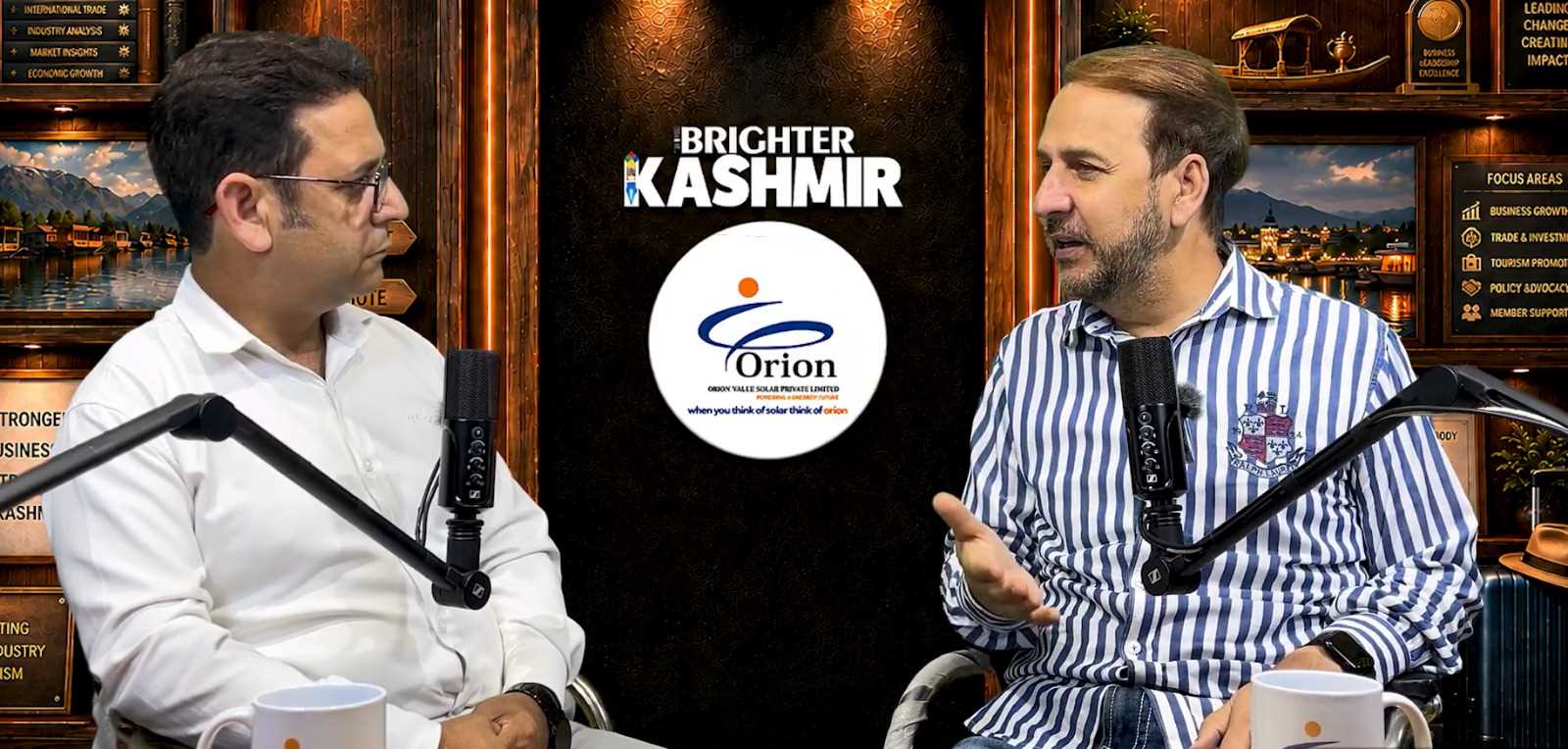
Srinagar, Aug 16: Kashmir’s business community is increasingly looking beyond traditional sectors, seeking stronger investment, improved infrastructure, greater market access and a more enabling environment for entrepreneurship. These issues, along with the challenges confronting local industry and the opportunities emerging in the region, were at the centre of a conversation with Tariq Ghani, President of the Chamber of Commerce & Industry Kashmir.
Ghani highlighted the evolving character of Kashmir’s economy and the need to create conditions in which local businesses can grow, compete and generate sustainable employment. While traditional sectors such as tourism, handicrafts, horticulture and trade continue to remain important pillars of the economy, there is growing scope for diversification into new areas of enterprise and industry.
A key concern for the business community remains the need for better infrastructure and smoother connectivity. Efficient transport networks, reliable power supply, digital connectivity and modern industrial facilities are essential for reducing the cost of doing business and enabling enterprises from Kashmir to compete in wider domestic and international markets.
The conversation also underlined the importance of strengthening local entrepreneurship. Kashmir has a growing pool of young people interested in startups, technology, services and independent business ventures. Greater access to finance, mentorship, skills and markets could help convert this entrepreneurial energy into sustainable enterprises and employment opportunities.
For established businesses, expanding market access remains equally important. Local products, particularly handicrafts, handloom items, horticultural produce and other Kashmir-specific products, possess considerable potential beyond the traditional markets. Branding, quality improvement, modern packaging, e-commerce and stronger export linkages can help local producers reach customers across India and overseas.
Tourism, meanwhile, continues to be a major economic driver. While Kashmir attracts millions of visitors because of its natural beauty and cultural heritage, the business community sees considerable potential for developing year-round tourism and promoting new destinations and experiences. Better facilities, improved connectivity and diversified tourism products could provide opportunities for businesses in both urban and rural areas.
Ghani also stressed the need for closer coordination between the government and the private sector. Regular dialogue can help identify bottlenecks, simplify procedures and ensure that policies respond effectively to the concerns of traders, manufacturers, entrepreneurs and investors.
The future of Kashmir’s economy, therefore, will depend not only on attracting fresh investment but also on strengthening existing businesses and empowering local entrepreneurs. A healthy business ecosystem requires predictable policies, efficient infrastructure, access to finance and opportunities to connect with larger markets.
As Kashmir moves towards a more diversified economic future, the voice of its business community will remain crucial. The challenge is to transform the region’s considerable natural, human and entrepreneurial potential into sustainable growth, quality employment and greater economic resilience.
The conversation with Tariq Ghani reflects a broader aspiration among Kashmir’s business leaders: an economy that is competitive, innovative and capable of creating opportunities for the next generation while preserving the region’s distinctive economic and cultural strengths
Srinagar, Aug 16: Kashmir’s business community is increasingly looking beyond traditional sectors, seeking stronger investment, improved infrastructure, greater market access and a more enabling environment for entrepreneurship. These issues, along with the challenges confronting local industry and the opportunities emerging in the region, were at the centre of a conversation with Tariq Ghani, President of the Chamber of Commerce & Industry Kashmir.
Ghani highlighted the evolving character of Kashmir’s economy and the need to create conditions in which local businesses can grow, compete and generate sustainable employment. While traditional sectors such as tourism, handicrafts, horticulture and trade continue to remain important pillars of the economy, there is growing scope for diversification into new areas of enterprise and industry.
A key concern for the business community remains the need for better infrastructure and smoother connectivity. Efficient transport networks, reliable power supply, digital connectivity and modern industrial facilities are essential for reducing the cost of doing business and enabling enterprises from Kashmir to compete in wider domestic and international markets.
The conversation also underlined the importance of strengthening local entrepreneurship. Kashmir has a growing pool of young people interested in startups, technology, services and independent business ventures. Greater access to finance, mentorship, skills and markets could help convert this entrepreneurial energy into sustainable enterprises and employment opportunities.
For established businesses, expanding market access remains equally important. Local products, particularly handicrafts, handloom items, horticultural produce and other Kashmir-specific products, possess considerable potential beyond the traditional markets. Branding, quality improvement, modern packaging, e-commerce and stronger export linkages can help local producers reach customers across India and overseas.
Tourism, meanwhile, continues to be a major economic driver. While Kashmir attracts millions of visitors because of its natural beauty and cultural heritage, the business community sees considerable potential for developing year-round tourism and promoting new destinations and experiences. Better facilities, improved connectivity and diversified tourism products could provide opportunities for businesses in both urban and rural areas.
Ghani also stressed the need for closer coordination between the government and the private sector. Regular dialogue can help identify bottlenecks, simplify procedures and ensure that policies respond effectively to the concerns of traders, manufacturers, entrepreneurs and investors.
The future of Kashmir’s economy, therefore, will depend not only on attracting fresh investment but also on strengthening existing businesses and empowering local entrepreneurs. A healthy business ecosystem requires predictable policies, efficient infrastructure, access to finance and opportunities to connect with larger markets.
As Kashmir moves towards a more diversified economic future, the voice of its business community will remain crucial. The challenge is to transform the region’s considerable natural, human and entrepreneurial potential into sustainable growth, quality employment and greater economic resilience.
The conversation with Tariq Ghani reflects a broader aspiration among Kashmir’s business leaders: an economy that is competitive, innovative and capable of creating opportunities for the next generation while preserving the region’s distinctive economic and cultural strengths

© Copyright 2023 brighterkashmir.com All Rights Reserved. Quantum Technologies