
Srinagar, Sep 1: A house in the Hazratbal area of Srinagar suddenly collapsed while workers were attempting to raise its lowered structure using hydraulic jacks, triggering panic among residents and temporarily disrupting traffic on the busy road.
The entire structure gave way unexpectedly during the lifting operation and crashed onto the roadside, bringing down electricity wires in the process. The collapse sent debris across the road and created an additional danger for motorists and pedestrians in the vicinity.
A car passing through the area narrowly escaped being struck by the falling structure. The vehicle was reportedly passing close to the building when the house suddenly collapsed, highlighting the potentially serious consequences of the incident.
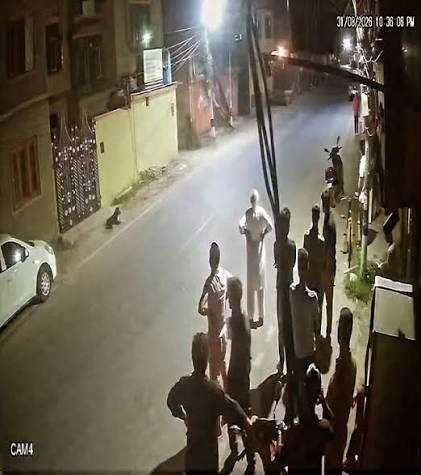
CCTV footage of the incident has surfaced, capturing the moment the weakened structure unexpectedly gave way. The footage shows the building collapsing rapidly onto the road, leaving little time for people nearby to react.
Fortunately, no casualties or injuries were reported, despite the sudden collapse and the presence of traffic on the road.
Following the incident, vehicular movement was temporarily affected as rubble and construction material blocked part of the carriageway. The fallen electricity wires also posed a serious safety hazard, prompting caution among commuters and residents until the area could be cleared and made safe.
The incident has raised concerns over the safety of structural lifting and modification work on weakened or compromised buildings. Raising a structure using jacks requires careful technical assessment, proper load distribution and adequate safety measures. Any failure during such an operation can result in a sudden structural collapse, particularly where the building has already suffered settlement, foundation problems or structural deterioration.
The incident also underscores the risks involved in undertaking major structural work in densely populated urban areas, where buildings often stand close to roads and utility infrastructure. A collapse in such circumstances can endanger not only workers and occupants but also pedestrians, motorists and nearby properties.
Experts and authorities may need to examine whether appropriate structural assessments and safety protocols were followed before the lifting operation began. Such checks are particularly important when work involves older buildings or structures whose foundations and load-bearing components may already have been compromised.
The temporary disruption caused by the collapse also highlights the interconnected risks associated with urban infrastructure. Damage to electricity lines can create secondary hazards even after the immediate danger from falling debris has passed.
While the absence of injuries has brought relief, the narrow escape of the passing vehicle serves as a stark reminder of how quickly structural failures can turn into major accidents.
The Hazratbal incident should therefore prompt greater caution and stricter supervision of structural lifting, renovation and modification work, particularly around public roads and densely inhabited areas. Technical assessment, qualified supervision and proper safety barriers must be treated as essential safeguards—not optional precautions—when dealing with vulnerable structures.
Srinagar, Sep 1: A house in the Hazratbal area of Srinagar suddenly collapsed while workers were attempting to raise its lowered structure using hydraulic jacks, triggering panic among residents and temporarily disrupting traffic on the busy road.
The entire structure gave way unexpectedly during the lifting operation and crashed onto the roadside, bringing down electricity wires in the process. The collapse sent debris across the road and created an additional danger for motorists and pedestrians in the vicinity.
A car passing through the area narrowly escaped being struck by the falling structure. The vehicle was reportedly passing close to the building when the house suddenly collapsed, highlighting the potentially serious consequences of the incident.
CCTV footage of the incident has surfaced, capturing the moment the weakened structure unexpectedly gave way. The footage shows the building collapsing rapidly onto the road, leaving little time for people nearby to react.
Fortunately, no casualties or injuries were reported, despite the sudden collapse and the presence of traffic on the road.
Following the incident, vehicular movement was temporarily affected as rubble and construction material blocked part of the carriageway. The fallen electricity wires also posed a serious safety hazard, prompting caution among commuters and residents until the area could be cleared and made safe.
The incident has raised concerns over the safety of structural lifting and modification work on weakened or compromised buildings. Raising a structure using jacks requires careful technical assessment, proper load distribution and adequate safety measures. Any failure during such an operation can result in a sudden structural collapse, particularly where the building has already suffered settlement, foundation problems or structural deterioration.
The incident also underscores the risks involved in undertaking major structural work in densely populated urban areas, where buildings often stand close to roads and utility infrastructure. A collapse in such circumstances can endanger not only workers and occupants but also pedestrians, motorists and nearby properties.
Experts and authorities may need to examine whether appropriate structural assessments and safety protocols were followed before the lifting operation began. Such checks are particularly important when work involves older buildings or structures whose foundations and load-bearing components may already have been compromised.
The temporary disruption caused by the collapse also highlights the interconnected risks associated with urban infrastructure. Damage to electricity lines can create secondary hazards even after the immediate danger from falling debris has passed.
While the absence of injuries has brought relief, the narrow escape of the passing vehicle serves as a stark reminder of how quickly structural failures can turn into major accidents.
The Hazratbal incident should therefore prompt greater caution and stricter supervision of structural lifting, renovation and modification work, particularly around public roads and densely inhabited areas. Technical assessment, qualified supervision and proper safety barriers must be treated as essential safeguards—not optional precautions—when dealing with vulnerable structures.

© Copyright 2023 brighterkashmir.com All Rights Reserved. Quantum Technologies