
BREAKING NEWS
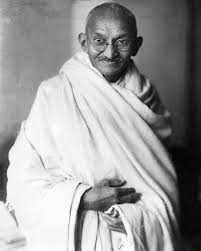
In a world trembling under the shadows of conflict—from the battlefields of Eastern Europe to the tense straits of the Indo-Pacific—the ghost of Mahatma Gandhi walks again. Not as a memory, but as a mirror. A mirror held up to a world that has abandoned satyagraha for siege, dialogue for drones, and moral courage for realpolitik.
The world is on fire. From the rubble of Gaza to the frozen trenches of Ukraine, a collective cry for peace echoes—yet finds no answer in statecraft or summits. In this crucible of chaos, the world is turning, almost instinctively, to a frail man who walked with a wooden staff: Mohandas Karamchand Gandhi.
In India, the homage is both political and profound. Prime Minister Narendra Modi, in a defining acknowledgment, has publicly honored him as ‘Rashtrapita’—Father of the Nation. In a symbolic convergence, the envoys of Russia and Germany laid wreaths at his statue in New Delhi, nations scarred by war seeking solace in his memory. Even the Union Budget has seen the symbolic return of Gandhi, with new initiatives echoing his vision of ‘Gram Swaraj’.
In a world trembling under the shadows of conflict—from the battlefields of Eastern Europe to the tense straits of the Indo-Pacific—the ghost of Mahatma Gandhi walks again. Not as a memory, but as a mirror. A mirror held up to a world that has abandoned satyagraha for siege, dialogue for drones, and moral courage for realpolitik.
This week, that reflection became unmistakable. Prime Minister Narendra Modi, in a notable rhetorical embrace, called Gandhi Rashtrapita. In New Delhi, the ambassadors of Russia and Germany—nations shaped by war and its memory—laid flowers at his statue. Most telling, however, was the annual ritual of regret from Oslo: the Nobel Peace Prize Committee’s tweet labelling Gandhi “The Missing Laureate,” confessing once more to the “greatest omission” in its history.
But in an age of unprecedented violence, regret is an empty currency. What the moment demands is atonement—a structural, historic correction. Not a posthumous prize, but a Millennium Peace Prize dedicated to Gandhi, transforming his legacy into a living instrument for global peace.
The Anatomy of an Historic Blunder
Gandhi was nominated five times between 1937 and 1948. The Committee’s internal assessments reveal a pattern of hesitation bordering on prejudice. In 1937, Advisor Professor Jacob Worm-Müller wrote that Gandhi was “too much of a nationalist,” “a freedom fighter” whose methods were “not always consistent.” This was not just misreading—it was a failure of moral imagination, an inability to see that his struggle for India’s freedom was a blueprint for universal emancipation.
The final, unforgivable failure came in 1948. After his assassination on January 30, the Committee met to decide on that year’s prize. The rules permitted a posthumous award. Instead, they recorded in their ledger: “There was no suitable living candidate.”
As historian Øivind Stenersen notes, this was the only time in Nobel history the Peace Prize was not awarded citing a lack of suitable living persons—a deliberate, chilling formulation that laid bare their evasion.
Deification as a Defense Mechanism
Today, the Committee’s defense has evolved from regret to reverence—a strategic deification. Nobel officials and advisors now argue that Gandhi belonged to a “different category,” comparing him to Buddha or Jesus, figures “beyond the realm of a prize.” Former Committee Secretary Geir Lundestad called the omission “the greatest,” yet this admission has become a ceremonial sigh, repeated annually without consequence.
This framing, however, is a profound disservice. Gandhi was not a detached spiritual figure but a political revolutionary who weaponized morality. He did not seek sainthood; he sought justice. To place him beyond the reach of a peace prize is to strip his struggle of its practical, earth-bound power and to excuse the Committee’s own historical timidity.
The World’s Verdict vs. Nobel’s Myopia
While the Nobel Committee hesitated, the world did not. Upon Gandhi’s death, the United Nations lowered its flags—an unprecedented honor for someone who never held state office. Over 3,500 messages of condolence poured in from global leaders.
• Albert Einstein: “Generations to come will scarce believe that such a one as this ever walked upon this earth.”
• General Douglas MacArthur: “The foulest crime in modern history.”
• British PM Clement Attlee: “The greatest figure of our time.”
• U.S. President Harry Truman: “An inspiration to the lovers of freedom everywhere.”
The irony is stark. The Nobel Committee that ignored Gandhi later awarded those he inspired: Martin Luther King Jr. (1964) explicitly rooted his civil disobedience in Gandhian thought; Albert Luthuli (1960) applied his principles in South Africa; Nelson Mandela (1993) acknowledged Gandhi as his moral precursor. Even in 1989, Chair Egil Aarvik called the Dalai Lama’s award “a tribute to the memory of Mahatma Gandhi.” The disciple was honored, the master overlooked.
A Pattern of Political Calculation
The Gandhi omission was not isolated but symptomatic. The Committee has repeatedly privileged political expediency over moral clarity. Compare Gandhi’s absence with:
Henry Kissinger (1973): Awarded during the Vietnam War’s brutal climax.
Aung San Suu Kyi (1991): Honored before her complicity in the Rohingya crisis.
Abiy Ahmed (2019): Celebrated before the Tigray war.
As Nobel historian Irwin Abrams noted, the Gandhi case represents “the Nobel’s most painful paradox”—the consistent avoidance of radical non-violence in favor of conventional diplomatic actors.
The Case for a Millennium Peace Prize
Mere annual tweets of regret are now an insult to history. True atonement requires an act of equal magnitude to the original failure. The Nobel Committee should:
1. Institute a one-time Millennium Peace Prize for Mahatma Gandhi—not as a posthumous award but as a special category recognizing transformative moral leadership that reshapes history.
2. Endow a Global Gandhi Institute for Ethical Conflict Resolution using the prize money, establishing a permanent institution focused on:
Scientific research on non-violent resistance
Training for mediators in conflict zones
Ethical governance frameworks for divided societies
Revise the nomination criteria to explicitly recognize moral leadership beyond state actors and diplomatic agreements.
Gandhi’s Relevance in Our Fractured Present
Today’s conflicts—Ukraine, Gaza, Sudan, Myanmar—share a common trait: they are sustained by the belief that violence is the ultimate arbitrator. Gandhi’s teachings reject this fundamentally. His concept of Satyagraha (truth-force) offers not passive resistance but active moral confrontation. His vision of Swaraj (self-rule) champions decentralization in an age of authoritarian centralization. His ideal of Vasudhaiva Kutumbakam (the world as one family) directly counters rising xenophobia and civilizational arrogance.
Conclusion: Beyond Regret to Redemption
The Nobel Peace Prize stands at a crossroads. It can continue as a diplomatic instrument, occasionally recognizing genuine peacemakers but often rewarding political convenience. Or it can reclaim moral authority by confronting its greatest failure with courage and imagination.
A Millennium Peace Prize for Gandhi would do more than correct a historical record—it would redefine the prize’s purpose for the 21st century. It would signal that the highest form of leadership is not about controlling armies but about mastering oneself; not about winning wars but about ending the very idea of war.
As the world stumbles from one crisis to another, Gandhi’s light hasn’t faded—it has grown more urgent. The Nobel Committee now has an opportunity not just to atone for the past, but to illuminate the future. The question is whether it possesses the very courage it failed to recognize in one man a century ago.
Emaill:-------------------editoronkar@gmail.com
In a world trembling under the shadows of conflict—from the battlefields of Eastern Europe to the tense straits of the Indo-Pacific—the ghost of Mahatma Gandhi walks again. Not as a memory, but as a mirror. A mirror held up to a world that has abandoned satyagraha for siege, dialogue for drones, and moral courage for realpolitik.
The world is on fire. From the rubble of Gaza to the frozen trenches of Ukraine, a collective cry for peace echoes—yet finds no answer in statecraft or summits. In this crucible of chaos, the world is turning, almost instinctively, to a frail man who walked with a wooden staff: Mohandas Karamchand Gandhi.
In India, the homage is both political and profound. Prime Minister Narendra Modi, in a defining acknowledgment, has publicly honored him as ‘Rashtrapita’—Father of the Nation. In a symbolic convergence, the envoys of Russia and Germany laid wreaths at his statue in New Delhi, nations scarred by war seeking solace in his memory. Even the Union Budget has seen the symbolic return of Gandhi, with new initiatives echoing his vision of ‘Gram Swaraj’.
In a world trembling under the shadows of conflict—from the battlefields of Eastern Europe to the tense straits of the Indo-Pacific—the ghost of Mahatma Gandhi walks again. Not as a memory, but as a mirror. A mirror held up to a world that has abandoned satyagraha for siege, dialogue for drones, and moral courage for realpolitik.
This week, that reflection became unmistakable. Prime Minister Narendra Modi, in a notable rhetorical embrace, called Gandhi Rashtrapita. In New Delhi, the ambassadors of Russia and Germany—nations shaped by war and its memory—laid flowers at his statue. Most telling, however, was the annual ritual of regret from Oslo: the Nobel Peace Prize Committee’s tweet labelling Gandhi “The Missing Laureate,” confessing once more to the “greatest omission” in its history.
But in an age of unprecedented violence, regret is an empty currency. What the moment demands is atonement—a structural, historic correction. Not a posthumous prize, but a Millennium Peace Prize dedicated to Gandhi, transforming his legacy into a living instrument for global peace.
The Anatomy of an Historic Blunder
Gandhi was nominated five times between 1937 and 1948. The Committee’s internal assessments reveal a pattern of hesitation bordering on prejudice. In 1937, Advisor Professor Jacob Worm-Müller wrote that Gandhi was “too much of a nationalist,” “a freedom fighter” whose methods were “not always consistent.” This was not just misreading—it was a failure of moral imagination, an inability to see that his struggle for India’s freedom was a blueprint for universal emancipation.
The final, unforgivable failure came in 1948. After his assassination on January 30, the Committee met to decide on that year’s prize. The rules permitted a posthumous award. Instead, they recorded in their ledger: “There was no suitable living candidate.”
As historian Øivind Stenersen notes, this was the only time in Nobel history the Peace Prize was not awarded citing a lack of suitable living persons—a deliberate, chilling formulation that laid bare their evasion.
Deification as a Defense Mechanism
Today, the Committee’s defense has evolved from regret to reverence—a strategic deification. Nobel officials and advisors now argue that Gandhi belonged to a “different category,” comparing him to Buddha or Jesus, figures “beyond the realm of a prize.” Former Committee Secretary Geir Lundestad called the omission “the greatest,” yet this admission has become a ceremonial sigh, repeated annually without consequence.
This framing, however, is a profound disservice. Gandhi was not a detached spiritual figure but a political revolutionary who weaponized morality. He did not seek sainthood; he sought justice. To place him beyond the reach of a peace prize is to strip his struggle of its practical, earth-bound power and to excuse the Committee’s own historical timidity.
The World’s Verdict vs. Nobel’s Myopia
While the Nobel Committee hesitated, the world did not. Upon Gandhi’s death, the United Nations lowered its flags—an unprecedented honor for someone who never held state office. Over 3,500 messages of condolence poured in from global leaders.
• Albert Einstein: “Generations to come will scarce believe that such a one as this ever walked upon this earth.”
• General Douglas MacArthur: “The foulest crime in modern history.”
• British PM Clement Attlee: “The greatest figure of our time.”
• U.S. President Harry Truman: “An inspiration to the lovers of freedom everywhere.”
The irony is stark. The Nobel Committee that ignored Gandhi later awarded those he inspired: Martin Luther King Jr. (1964) explicitly rooted his civil disobedience in Gandhian thought; Albert Luthuli (1960) applied his principles in South Africa; Nelson Mandela (1993) acknowledged Gandhi as his moral precursor. Even in 1989, Chair Egil Aarvik called the Dalai Lama’s award “a tribute to the memory of Mahatma Gandhi.” The disciple was honored, the master overlooked.
A Pattern of Political Calculation
The Gandhi omission was not isolated but symptomatic. The Committee has repeatedly privileged political expediency over moral clarity. Compare Gandhi’s absence with:
Henry Kissinger (1973): Awarded during the Vietnam War’s brutal climax.
Aung San Suu Kyi (1991): Honored before her complicity in the Rohingya crisis.
Abiy Ahmed (2019): Celebrated before the Tigray war.
As Nobel historian Irwin Abrams noted, the Gandhi case represents “the Nobel’s most painful paradox”—the consistent avoidance of radical non-violence in favor of conventional diplomatic actors.
The Case for a Millennium Peace Prize
Mere annual tweets of regret are now an insult to history. True atonement requires an act of equal magnitude to the original failure. The Nobel Committee should:
1. Institute a one-time Millennium Peace Prize for Mahatma Gandhi—not as a posthumous award but as a special category recognizing transformative moral leadership that reshapes history.
2. Endow a Global Gandhi Institute for Ethical Conflict Resolution using the prize money, establishing a permanent institution focused on:
Scientific research on non-violent resistance
Training for mediators in conflict zones
Ethical governance frameworks for divided societies
Revise the nomination criteria to explicitly recognize moral leadership beyond state actors and diplomatic agreements.
Gandhi’s Relevance in Our Fractured Present
Today’s conflicts—Ukraine, Gaza, Sudan, Myanmar—share a common trait: they are sustained by the belief that violence is the ultimate arbitrator. Gandhi’s teachings reject this fundamentally. His concept of Satyagraha (truth-force) offers not passive resistance but active moral confrontation. His vision of Swaraj (self-rule) champions decentralization in an age of authoritarian centralization. His ideal of Vasudhaiva Kutumbakam (the world as one family) directly counters rising xenophobia and civilizational arrogance.
Conclusion: Beyond Regret to Redemption
The Nobel Peace Prize stands at a crossroads. It can continue as a diplomatic instrument, occasionally recognizing genuine peacemakers but often rewarding political convenience. Or it can reclaim moral authority by confronting its greatest failure with courage and imagination.
A Millennium Peace Prize for Gandhi would do more than correct a historical record—it would redefine the prize’s purpose for the 21st century. It would signal that the highest form of leadership is not about controlling armies but about mastering oneself; not about winning wars but about ending the very idea of war.
As the world stumbles from one crisis to another, Gandhi’s light hasn’t faded—it has grown more urgent. The Nobel Committee now has an opportunity not just to atone for the past, but to illuminate the future. The question is whether it possesses the very courage it failed to recognize in one man a century ago.
Emaill:-------------------editoronkar@gmail.com

© Copyright 2023 brighterkashmir.com All Rights Reserved. Quantum Technologies