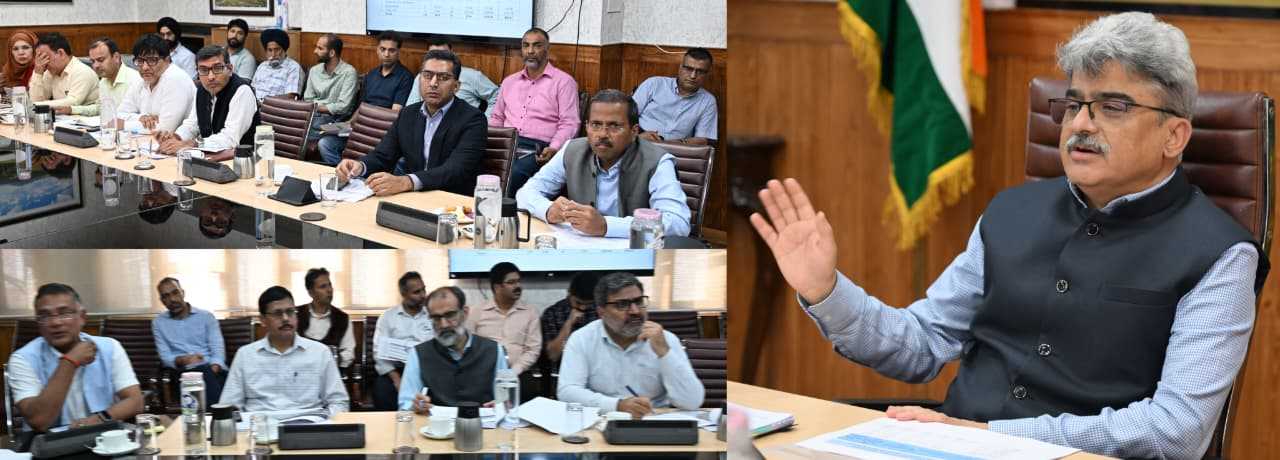
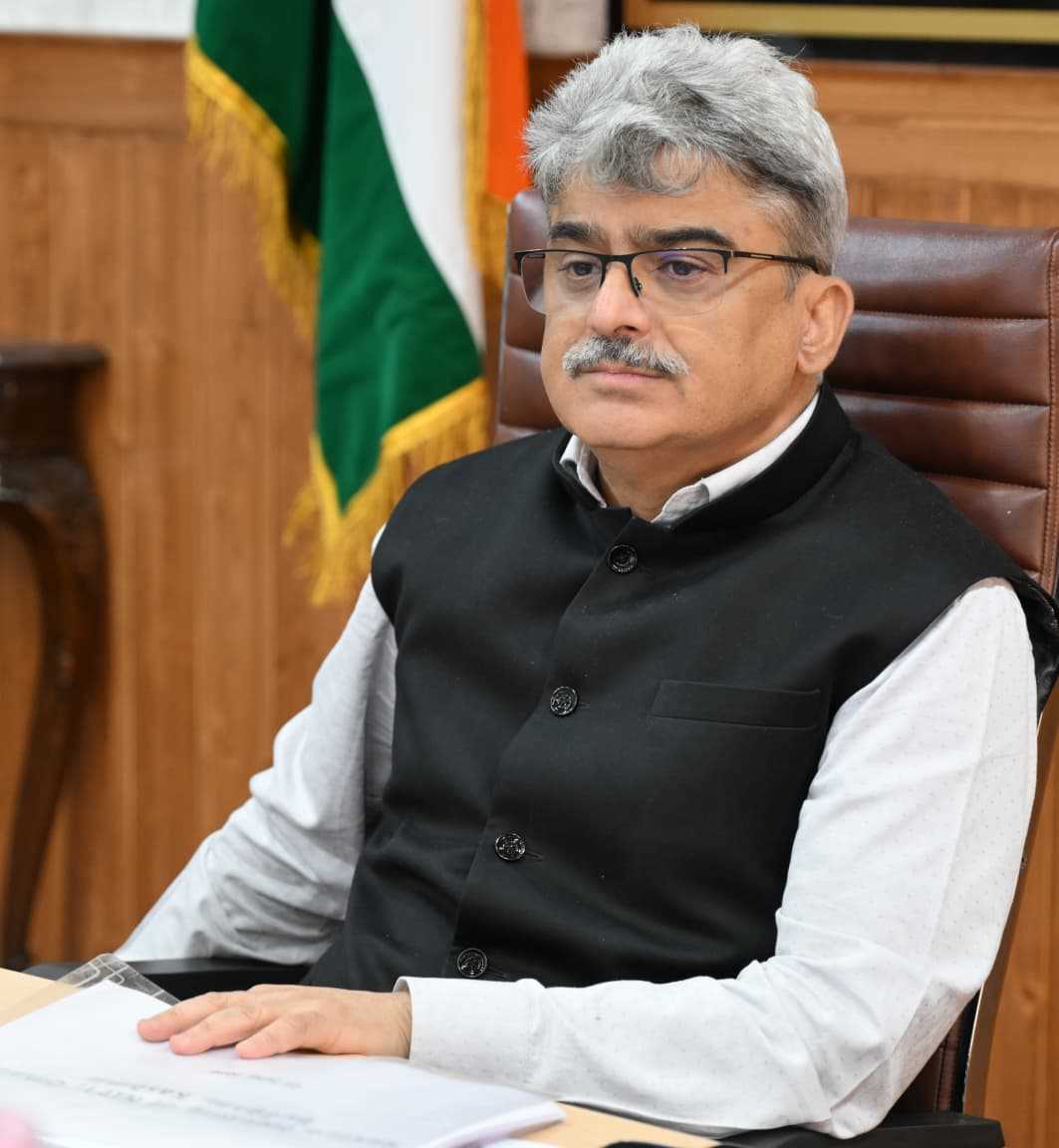
Srinagar, June 18: Chief Secretary Atal Dulloo on Thursday reviewed a proposed Circular Economy Framework prepared by the Housing and Urban Development Department (H&UDD) aimed at promoting resource efficiency, reducing waste and fostering environmentally sustainable development across Jammu and Kashmir.
The framework seeks to transform Jammu and Kashmir into a regenerative Himalayan economy by converting waste into productive resources, strengthening urban governance, protecting fragile ecosystems and creating sustainable livelihood opportunities.
During the meeting, officials said the policy has been formulated in response to growing waste generation, particularly from tourism and pilgrimage activities, evolving environmental regulations, judicial directives and the need to safeguard ecologically sensitive lakes, wetlands, forests and mountain landscapes.
The proposed policy leverages Jammu and Kashmir’s unique strengths, including its thriving horticulture sector, extensive tourism network and distinctive geographical conditions, to build a region-specific circular economy model.
Commissioner Secretary, H&UDD, Mandeep Kaur informed the meeting that the framework introduces a “Differentiated Circularity Framework” under which Urban Local Bodies (ULBs) will be assigned responsibilities based on their size, infrastructure capacity and waste generation levels.
Under the model, smaller and remote urban local bodies will focus on waste reduction, reuse and recycling through ward-level Reduce-Reuse-Recycle (RRR) centres, household composting and recyclable collection systems supported by cluster-level processing facilities.
Medium-sized towns will adopt a more advanced model incorporating decentralised composting units, material recovery facilities, mini biogas plants, repair-and-reuse initiatives and stronger compliance mechanisms for bulk waste generators.
For the cities of Jammu and Srinagar, the framework proposes an advanced Circular Model. Commissioner, Jammu Municipal Corporation, Devansh Yadav said the two cities would function as regional circular economy hubs with integrated waste segregation systems, biomethanation plants, construction and demolition waste recycling facilities, wastewater reuse infrastructure and digital monitoring systems.
The policy also proposes a cluster-based approach with seven priority clusters, including urban waste recovery, horticulture biomass management, tourism and pilgrimage waste management, artisan and upcycling industries, construction waste recycling and water reuse systems.
Nine key value chains have been identified for intervention, covering municipal waste recovery, organic waste management, plastic recycling, horticulture biomass utilisation, tourism waste management, construction waste recycling, wastewater reuse, repair and refurbishment services and artisan-led circular production networks.
To support implementation, the framework is built around six pillars—regulatory reforms, financial mechanisms, institutional arrangements, market development, digital governance and livelihood generation.
Officials said implementation will be carried out in four phases, beginning with institutional activation and infrastructure preparation, followed by pilot projects and market development, scaling up across the Union Territory and eventually achieving mature, self-sustaining circular systems.
Chief Secretary Atal Dulloo stressed the need for a practical, technology-driven and financially sustainable model capable of delivering measurable environmental and economic benefits. He called for strong inter-departmental coordination, convergence of existing schemes and robust digital monitoring to ensure effective implementation.
Once implemented, the framework is expected to improve waste recovery, reduce landfill dependence, strengthen environmental protection, generate green jobs, encourage circular enterprises and enhance urban governance across Jammu and Kashmir.

Srinagar, June 18: Chief Secretary Atal Dulloo on Thursday reviewed a proposed Circular Economy Framework prepared by the Housing and Urban Development Department (H&UDD) aimed at promoting resource efficiency, reducing waste and fostering environmentally sustainable development across Jammu and Kashmir.
The framework seeks to transform Jammu and Kashmir into a regenerative Himalayan economy by converting waste into productive resources, strengthening urban governance, protecting fragile ecosystems and creating sustainable livelihood opportunities.
During the meeting, officials said the policy has been formulated in response to growing waste generation, particularly from tourism and pilgrimage activities, evolving environmental regulations, judicial directives and the need to safeguard ecologically sensitive lakes, wetlands, forests and mountain landscapes.
The proposed policy leverages Jammu and Kashmir’s unique strengths, including its thriving horticulture sector, extensive tourism network and distinctive geographical conditions, to build a region-specific circular economy model.
Commissioner Secretary, H&UDD, Mandeep Kaur informed the meeting that the framework introduces a “Differentiated Circularity Framework” under which Urban Local Bodies (ULBs) will be assigned responsibilities based on their size, infrastructure capacity and waste generation levels.
Under the model, smaller and remote urban local bodies will focus on waste reduction, reuse and recycling through ward-level Reduce-Reuse-Recycle (RRR) centres, household composting and recyclable collection systems supported by cluster-level processing facilities.
Medium-sized towns will adopt a more advanced model incorporating decentralised composting units, material recovery facilities, mini biogas plants, repair-and-reuse initiatives and stronger compliance mechanisms for bulk waste generators.
For the cities of Jammu and Srinagar, the framework proposes an advanced Circular Model. Commissioner, Jammu Municipal Corporation, Devansh Yadav said the two cities would function as regional circular economy hubs with integrated waste segregation systems, biomethanation plants, construction and demolition waste recycling facilities, wastewater reuse infrastructure and digital monitoring systems.
The policy also proposes a cluster-based approach with seven priority clusters, including urban waste recovery, horticulture biomass management, tourism and pilgrimage waste management, artisan and upcycling industries, construction waste recycling and water reuse systems.
Nine key value chains have been identified for intervention, covering municipal waste recovery, organic waste management, plastic recycling, horticulture biomass utilisation, tourism waste management, construction waste recycling, wastewater reuse, repair and refurbishment services and artisan-led circular production networks.
To support implementation, the framework is built around six pillars—regulatory reforms, financial mechanisms, institutional arrangements, market development, digital governance and livelihood generation.
Officials said implementation will be carried out in four phases, beginning with institutional activation and infrastructure preparation, followed by pilot projects and market development, scaling up across the Union Territory and eventually achieving mature, self-sustaining circular systems.
Chief Secretary Atal Dulloo stressed the need for a practical, technology-driven and financially sustainable model capable of delivering measurable environmental and economic benefits. He called for strong inter-departmental coordination, convergence of existing schemes and robust digital monitoring to ensure effective implementation.
Once implemented, the framework is expected to improve waste recovery, reduce landfill dependence, strengthen environmental protection, generate green jobs, encourage circular enterprises and enhance urban governance across Jammu and Kashmir.
© Copyright 2023 brighterkashmir.com All Rights Reserved. Quantum Technologies