
BREAKING NEWS
International refugee protection recognises that returning people to a country where they face a real risk of persecution or serious harm can have grave consequences. The principle of non-refoulement is especially important in this context. Its application depends on the circumstances and the relevant legal obligations, but the underlying humanitarian concern is clear: authorities should not send people into serious danger without properly assessing their individual situations. Even when a person lacks valid immigration documents, that fact alone does not eliminate every protection concern.
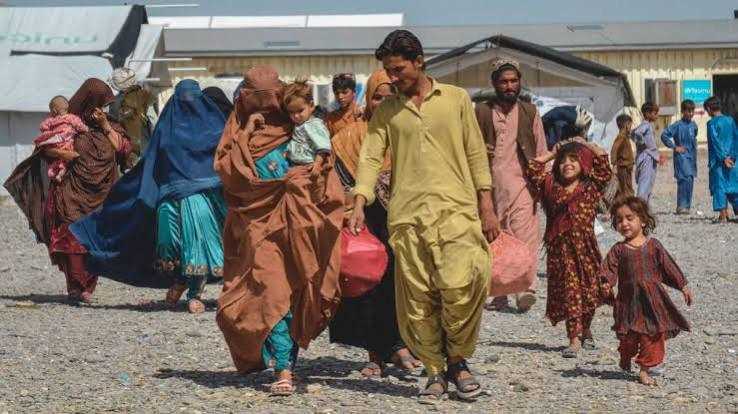
The Pakistani administration has shown a harsh and deeply troubling face to innocent Afghan people living in Pakistan, many of whom sought refuge there after escaping decades of war, violence, and instability. Under its deportation campaign, thousands of families have faced fear, displacement, and uncertainty, raising serious concerns about the treatment of vulnerable people. According to UNHCR and IOM data, more than 2.39 million Afghans returned to Afghanistan from Pakistan between 15 September 2023 and 16 May 2026, through both voluntary and forced returns. At the same time, UNHCR reported that Pakistan continued to host over 2.8 million Afghans at the end of 2025, including refugees and other Afghan nationals. These figures reveal the enormous scale of the crisis and the human cost of policies that risk treating innocent people as a collective burden rather than as individuals deserving dignity and fair treatment. The treatment of Afghan people by the Pakistani administration has long been a painful issue in the region. For decades, millions of Afghans have lived in Pakistan after fleeing war, political instability, poverty, and insecurity in their homeland. Many arrived with little more than the clothes they wore, hoping to find safety, work, education, and a chance to rebuild their lives. Yet, instead of always receiving protection and dignity, many have faced suspicion, harassment, arbitrary detention, forced displacement, and the constant fear of being sent back to an uncertain future. The tendency to treat ordinary Afghans as a collective problem rather than as individuals has created deep suffering among families who have already endured years of hardship. Pakistan has hosted Afghan refugees for generations, and this history should not be ignored. The country has provided shelter to people escaping decades of conflict, and many Pakistani communities have shared their homes, workplaces, schools, and markets with Afghan families. This humanitarian contribution deserves recognition. However, the difficulties faced by Afghan refugees in recent years have raised serious questions about the way the Pakistani administration handles migration, security, and the rights of vulnerable people. When authorities use collective punishment, indiscriminate enforcement, or intimidation against an entire community, innocent people become victims of policies that fail to distinguish between those suspected of wrongdoing and ordinary families seeking a peaceful life.
The central problem is the tendency to associate Afghan nationality with insecurity and criminal activity. Security challenges in Pakistan are real, and the government has a responsibility to protect its citizens from violence and terrorism. No country can ignore threats to public safety. However, a responsible administration must distinguish between individuals who are credibly suspected of crimes and the wider population to which they belong. Nationality alone is not evidence of wrongdoing. A person should not be treated as a criminal simply because they were born in Afghanistan, speak with an Afghan accent, possess Afghan documents, or belong to a refugee family. When suspicion becomes a substitute for evidence, justice gives way to prejudice, and innocent people are forced to pay for actions they did not commit. The mass deportation and repatriation campaigns directed at undocumented Afghans have intensified these concerns. Pakistani authorities have defended such measures on the grounds that every state has the right to regulate its borders and enforce its immigration laws. That principle is legitimate. No government is required to allow unlimited residence to foreign nationals, and immigration rules cannot simply be ignored. Yet the manner in which these rules are enforced matters as much as the rules themselves. Deportation becomes deeply unjust when people are given little time to prepare, families are separated, property is lost, or individuals are detained without a fair opportunity to establish their legal status. A policy may be presented as an administrative necessity, but its implementation can still violate basic standards of humanity and justice. Many Afghan families have spent years, and in some cases decades, in Pakistan. Their children may have been born there, attended Pakistani schools, learned local languages, and developed friendships with Pakistani neighbours. Some families have built small businesses, rented homes, and contributed to local economies. For these people, the distinction between their country of origin and their country of residence is not merely a matter of geography. Pakistan may be the only home they have ever known, even if their legal status remains uncertain. When such families are suddenly forced to leave, they face the destruction of their social and economic lives. Children lose access to education, workers lose their livelihoods, and elderly people may be uprooted from the communities in which they have spent most of their lives. The most disturbing aspect of harsh enforcement is the suffering it causes to people who have no involvement in political or security disputes. Women, children, elderly people, daily wage workers, and people with disabilities are often among the least capable of protecting themselves against sudden displacement. A family may have no connection to militancy or criminal activity, yet still find itself facing detention, eviction, or deportation because of its nationality or documentation status. Children cannot be held responsible for the circumstances under which their parents crossed a border or the legal decisions made by governments before they were born. Punishing them through fear, deprivation, and forced displacement raises serious moral questions. The problem becomes even more troubling when people are pressured to leave through raids, threats, or demands for money. Allegations of harassment and extortion by individual officials must be investigated rather than automatically accepted or dismissed. Where abuses occur, the authorities have a duty to identify those responsible and ensure accountability. An innocent refugee should not have to pay a bribe to avoid detention, nor should a family live in constant fear of being stopped merely because its members look Afghan or speak a particular language. Law enforcement must operate through transparent procedures, documented decisions, and accessible complaint mechanisms. Without these safeguards, the power of the state can become a source of insecurity for the very people who need protection most. There is also a serious humanitarian concern surrounding the return of Afghans to Afghanistan. The country continues to face difficult economic and social conditions, while the rights and freedoms of many people remain restricted under the Taliban authorities. The situation varies between individuals and regions, but returning to Afghanistan may expose some people to poverty, unemployment, discrimination, persecution, or other forms of danger. Women and girls, people associated with the former Afghan government, journalists, civil society members, and other vulnerable groups may face particular risks. For families who fled such circumstances, forced return can mean being sent back to the very conditions they escaped.
International refugee protection recognises that returning people to a country where they face a real risk of persecution or serious harm can have grave consequences. The principle of non-refoulement is especially important in this context. Its application depends on the circumstances and the relevant legal obligations, but the underlying humanitarian concern is clear: authorities should not send people into serious danger without properly assessing their individual situations. Even when a person lacks valid immigration documents, that fact alone does not eliminate every protection concern. A fair process should allow vulnerable individuals to explain their circumstances and seek appropriate protection before a final decision is made. The Pakistani administration should also recognise that Afghan refugees are not a single, uniform group. Some possess recognised refugee documentation, some hold other forms of legal permission, and others may lack valid papers. Their situations differ significantly. Treating every Afghan as an undocumented migrant ignores these distinctions and increases the likelihood of wrongful detention and removal. Effective administration requires checking documents carefully, providing clear information about legal requirements, and allowing people to challenge incorrect decisions. Where records are missing or difficult to verify, authorities should establish practical procedures to resolve the uncertainty instead of immediately assuming that the individual is acting unlawfully. Another important concern is the use of collective pressure to achieve political or administrative objectives. Relations between Pakistan and Afghanistan have frequently been strained by border disputes, accusations concerning militant groups, and disagreements over security responsibilities. These tensions can create pressure for governments to demonstrate toughness. Refugees, however, should not become instruments in disputes between states. They generally have little influence over diplomatic negotiations, military decisions, or the activities of armed groups. Using their living conditions as leverage against another government transfers the burden of political disagreement onto people who may already have lost their homes, livelihoods, and family members. Such policies can also damage Pakistan's own interests. Afghan and Pakistani communities have maintained commercial, cultural, linguistic, and family connections across the border for generations. Harsh treatment of Afghan residents can weaken these relationships, deepen resentment, and create lasting hostility. Children who experience humiliation or exclusion may grow up with painful memories of the society in which they once sought refuge. Workers and business owners who are abruptly displaced can disrupt local economic activity, while sudden movements of large populations can create additional pressures on border communities and humanitarian organisations. A policy intended to address insecurity may therefore produce further instability if it is carried out without adequate planning or respect for human dignity.
There is a better way to address the issue. Pakistan can enforce its immigration laws while ensuring that innocent people are treated fairly. Authorities should distinguish between documented refugees, people with other lawful residence arrangements, undocumented migrants, and individuals who present specific security concerns. Each category requires a clear and appropriate process. Allegations of criminal activity should be investigated individually, and detention should not be based solely on nationality. People facing removal should receive understandable information about their status, sufficient opportunity to present relevant documents, and access to an effective review process where required. Particular attention should be given to children, separated families, medical emergencies, and people who may face persecution or serious harm upon return. The administration should also investigate complaints of police misconduct, unlawful detention, intimidation, and extortion. Officials who abuse their authority must face appropriate consequences, regardless of the nationality of their victims. Independent monitoring, legal assistance, accessible complaint procedures, and cooperation with humanitarian organisations can help prevent wrongful treatment. The government should communicate its policies clearly so that families know what documents they need, where they can obtain advice, and what procedures apply to their circumstances. Confusion and fear should not become instruments of enforcement. At the same time, the international community must do more than express concern. Countries that have benefited from regional stability should support practical solutions through humanitarian assistance, refugee resettlement where appropriate, financial support for host communities, and cooperation with relevant international organisations. Pakistan has faced considerable economic and security pressures, and these challenges should be acknowledged. However, the existence of such pressures does not justify unnecessary cruelty. International responsibility-sharing can reduce the burden on host communities while protecting people whose circumstances make return unsafe or exceptionally difficult. Afghan leaders and authorities also have responsibilities. Creating conditions in Afghanistan that allow people to live safely, access education, find employment, and exercise their basic rights would reduce the pressure to seek refuge elsewhere. Cooperation between Islamabad and Kabul is essential for resolving documentation problems, managing border movements, addressing security concerns, and facilitating safe and dignified returns where appropriate. Neither government should use ordinary civilians as bargaining tools in a political confrontation. Diplomatic disagreements must be addressed through dialogue and practical cooperation rather than through policies that deepen the suffering of vulnerable families.
Ultimately, the treatment of Afghan people in Pakistan is a test of how a state balances sovereignty with humanity. Pakistan has every right to protect its citizens, control its borders, and enforce legitimate immigration regulations. Afghan people, in turn, are not entitled to immunity from laws that apply to foreign residents. But the enforcement of law must never become an excuse for collective blame, arbitrary punishment, or disregard for human dignity. The difference between lawful administration and injustice lies in fairness, evidence, proportionality, and respect for the rights of individuals. Innocent Afghans should not have to live under the assumption that their nationality makes them guilty. They should not be subjected to humiliation because of the actions of armed groups, the failures of political leaders, or the tensions between neighbouring states. Every person deserves to be judged according to their own conduct and circumstances, not according to stereotypes about their community. A government demonstrates strength not simply by removing people from its territory, but by exercising its authority responsibly and ensuring that justice is not sacrificed for political convenience. Pakistan and Afghanistan share a long, complicated history and a future that cannot be separated by a border alone. Their peoples have suffered enormously from war, displacement, poverty, and insecurity. Continuing this cycle by making innocent refugees bear the consequences of political and security disputes will only deepen mistrust. A fair, transparent, and humane approach would protect Pakistan's legitimate interests while recognising the dignity of Afghan families. No country can solve every migration challenge overnight, but every government can choose not to punish the innocent. That choice is not a sign of weakness. It is the foundation of justice, responsible governance, and lasting peace.
International refugee protection recognises that returning people to a country where they face a real risk of persecution or serious harm can have grave consequences. The principle of non-refoulement is especially important in this context. Its application depends on the circumstances and the relevant legal obligations, but the underlying humanitarian concern is clear: authorities should not send people into serious danger without properly assessing their individual situations. Even when a person lacks valid immigration documents, that fact alone does not eliminate every protection concern.
The Pakistani administration has shown a harsh and deeply troubling face to innocent Afghan people living in Pakistan, many of whom sought refuge there after escaping decades of war, violence, and instability. Under its deportation campaign, thousands of families have faced fear, displacement, and uncertainty, raising serious concerns about the treatment of vulnerable people. According to UNHCR and IOM data, more than 2.39 million Afghans returned to Afghanistan from Pakistan between 15 September 2023 and 16 May 2026, through both voluntary and forced returns. At the same time, UNHCR reported that Pakistan continued to host over 2.8 million Afghans at the end of 2025, including refugees and other Afghan nationals. These figures reveal the enormous scale of the crisis and the human cost of policies that risk treating innocent people as a collective burden rather than as individuals deserving dignity and fair treatment. The treatment of Afghan people by the Pakistani administration has long been a painful issue in the region. For decades, millions of Afghans have lived in Pakistan after fleeing war, political instability, poverty, and insecurity in their homeland. Many arrived with little more than the clothes they wore, hoping to find safety, work, education, and a chance to rebuild their lives. Yet, instead of always receiving protection and dignity, many have faced suspicion, harassment, arbitrary detention, forced displacement, and the constant fear of being sent back to an uncertain future. The tendency to treat ordinary Afghans as a collective problem rather than as individuals has created deep suffering among families who have already endured years of hardship. Pakistan has hosted Afghan refugees for generations, and this history should not be ignored. The country has provided shelter to people escaping decades of conflict, and many Pakistani communities have shared their homes, workplaces, schools, and markets with Afghan families. This humanitarian contribution deserves recognition. However, the difficulties faced by Afghan refugees in recent years have raised serious questions about the way the Pakistani administration handles migration, security, and the rights of vulnerable people. When authorities use collective punishment, indiscriminate enforcement, or intimidation against an entire community, innocent people become victims of policies that fail to distinguish between those suspected of wrongdoing and ordinary families seeking a peaceful life.
The central problem is the tendency to associate Afghan nationality with insecurity and criminal activity. Security challenges in Pakistan are real, and the government has a responsibility to protect its citizens from violence and terrorism. No country can ignore threats to public safety. However, a responsible administration must distinguish between individuals who are credibly suspected of crimes and the wider population to which they belong. Nationality alone is not evidence of wrongdoing. A person should not be treated as a criminal simply because they were born in Afghanistan, speak with an Afghan accent, possess Afghan documents, or belong to a refugee family. When suspicion becomes a substitute for evidence, justice gives way to prejudice, and innocent people are forced to pay for actions they did not commit. The mass deportation and repatriation campaigns directed at undocumented Afghans have intensified these concerns. Pakistani authorities have defended such measures on the grounds that every state has the right to regulate its borders and enforce its immigration laws. That principle is legitimate. No government is required to allow unlimited residence to foreign nationals, and immigration rules cannot simply be ignored. Yet the manner in which these rules are enforced matters as much as the rules themselves. Deportation becomes deeply unjust when people are given little time to prepare, families are separated, property is lost, or individuals are detained without a fair opportunity to establish their legal status. A policy may be presented as an administrative necessity, but its implementation can still violate basic standards of humanity and justice. Many Afghan families have spent years, and in some cases decades, in Pakistan. Their children may have been born there, attended Pakistani schools, learned local languages, and developed friendships with Pakistani neighbours. Some families have built small businesses, rented homes, and contributed to local economies. For these people, the distinction between their country of origin and their country of residence is not merely a matter of geography. Pakistan may be the only home they have ever known, even if their legal status remains uncertain. When such families are suddenly forced to leave, they face the destruction of their social and economic lives. Children lose access to education, workers lose their livelihoods, and elderly people may be uprooted from the communities in which they have spent most of their lives. The most disturbing aspect of harsh enforcement is the suffering it causes to people who have no involvement in political or security disputes. Women, children, elderly people, daily wage workers, and people with disabilities are often among the least capable of protecting themselves against sudden displacement. A family may have no connection to militancy or criminal activity, yet still find itself facing detention, eviction, or deportation because of its nationality or documentation status. Children cannot be held responsible for the circumstances under which their parents crossed a border or the legal decisions made by governments before they were born. Punishing them through fear, deprivation, and forced displacement raises serious moral questions. The problem becomes even more troubling when people are pressured to leave through raids, threats, or demands for money. Allegations of harassment and extortion by individual officials must be investigated rather than automatically accepted or dismissed. Where abuses occur, the authorities have a duty to identify those responsible and ensure accountability. An innocent refugee should not have to pay a bribe to avoid detention, nor should a family live in constant fear of being stopped merely because its members look Afghan or speak a particular language. Law enforcement must operate through transparent procedures, documented decisions, and accessible complaint mechanisms. Without these safeguards, the power of the state can become a source of insecurity for the very people who need protection most. There is also a serious humanitarian concern surrounding the return of Afghans to Afghanistan. The country continues to face difficult economic and social conditions, while the rights and freedoms of many people remain restricted under the Taliban authorities. The situation varies between individuals and regions, but returning to Afghanistan may expose some people to poverty, unemployment, discrimination, persecution, or other forms of danger. Women and girls, people associated with the former Afghan government, journalists, civil society members, and other vulnerable groups may face particular risks. For families who fled such circumstances, forced return can mean being sent back to the very conditions they escaped.
International refugee protection recognises that returning people to a country where they face a real risk of persecution or serious harm can have grave consequences. The principle of non-refoulement is especially important in this context. Its application depends on the circumstances and the relevant legal obligations, but the underlying humanitarian concern is clear: authorities should not send people into serious danger without properly assessing their individual situations. Even when a person lacks valid immigration documents, that fact alone does not eliminate every protection concern. A fair process should allow vulnerable individuals to explain their circumstances and seek appropriate protection before a final decision is made. The Pakistani administration should also recognise that Afghan refugees are not a single, uniform group. Some possess recognised refugee documentation, some hold other forms of legal permission, and others may lack valid papers. Their situations differ significantly. Treating every Afghan as an undocumented migrant ignores these distinctions and increases the likelihood of wrongful detention and removal. Effective administration requires checking documents carefully, providing clear information about legal requirements, and allowing people to challenge incorrect decisions. Where records are missing or difficult to verify, authorities should establish practical procedures to resolve the uncertainty instead of immediately assuming that the individual is acting unlawfully. Another important concern is the use of collective pressure to achieve political or administrative objectives. Relations between Pakistan and Afghanistan have frequently been strained by border disputes, accusations concerning militant groups, and disagreements over security responsibilities. These tensions can create pressure for governments to demonstrate toughness. Refugees, however, should not become instruments in disputes between states. They generally have little influence over diplomatic negotiations, military decisions, or the activities of armed groups. Using their living conditions as leverage against another government transfers the burden of political disagreement onto people who may already have lost their homes, livelihoods, and family members. Such policies can also damage Pakistan's own interests. Afghan and Pakistani communities have maintained commercial, cultural, linguistic, and family connections across the border for generations. Harsh treatment of Afghan residents can weaken these relationships, deepen resentment, and create lasting hostility. Children who experience humiliation or exclusion may grow up with painful memories of the society in which they once sought refuge. Workers and business owners who are abruptly displaced can disrupt local economic activity, while sudden movements of large populations can create additional pressures on border communities and humanitarian organisations. A policy intended to address insecurity may therefore produce further instability if it is carried out without adequate planning or respect for human dignity.
There is a better way to address the issue. Pakistan can enforce its immigration laws while ensuring that innocent people are treated fairly. Authorities should distinguish between documented refugees, people with other lawful residence arrangements, undocumented migrants, and individuals who present specific security concerns. Each category requires a clear and appropriate process. Allegations of criminal activity should be investigated individually, and detention should not be based solely on nationality. People facing removal should receive understandable information about their status, sufficient opportunity to present relevant documents, and access to an effective review process where required. Particular attention should be given to children, separated families, medical emergencies, and people who may face persecution or serious harm upon return. The administration should also investigate complaints of police misconduct, unlawful detention, intimidation, and extortion. Officials who abuse their authority must face appropriate consequences, regardless of the nationality of their victims. Independent monitoring, legal assistance, accessible complaint procedures, and cooperation with humanitarian organisations can help prevent wrongful treatment. The government should communicate its policies clearly so that families know what documents they need, where they can obtain advice, and what procedures apply to their circumstances. Confusion and fear should not become instruments of enforcement. At the same time, the international community must do more than express concern. Countries that have benefited from regional stability should support practical solutions through humanitarian assistance, refugee resettlement where appropriate, financial support for host communities, and cooperation with relevant international organisations. Pakistan has faced considerable economic and security pressures, and these challenges should be acknowledged. However, the existence of such pressures does not justify unnecessary cruelty. International responsibility-sharing can reduce the burden on host communities while protecting people whose circumstances make return unsafe or exceptionally difficult. Afghan leaders and authorities also have responsibilities. Creating conditions in Afghanistan that allow people to live safely, access education, find employment, and exercise their basic rights would reduce the pressure to seek refuge elsewhere. Cooperation between Islamabad and Kabul is essential for resolving documentation problems, managing border movements, addressing security concerns, and facilitating safe and dignified returns where appropriate. Neither government should use ordinary civilians as bargaining tools in a political confrontation. Diplomatic disagreements must be addressed through dialogue and practical cooperation rather than through policies that deepen the suffering of vulnerable families.
Ultimately, the treatment of Afghan people in Pakistan is a test of how a state balances sovereignty with humanity. Pakistan has every right to protect its citizens, control its borders, and enforce legitimate immigration regulations. Afghan people, in turn, are not entitled to immunity from laws that apply to foreign residents. But the enforcement of law must never become an excuse for collective blame, arbitrary punishment, or disregard for human dignity. The difference between lawful administration and injustice lies in fairness, evidence, proportionality, and respect for the rights of individuals. Innocent Afghans should not have to live under the assumption that their nationality makes them guilty. They should not be subjected to humiliation because of the actions of armed groups, the failures of political leaders, or the tensions between neighbouring states. Every person deserves to be judged according to their own conduct and circumstances, not according to stereotypes about their community. A government demonstrates strength not simply by removing people from its territory, but by exercising its authority responsibly and ensuring that justice is not sacrificed for political convenience. Pakistan and Afghanistan share a long, complicated history and a future that cannot be separated by a border alone. Their peoples have suffered enormously from war, displacement, poverty, and insecurity. Continuing this cycle by making innocent refugees bear the consequences of political and security disputes will only deepen mistrust. A fair, transparent, and humane approach would protect Pakistan's legitimate interests while recognising the dignity of Afghan families. No country can solve every migration challenge overnight, but every government can choose not to punish the innocent. That choice is not a sign of weakness. It is the foundation of justice, responsible governance, and lasting peace.

© Copyright 2023 brighterkashmir.com All Rights Reserved. Quantum Technologies